
Blog
Why Pre-1972 New Haven Homes Give Garage Doors a Hard Time
Most New Haven garage doors date from 1954-1986, built before insulation codes. The area's cold winters hit them hard - here's when a repair call makes sense.
How Local Conditions Play In
Most of the housing stock around New Haven went up between 1954 and 1986, with the median build year sitting around 1972. That's true whether you're in Westville, East Rock, the Hill, or one of the other named neighborhoods that make up this service area - the construction era repeats across all 41 of them, and across the nearby towns too, from West Haven and East Haven four miles out to places like Guilford and Durham further north. A door built to a 1972 standard was never designed with insulation in mind, because the codes that require it didn't exist yet.
Pair that with the climate here, which sits in a cold-severe band. Steel contracts in the cold, and an uninsulated single-layer panel moves more than a modern two-layer door. Tracks that were plumb in August can bind in January. None of this is exotic - it's just what happens when a fifty-year-old door meets a real New England winter, year after year, without ever being upgraded. The door doesn't fail because it's defective. It fails because it was built for a different set of expectations than the ones it's being asked to meet now.
What to Check
Start with the weatherstripping along the bottom edge and the sides. On doors from this era it's often original or close to it, and once it cracks or flattens, cold air gets a direct path into the garage - and in a lot of these houses, into a room right above or beside it. Check the panels themselves for rust blooming at the bottom few inches, where snowmelt and road salt sit against uninsulated steel.
Next, look at the springs. Cold steel is less forgiving steel, and a torsion spring that's been cycling for decades on an uninsulated door works harder every time the temperature drops. If you can see rust pitting on the coils or hear a grinding sound on the way up, that spring has less life left than it looks like it does.
Last, check the track mounting brackets. In houses from the 1960s and 70s, those brackets were lagged into framing that's now shrunk and settled over fifty-plus years. A bracket that's pulled even an eighth of an inch away from the jamb will let the door rack sideways in cold weather, which is when you hear the door scrape or bind partway through its travel.
What Is Going On
An uninsulated steel panel is a single sheet of metal with nothing behind it to slow down temperature swings. When it's 20 degrees outside, that panel gets close to 20 degrees too, all the way through. Metal that cold is stiffer and more brittle than it is at room temperature, so a panel that flexes fine in July can crack at a seam or around a hinge bolt in January.
The springs feel it differently. Torsion springs lose a little bit of tension every time they cycle, and that loss happens faster in the cold because the steel itself is less elastic. A spring rated for a certain number of cycles at moderate temperatures will often fall short of that number here, especially on a door that's already thirty or forty years past its install date.
Rollers are the quiet casualty. Nylon rollers common on doors from this era go brittle in sustained cold and can crack at the hub, which throws the door's travel off just enough that the opener has to work harder to pull it through the track. None of this shows up overnight - it's cumulative, and it's a direct result of old hardware doing a cold-climate job it wasn't built for.
When to Call Someone
If the door is binding, scraping, or hesitating partway through its cycle, that's a track or roller issue, and it's worth a look before a cold snap turns a minor misalignment into a bent track. A spring that's visibly rusted at the coils, or one that's audibly straining, isn't something to wait out - a broken torsion spring on a double door can let the door drop hard, and that's a safety issue, not just an inconvenience.
Here's the honest limit: if the door is original to a house built in the 1950s or 60s and the panel itself is cracked, warped, or rusted through at the bottom, replacing it usually makes more sense than repairing it. An insulated replacement door will handle this climate the way the original never could, and patching a fifty-year-old uninsulated panel is often money spent to delay the same decision by a year or two. We'll tell you when that's the case rather than keep billing you for stopgap fixes on a door that's done.
Questions
Common questions
Why does my garage door get harder to open in the winter?
On a lot of New Haven's older housing stock, built between 1954 and 1986, the door panel and hardware are original. Cold steel is stiffer, torsion springs lose tension faster in low temperatures, and nylon rollers can go brittle. The combination means a door that opens smoothly in summer can bind or drag once the cold-severe winters here set in.
Is it worth insulating an old garage door instead of replacing it?
Adding a retrofit insulation kit to an original 1960s or 70s steel panel can help a little, but it won't fix worn springs, pitted tracks, or hardware that's fifty years old. If the panel itself is in decent shape, insulation is a reasonable interim step. If it's cracked or rusted, replacement is the better use of the money.
How do I know if it's the spring or the track?
If the door feels heavy to lift by hand or the opener strains and reverses, suspect the spring. If the door scrapes, binds at one spot, or runs crooked, suspect the track or a bracket that's pulled loose from aging framing. Both are common on houses from New Haven's 1960s-70s building era.
Recommendation
You Might Also Like
More garage door guides for New Haven homeowners.
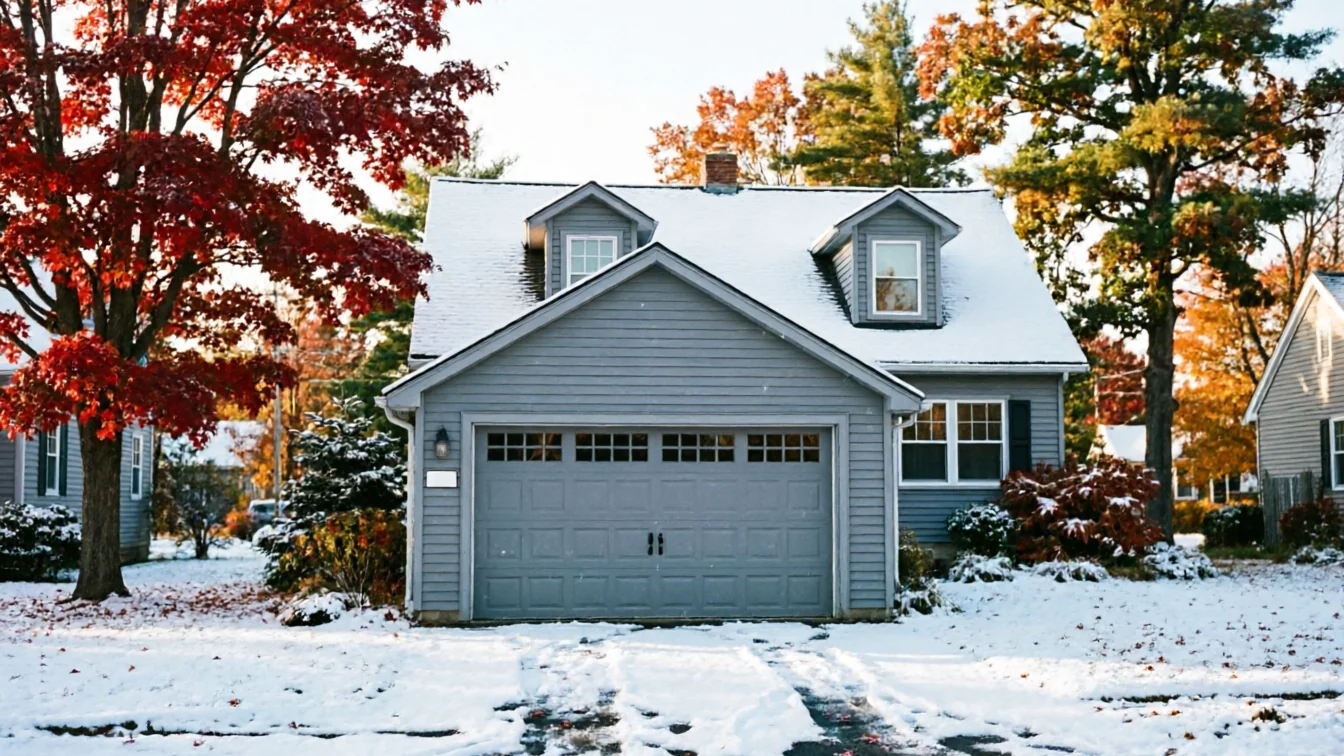
What Winter Power Outages Do to Your New Haven Garage Door Opener
Power cuts hit garage door openers hard in New Haven's older housing stock and cold winters.
Read guide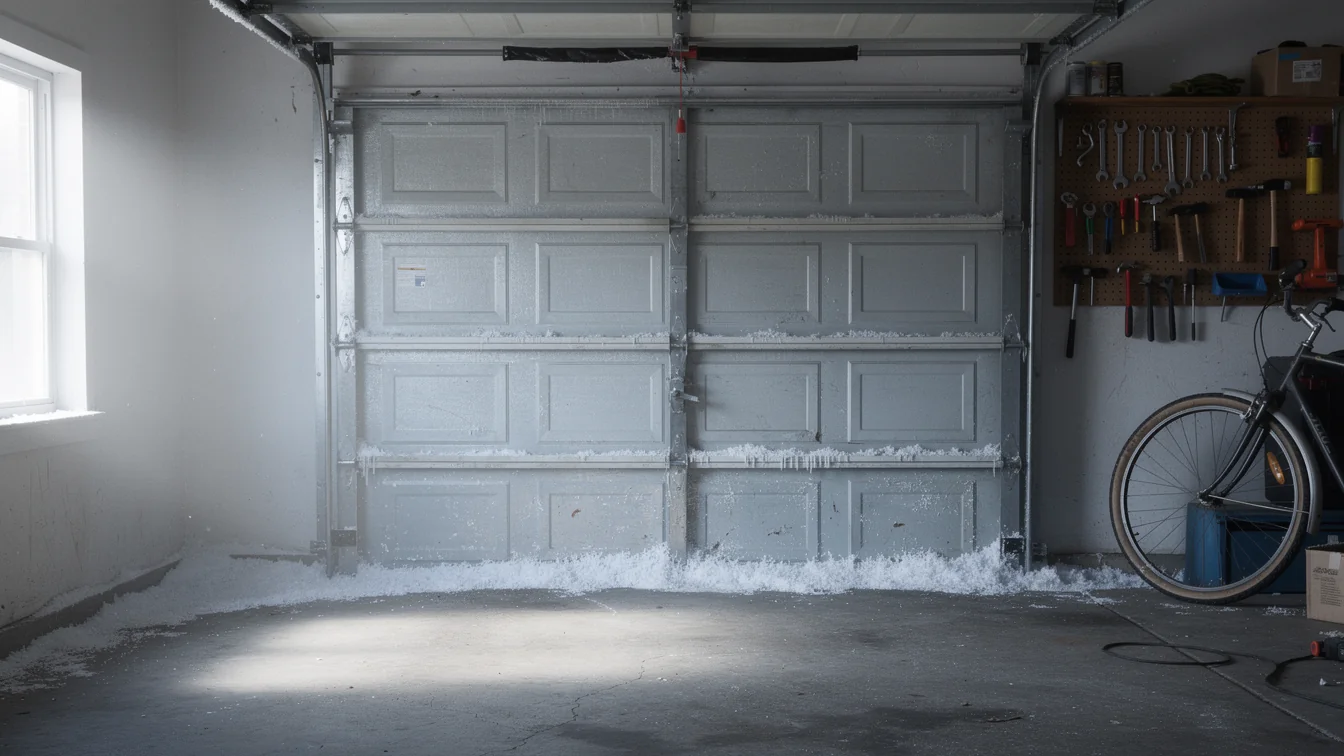
Why Your Garage Door Leaks Cold Air in New Haven
Most New Haven area houses date to 1954-1986, and that era's door seals weren't built for the cold band this region sits in.
Read guide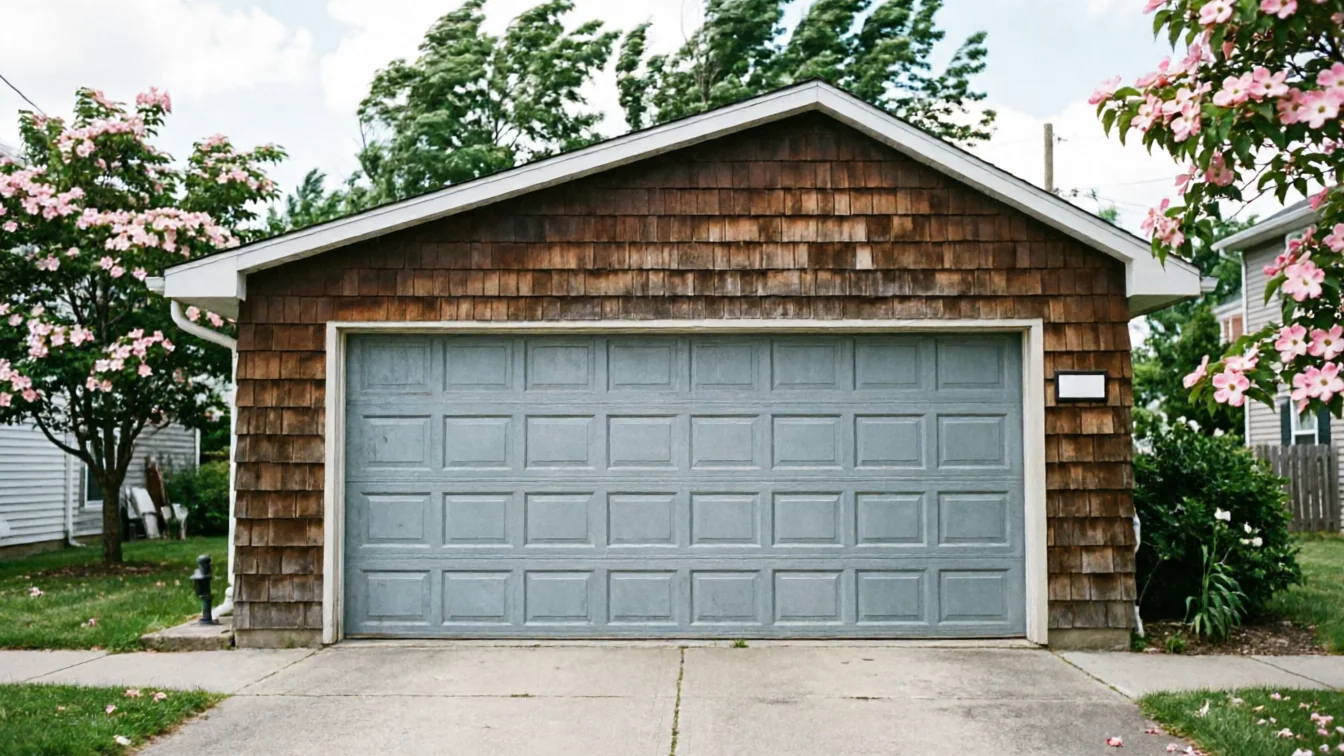
What Replacing a Garage Door Looks Like in New Haven
Most New Haven homes were built 1954-1986.
Read guideReady when you are
Need a garage door sorted in New Haven?
New Haven Garage Door Pros repairs and installs garage doors, springs and openers in New Haven, CT and the surrounding area.