
Blog
Why Your Garage Door Sensors Keep Drifting Out of Alignment
Why safety sensors misalign in New Haven's older garages, what to check first, and when a cold-climate fix needs a pro. Local, plain-spoken advice.
How Local Conditions Play In
Most of the garages we get called to sit under houses built between 1954 and 1986, with the bulk going up in the 1960s and '70s. That means the opener brackets and sensor mounts are usually original hardware bolted to wood jambs or thin aftermarket trim added decades later - not the steel-reinforced tracks you'd find in new construction. Wood moves. It shrinks in winter and swells back in summer, and every cycle nudges the sensor eye a few degrees off center.
New Haven sits in a cold-severe climate band, which means real frost depth and real freeze-thaw cycling every winter. Concrete slabs in driveways and garage floors heave slightly as the ground beneath them freezes and thaws, and a slab that's moved even an eighth of an inch can tilt the sensor bracket enough to break the beam intermittently. This isn't a one-time install problem - it's a seasonal one, and it repeats every year in houses this old because the mounting points were never designed for that kind of ground movement.
Across the neighborhoods we cover - Westville, East Rock, the Hill, Quinnipiac Meadows, and the rest - the pattern holds. Older stock, older brackets, the same drift.
What to Check
Start with the brackets themselves, not the sensor eyes. On a house from the 1960s or '70s, the metal bracket holding each sensor is often screwed into a wood jamb that's cupped or split with age. Give each bracket a gentle push - if it flexes or rocks, that's your drift source, not the electronics.
Next, look at the floor in front of each sensor. If your garage slab has any visible heave or a gap opening up where it meets the driveway apron, that's cold-climate ground movement, and it will keep shifting the sensor angle every winter until the mounting is redone on something more stable than the original wood.
Wipe the lenses - spiderwebs and winter road salt film build up fast here and block the beam without any misalignment at all. Check that both LED indicators glow solid, not blinking, when the door is up and nothing is in the path. A blinking light on one side tells you which sensor to adjust first.
Finally, sight down the beam line yourself. Crouch at one sensor and look toward the other - in houses this age, it's common to find the two sensors aren't even parallel anymore because one side of the frame has settled lower than the other.
What Is Going On
In a house built in the 1960s or '70s, the garage frame has had fifty-plus years of freeze-thaw cycles to work on it. Cold-severe winters here mean the ground under and around the slab expands and contracts hard every season, and that motion transfers into the wood framing the sensors are bolted to. The sensors themselves rarely fail - what fails is the thing holding them still.
There's also a simpler, less dramatic cause: vibration. A door that's run on the same track for decades develops small amounts of play, and every open-close cycle shakes the sensor brackets a fraction more out of true. In newer construction this is less noticeable because the mounting points are sturdier. In the older housing stock common here, it adds up.
I'll be straight about one thing - if the wood jamb itself is soft or rotted at the base, no amount of sensor realignment holds for long. You can true up the brackets every few months, but if the wood they're anchored to keeps moving, you're chasing the same problem on repeat. At some point the fix is a new mounting surface, not another adjustment.
When to Call Someone
If you've wiped the lenses, checked both brackets for play, and the door still reverses or won't close, call it in rather than keep adjusting. A beam that's blocked by a half-degree of drift is a quick fix for someone who does this daily - minutes, not hours.
If the wood framing around either sensor is soft, cracked, or visibly pulling away from the slab, that's past a DIY realignment. It needs a proper remount, sometimes onto a steel plate instead of the original wood, so it stops drifting every winter.
And if you've got a door opener old enough to predate current auto-reverse sensor requirements, don't try to wire around a missing or disabled sensor yourself. That's a safety system, not a convenience feature, and in a house from this era it's worth having someone confirm the whole setup is wired the way it should be, not just working today.
Questions
Common questions
Why do my garage door sensors only act up in winter?
Cold-severe winters here mean the ground under your slab and garage framing goes through real freeze-thaw movement each season. That shifts the sensor brackets a little every year, especially in houses from the 1960s and '70s where the brackets are often mounted to wood, not steel.
Can I just re-aim the sensors myself?
Yes, for a quick fix - loosen the bracket screw, sight down the beam, and nudge until both LEDs show solid. But if the wood jamb underneath is loose or split, which is common in this area's older housing stock, it'll drift again within a season.
Is sensor drift a sign I need a new opener?
Not usually. It's almost always the mounting, not the electronics. We don't recommend replacing an opener over sensor drift unless the wiring or sensor unit itself is damaged - that's a repair we won't upsell into a full replacement.
Recommendation
You Might Also Like
More garage door guides for New Haven homeowners.
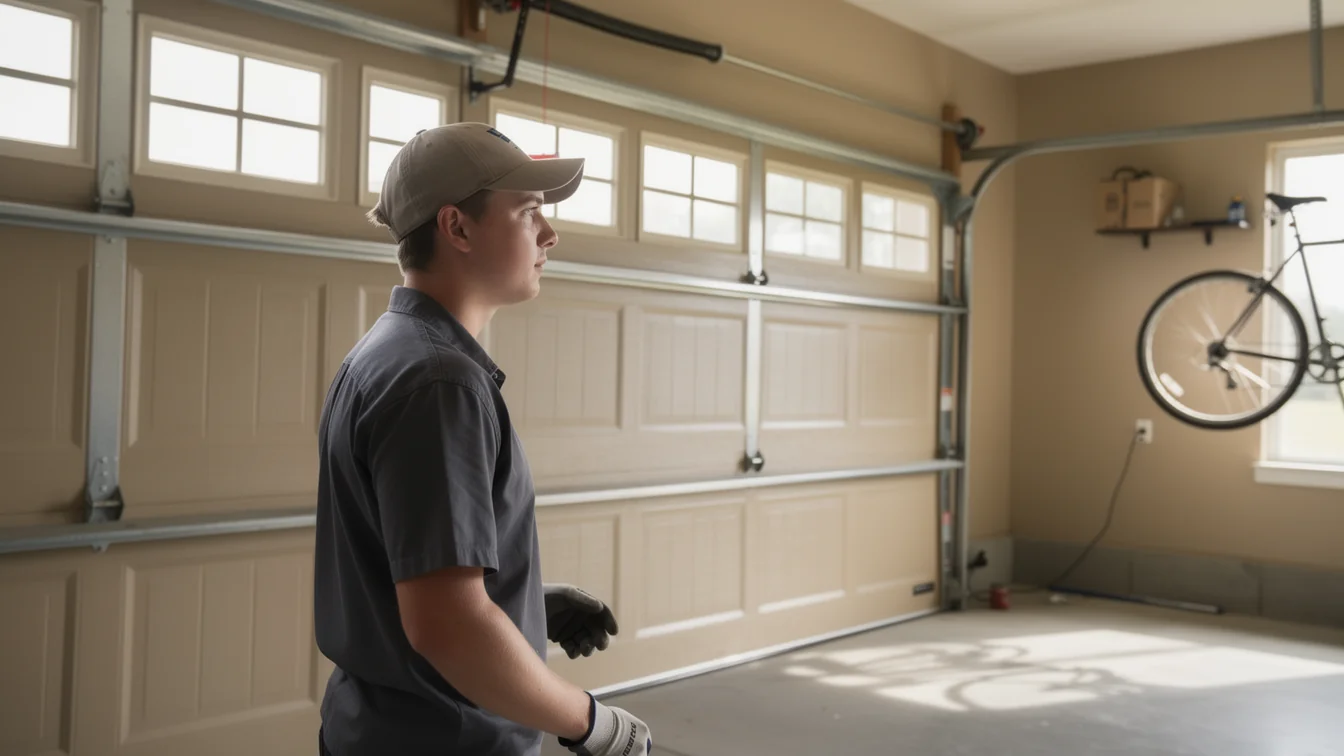
What That Noise From Your Garage Door Is Actually Telling You
A guide to garage door noises for New Haven homes built mostly 1954-1986, with cold-climate wear in mind.
Read guide
What Winter Power Outages Do to Your New Haven Garage Door Opener
Power cuts hit garage door openers hard in New Haven's older housing stock and cold winters.
Read guide
What a Service Call Actually Covers in New Haven
New Haven's housing runs 1954-1986 with cold-climate wear on original hardware.
Read guideReady when you are
Need a garage door sorted in New Haven?
New Haven Garage Door Pros repairs and installs garage doors, springs and openers in New Haven, CT and the surrounding area.