
Blog
Is Your Old New Haven Garage Door Worth Repairing
Most New Haven garage doors date to the 1960s-70s building boom. Here's how to tell if yours is worth repairing or ready to replace, given our cold winters.
How Local Conditions Play In
Most of the housing around New Haven went up between 1954 and 1986, with the median house dating to 1972. That means a big share of the doors we look at - from East Rock to Westville to West Hill - are original or close to it, built for a cold-but-not-brutal New England winter that's gotten colder on the extreme end over the decades. We're in a severe cold climate band here, which matters for garage doors in a specific way: steel contracts in deep cold, torsion springs lose a bit of tension as temperatures drop, and nylon rollers from the 1970s get brittle and crack rather than wear smoothly. A door built in 1972 wasn't engineered with today's weatherstripping or insulated panel standards, so the gap at the bottom and sides tends to be wider than what you'd get on a new install. None of that means the door is junk. It means the parts under stress are different from what you'd find on a 2015 build, and the fix has to account for that.
What to Check
Start with the panels. On a door from the 1960s-70s era, steel panels often show rust at the bottom seam where snowmelt sits - press on it with a thumb. If it gives or flakes, that panel's done regardless of what else is fine. Next, look at the torsion spring: count the coils and check for a visible gap or a flat spot, which shows up more in a cold climate because the metal's under more stress when it's contracted. Check the rollers - metal or old nylon are worse at consistent travel in cold weather than modern nylon. Track alignment matters too; a door built for 1970s framing tolerances can have tracks slightly out of plumb even if nothing's broken, and that shows up as noise or binding on cold mornings when everything's stiffer. Last, test the opener if there is one - a lot of these houses still run openers added decades after the original door, which is its own mismatch worth noting.
What Is Going On
When a door from this era starts acting up, it's usually one of three things. First, age catching up with hardware that was fine for 40 years and then wasn't - springs have a cycle life, and a door original to a 1972 build has had a long run. Second, a cold-season problem that's really a lubrication or tension issue, not a structural one - this shows up a lot given our winters, where a door that worked fine in August suddenly binds in January. Third, and this is the one we see most in the older stock across the area's 41 named neighborhoods, is a panel or track that's been patched before and is finally past patching. We can't tell you which one you've got without seeing it - a stiff door in cold weather and a dying spring look almost identical from inside the kitchen.
When to Call Someone
If the door is original to a house built before 1986 and more than one system is failing at once - say, a cracked panel and a spring that's lost tension - repair starts costing close to what replacement runs, and it's not always the better bet. We'll be straight with you: we don't rebuild a door that's rusted through at the bottom panel just to keep the original look. But a single bad spring, a bent track section, or worn rollers on an otherwise sound 1970s steel door is almost always worth fixing rather than replacing. The honest answer depends on what's underneath, which is why a look in person beats a guess over the phone. If you're in New Haven or nearby - Hamden, East Haven, West Haven, North Haven - and the door's acting up worse since the cold set in, that's worth a call before it gets worse.
Questions
Common questions
Is it worth fixing a garage door from the 1960s or 70s?
Usually yes, if the panels aren't rusted through and it's a single-system failure - a spring, a roller set, a bent track section. Original steel panels from that era were often heavier gauge than what's used today, so the shell can outlast several rounds of hardware repair.
Why does my old garage door get worse in winter?
Cold contracts the steel and stiffens torsion springs, so marginal hardware that limps along in summer can bind or snap once temperatures drop. We're in a severe cold climate band here, and doors original to houses built in the 1960s-70s often weren't set up with today's weatherstripping or insulation standards.
How do I know if my garage door panel is too rusted to save?
Press a thumb at the bottom seam where snowmelt collects. If the steel flakes or gives, that panel needs replacing regardless of the rest of the door's condition - patching rust-through steel doesn't hold.
Should I replace the whole door or just the broken part?
Depends on what's failing. One bad spring or a worn roller set on an otherwise sound door is a repair. Multiple failures at once on a door original to a 1954-1986 build usually means the repair bill starts closing in on replacement cost.
Recommendation
You Might Also Like
More garage door guides for New Haven homeowners.
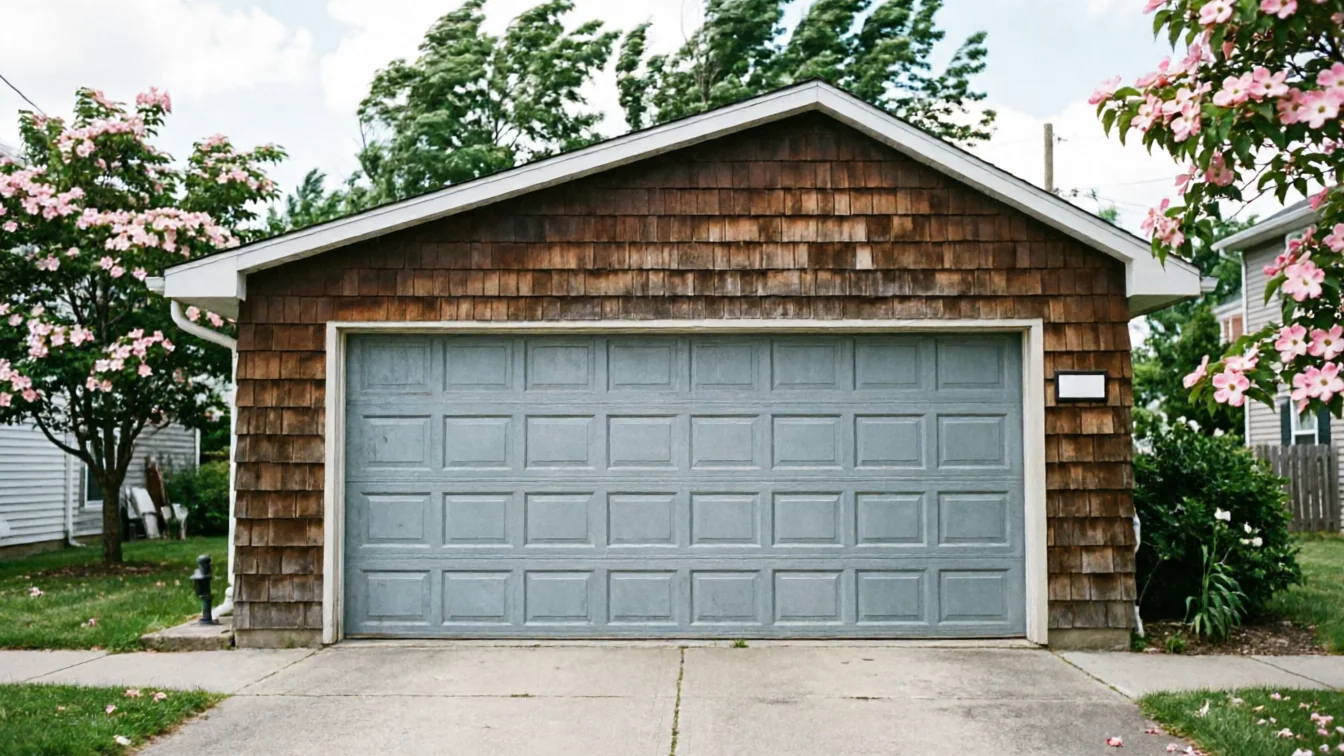
Why Pre-1972 New Haven Homes Give Garage Doors a Hard Time
Most New Haven garage doors date from 1954-1986, built before insulation codes.
Read guide
What Replacing a Garage Door Looks Like in New Haven
Most New Haven homes were built 1954-1986.
Read guide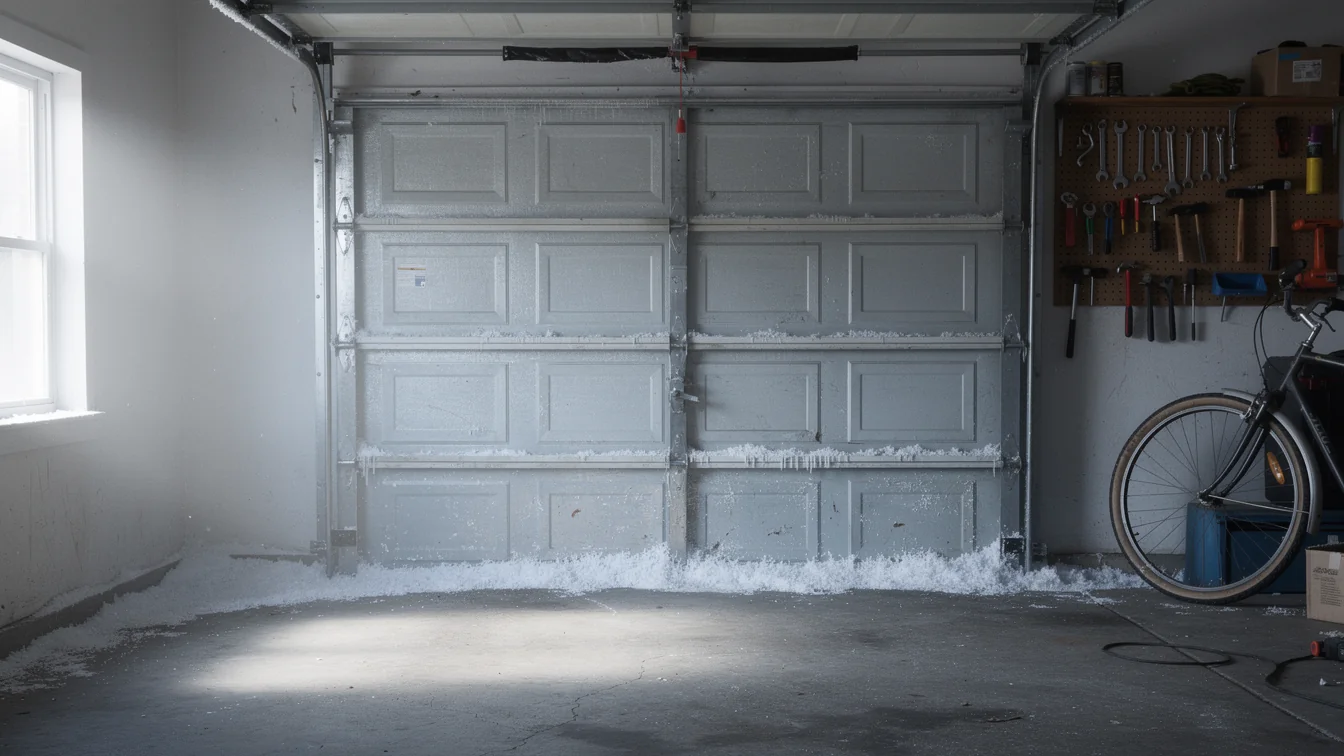
Why Your Garage Door Leaks Cold Air in New Haven
Most New Haven area houses date to 1954-1986, and that era's door seals weren't built for the cold band this region sits in.
Read guideReady when you are
Need a garage door sorted in New Haven?
New Haven Garage Door Pros repairs and installs garage doors, springs and openers in New Haven, CT and the surrounding area.