Nylon and steel stems
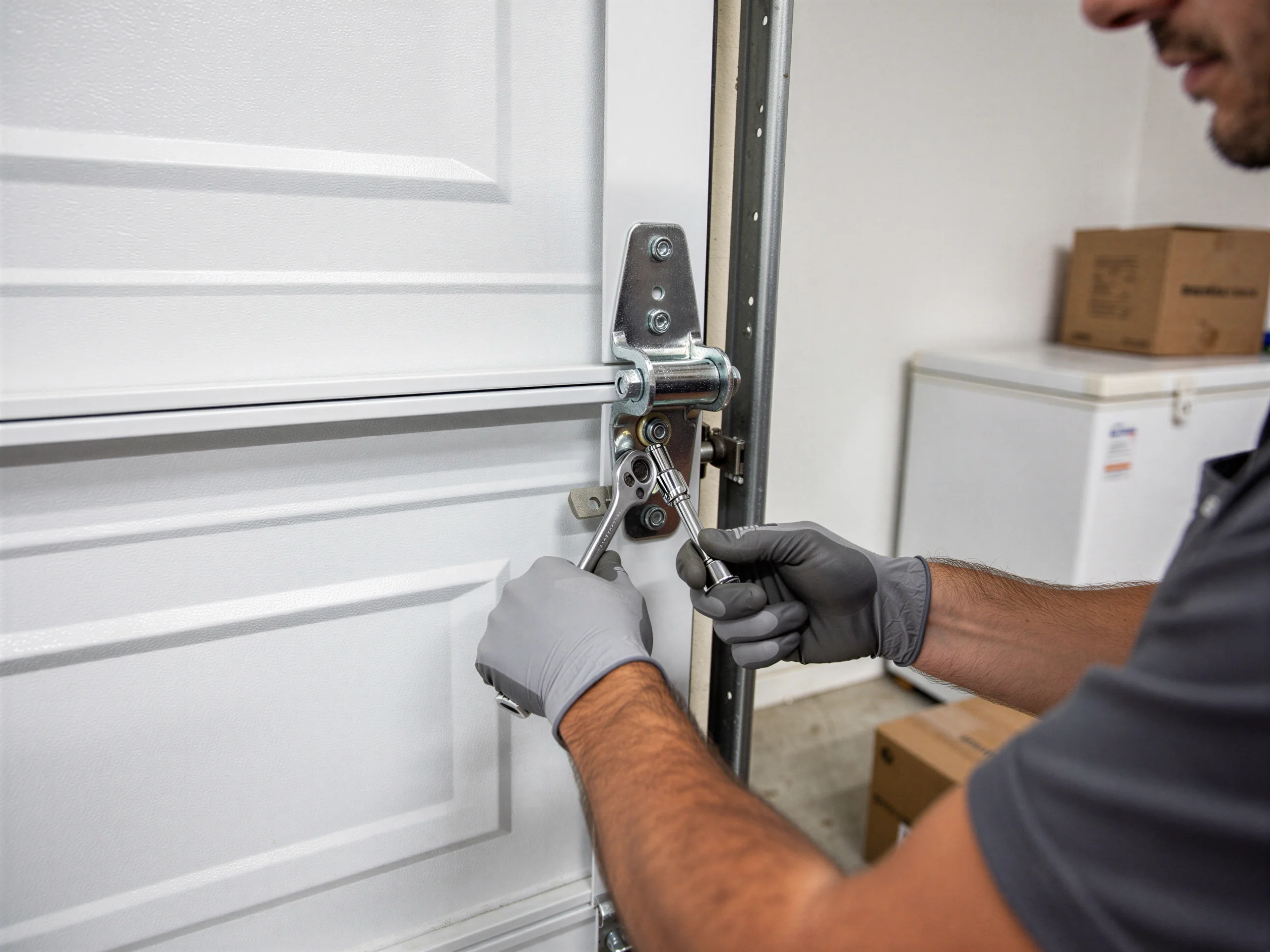
For roller work that means nylon rollers in the common stem lengths, sealed and unsealed steel rollers for doors still running the original hardware, and the bearings and stems that go with each.
North Branford, New Haven
Worn or cracked rollers on a North Branford garage door, explained by the town's 1977 median build year and the eight-mile run from our New Haven shop.
On the truck
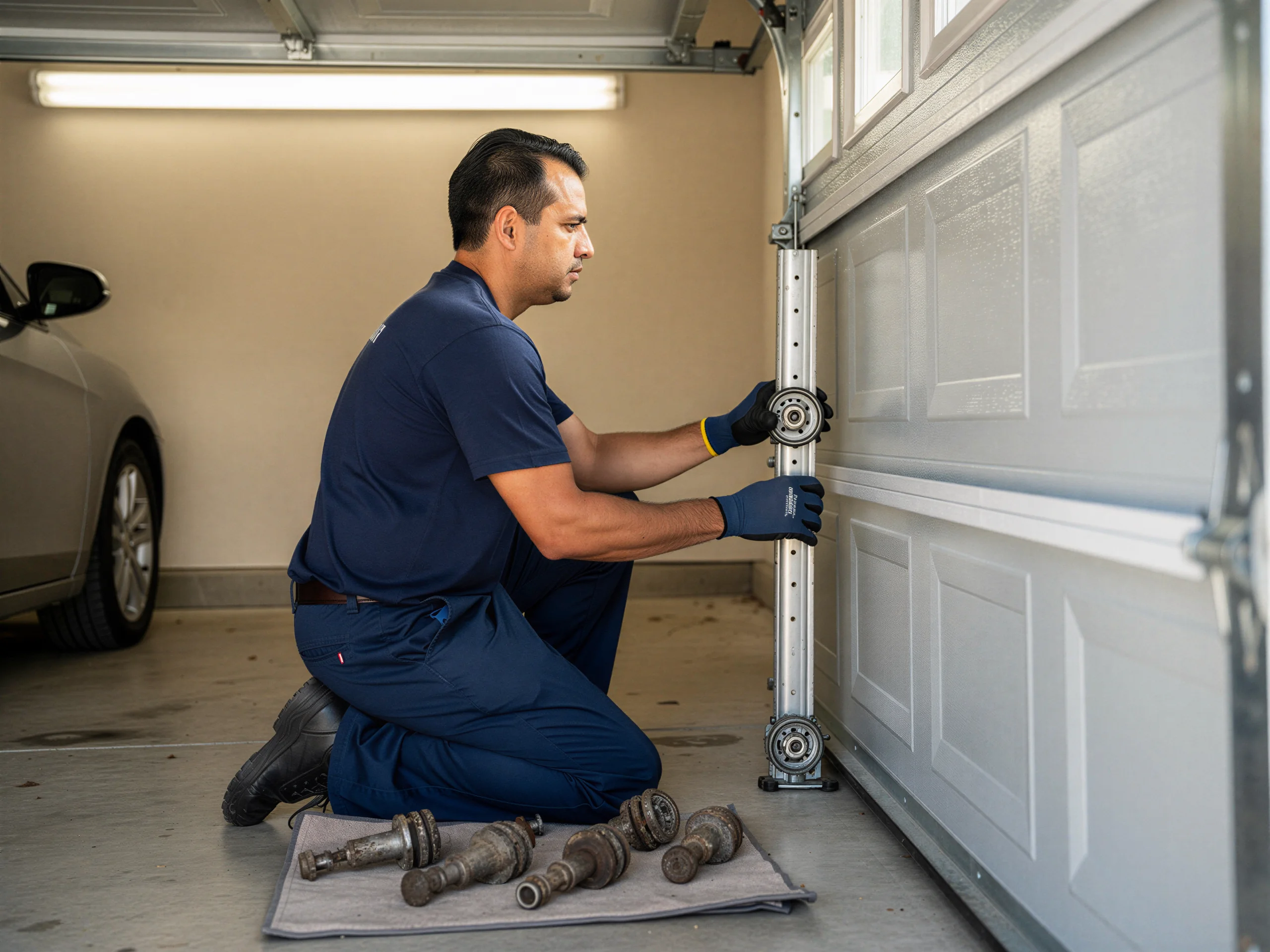
The drive out to North Branford runs about eight miles from our New Haven shop, which is close enough that a roller job doesn't turn into a half-day trip, but far enough that we load the truck before we leave rather than guess once we're on site.
For roller work that means nylon rollers in the common stem lengths, sealed and unsealed steel rollers for doors still running the original hardware, and the bearings and stems that go with each.
North Branford's housing sits at a median build year of 1977, which puts a lot of doors here on steel ball-bearing rollers from an era before nylon became the standard upgrade. We carry both because we don't know which one is on your track until we're standing in front of it.
One thing we don't carry is every obscure stem length ever made - if a door has a roller that's been discontinued for twenty years, we'll tell you that on the spot rather than string you along.
Pricing
We're not going to put a number here that doesn't hold up. Roller replacement cost depends on how many rollers are bad, whether it's a full set of ten or just the bottom two that take the brunt of the lifting, and whether the track needs straightening at the same time a cracked roller usually means it's been grinding against bent track for a while. What we can tell you is how we price it: we look at the door in person, tell you what's worn versus what's fine, and quote the job before any work starts. A full roller set on a double door costs more than a quick swap on two rollers, which is obvious once you say it out loud but worth saying anyway, since a lot of estimates over the phone skip that part entirely.
Local causes
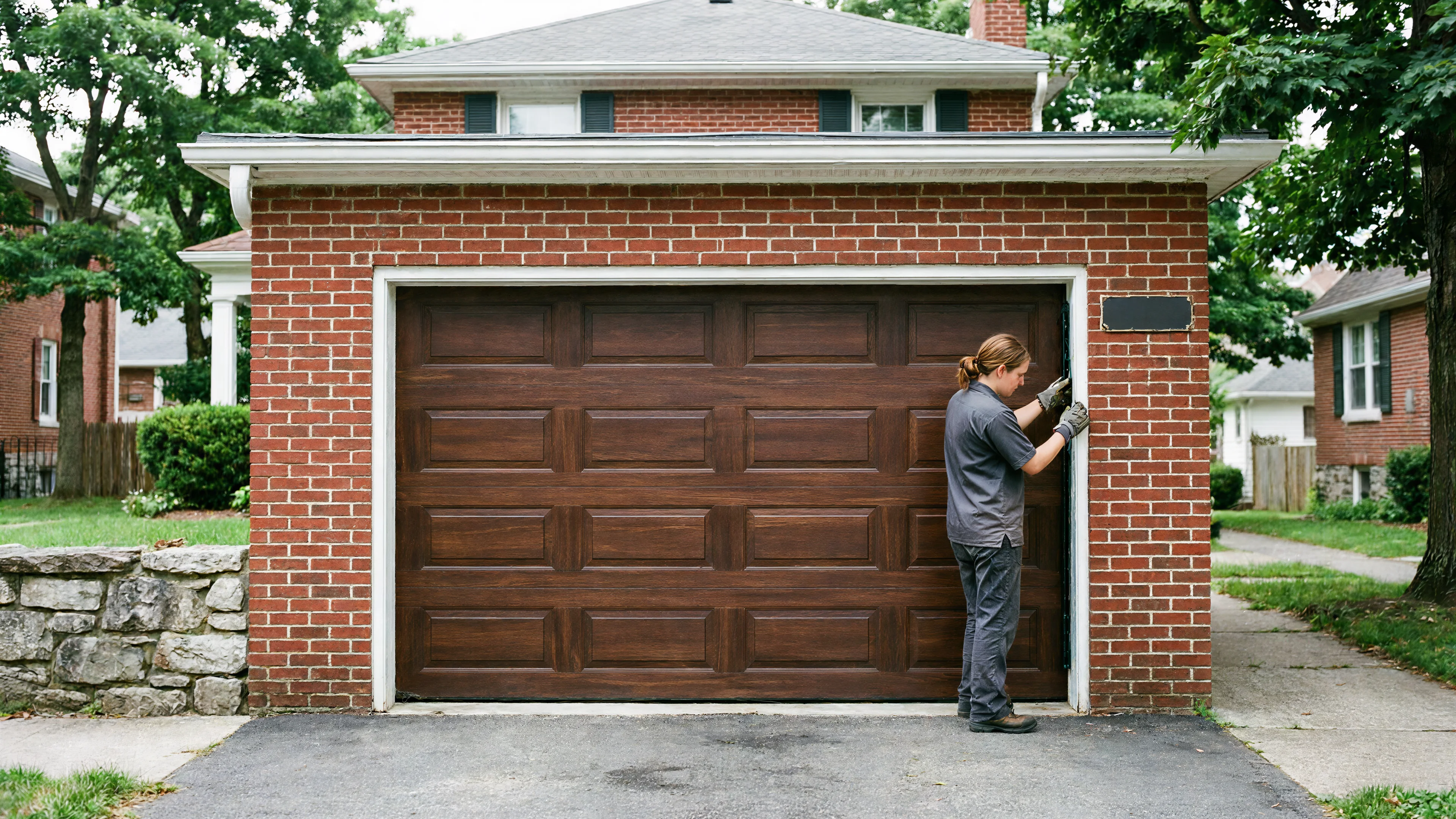
The service area overall runs a cold, severe winter climate, and North Branford's housing - most of it built between the 1960s and 1986 - carries hardware that was never designed around a plastic composite that's lasted this long.
Steel rollers with sealed bearings from that era don't flex the way nylon does, so repeated freeze-thaw cycling on an unheated garage track works the bearing loose faster than it would in a mild climate.
Nylon rollers fail differently here too: the housing gets brittle in sustained cold and cracks under the weight of a full-panel steel door rather than wearing down gradually. On a 1977-median neighborhood like this one, we see a mix of both failure modes depending on whether a homeowner already upgraded rollers once before.
If the track itself is bent from years of a roller riding rough, replacing the roller alone won't fix the noise - that's a track problem wearing a roller's symptoms.
Booking
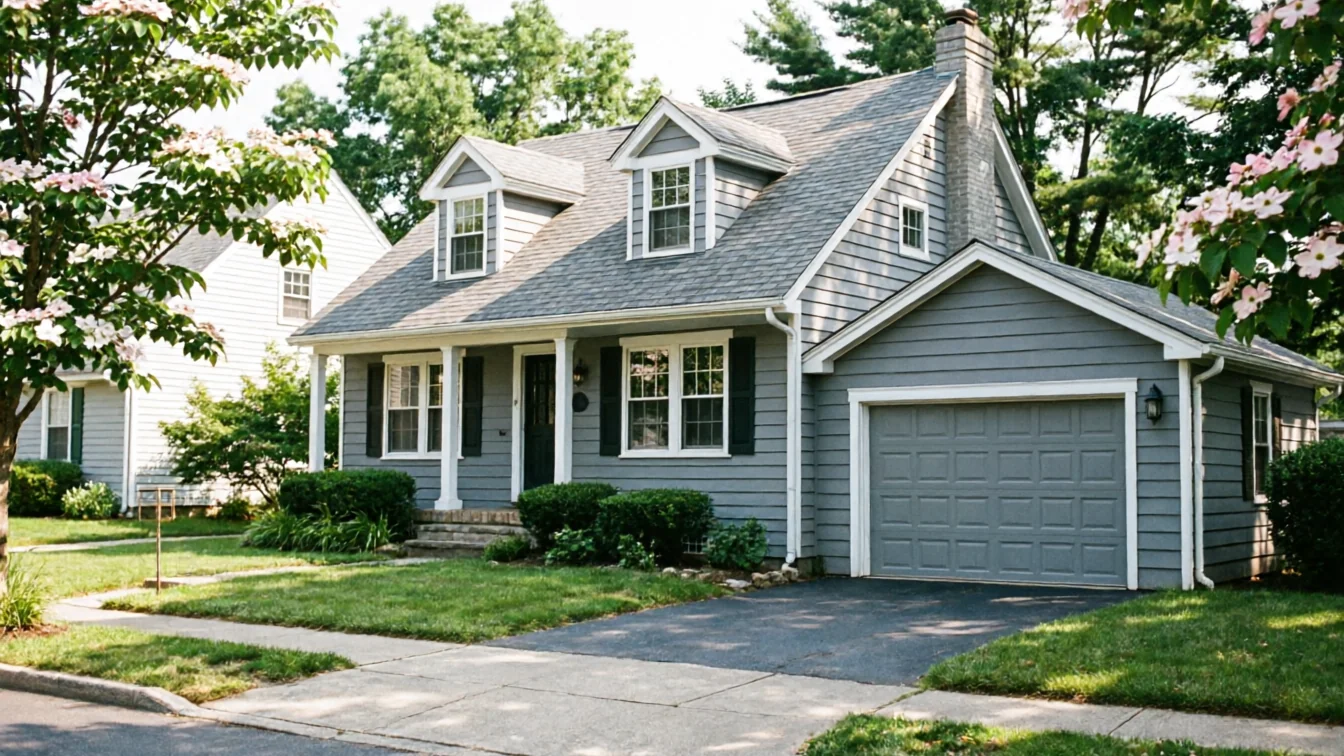
We cover North Branford from New Haven, about eight miles out, so there's no local branch or satellite crew here - it's the same truck and the same techs who'd come from the shop for any call in the area. Tell us the door's make and roughly how old it is if you know, whether it's grinding, popping, or just slow, and whether it's one roller or the whole set that sounds rough. That's enough for us to load the right stock before heading out. You can see what else we handle on doors in town on the North Branford services page, and if you're outside town limits closer to New Haven itself, the New Haven roller replacement page covers that side of the work.
DIY or pro
Lubricating rollers yourself is fine and worth doing twice a year - a silicone-based spray on the roller stem and track, not WD-40, which attracts grit.
Visually checking for cracked nylon housings or rollers that have gone oval instead of round is also something you can do from a ladder without touching anything under tension.
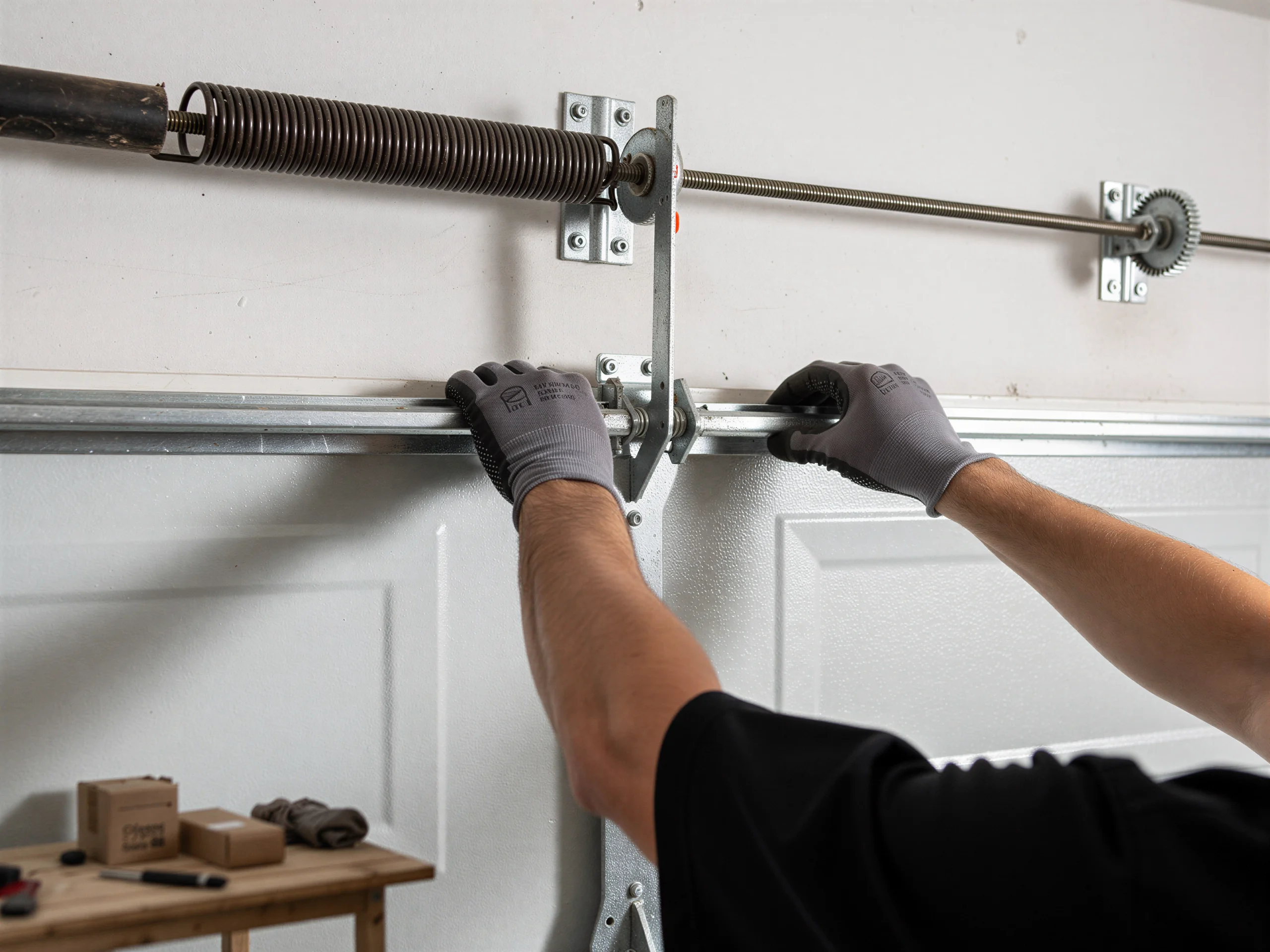
Swapping the roller itself is where we'd stop you, especially on the bottom two rollers, which sit on brackets tied into the cable system on a torsion-spring door. Pull the wrong bracket loose and you're dealing with a cable under load, not a roller.
If the roller's cracked but the door still opens smooth, it's a fine DIY watch-and-wait. If it's grinding on a 1977-era door with original hardware, that's usually the bearing, not just the roller, and worth having looked at before it seizes mid-cycle.
Questions
It depends on the door, but a standard double door usually runs eight to ten rollers total. We often see the bottom two fail first since they carry the most load and torque when the door opens, especially on the steel hardware still common on 1960s-70s builds in this area. We'll check the full set while we're there rather than replace just the obvious one.
Yes. With North Branford's median build year around 1977, a good share of doors we see still run original steel ball-bearing rollers rather than nylon. We stock both sealed steel and nylon rollers in common stem lengths on the truck, since we don't know which one's on your door until we look.
The service area sits in a cold, severe climate band, and nylon roller housings get brittle in sustained cold. Add the weight of a steel panel door cycling through freeze-thaw swings and the housings crack faster than they would somewhere milder. If you're replacing the same rollers every year or two, it's worth having the track checked too.
Lubrication and a visual check, sure, go ahead. Actually swapping rollers, especially the bottom two tied into the cable bracket, isn't a great DIY job on a torsion-spring door. We're coming from about eight miles out regardless, so there's no local branch to shave time off - but the job itself is still safer done by someone used to it.
Explore more
Ready when you are
New Haven Garage Door Pros repairs and installs garage doors, springs and openers in New Haven, CT and the surrounding area.