New Haven, CTSame-day service/Free estimates/Licensed & insured(475) 203-3810

North Haven, New Haven

Garage Door Maintenance for North Haven's 1964-Era Housing Stock

Six miles out from New Haven, North Haven's 1964-era doors need specific maintenance. See what we check, what to skip, and how we schedule the visit.

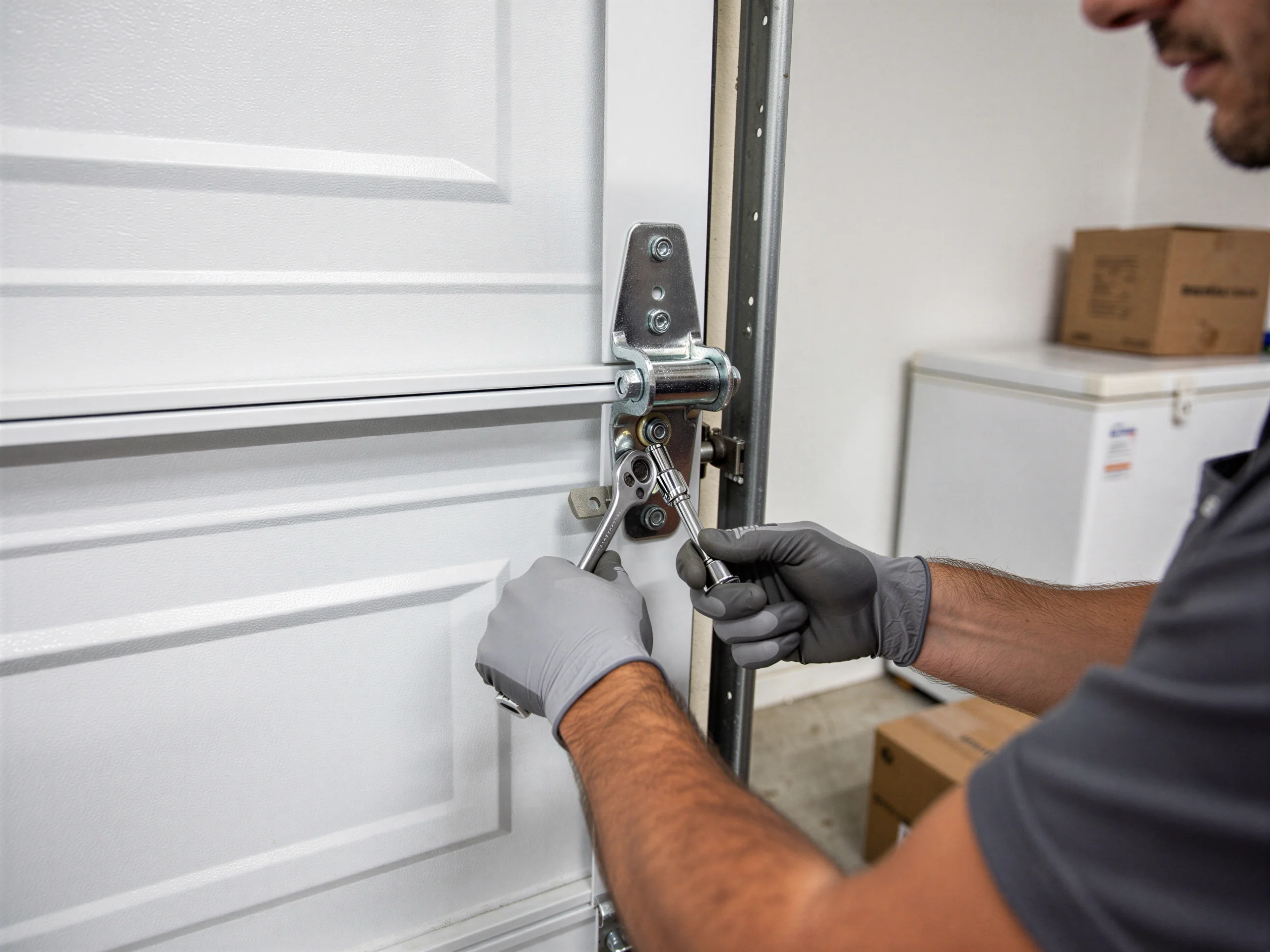
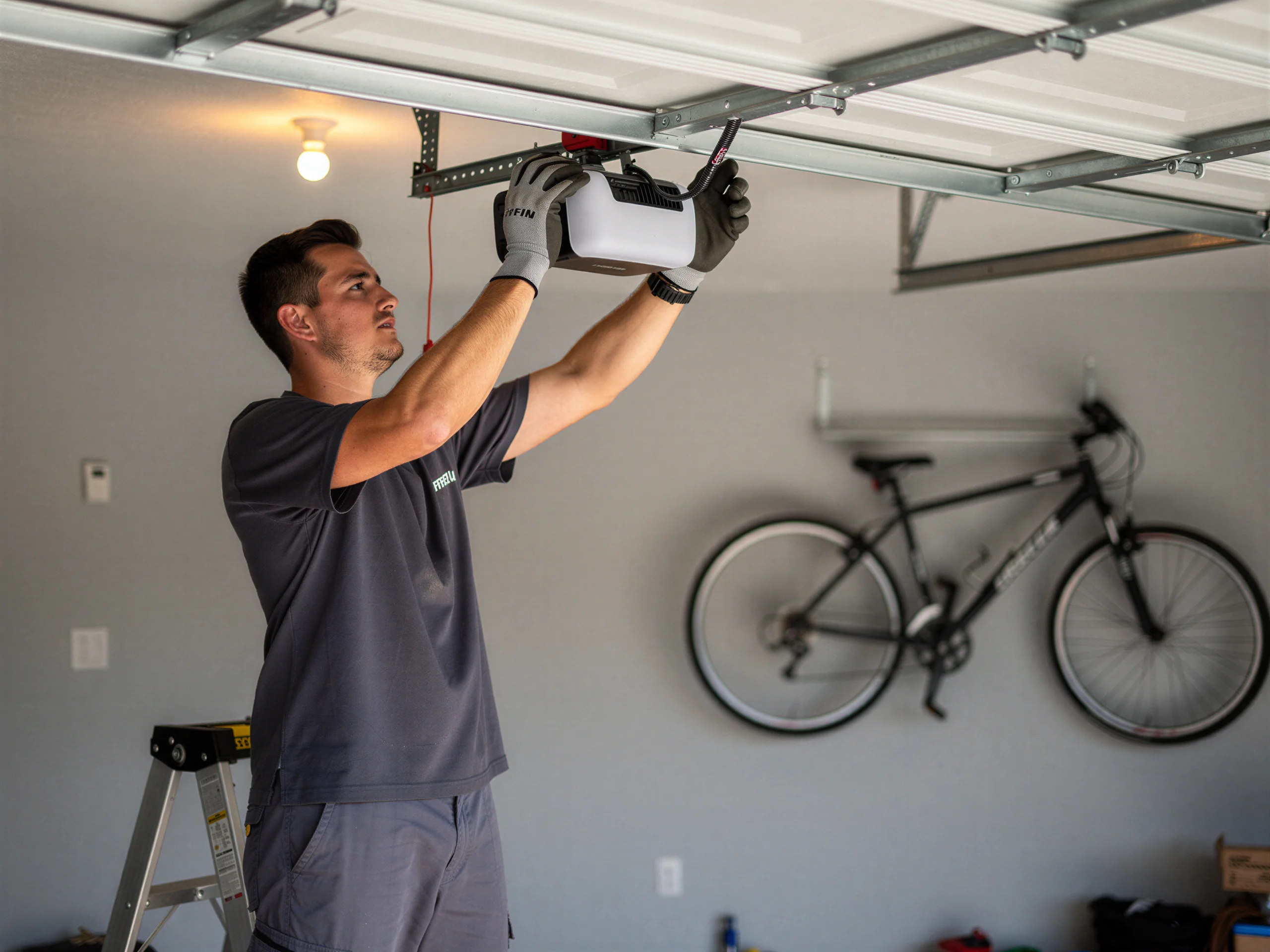
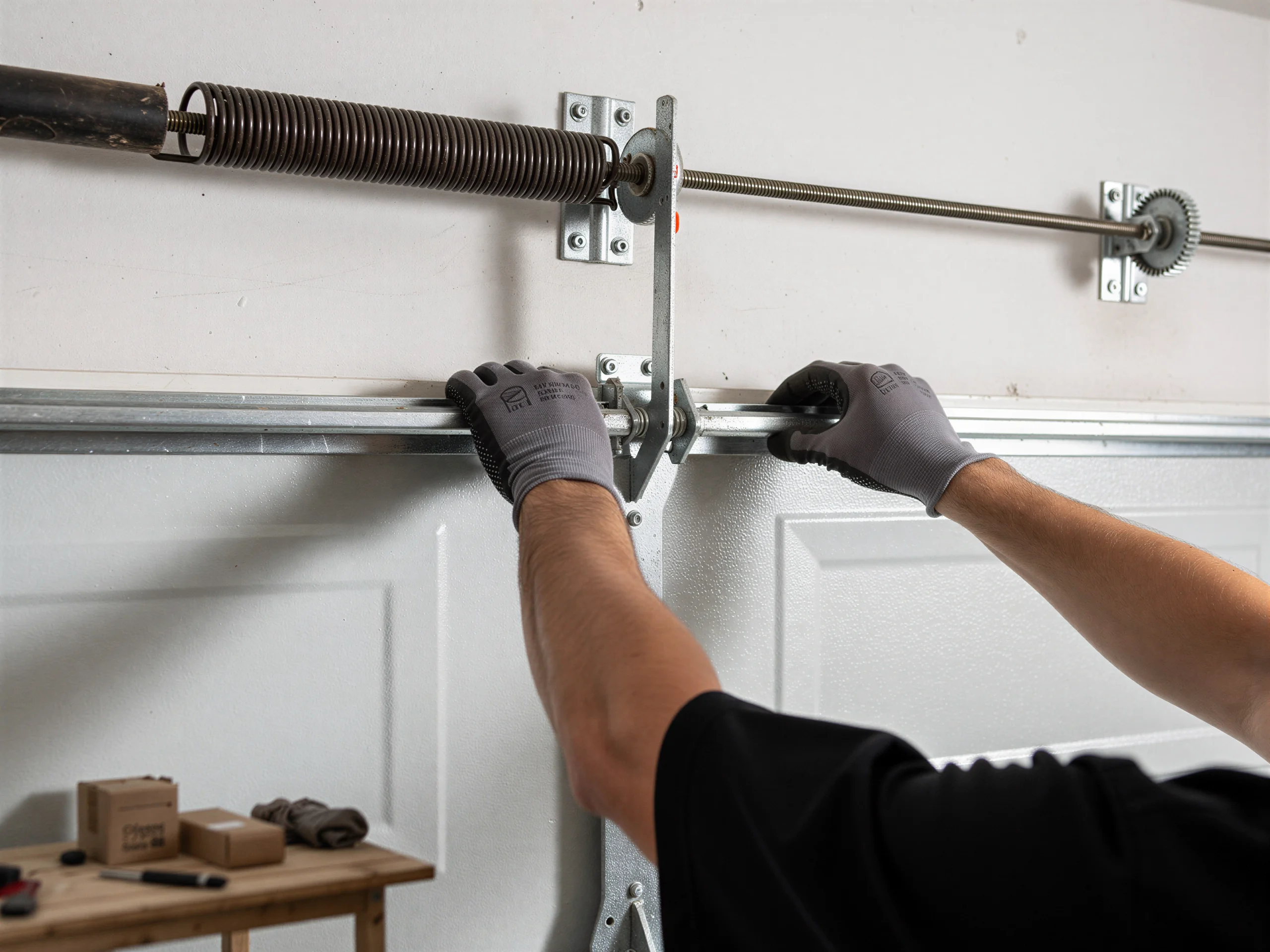
A technician wearing gloves adjusts the top panel of a white garage door.
Same-day serviceTrusted local pros
Serving New Haven, CTBackground-checked techsHonest, upfront pricingFast local response

On the truck

What Is on the Truck

North Haven sits six miles from New Haven, which is close enough that a maintenance call here doesn't eat half a day of driving, but it's not a depot stop either.

Batched with nearby stops

We come from New Haven, so a maintenance visit to North Haven usually gets scheduled alongside other stops on that side of the service area rather than run as a one-off trip. That changes what we load for the day, not what we check once we're in your driveway.

Low-headroom torsion springs

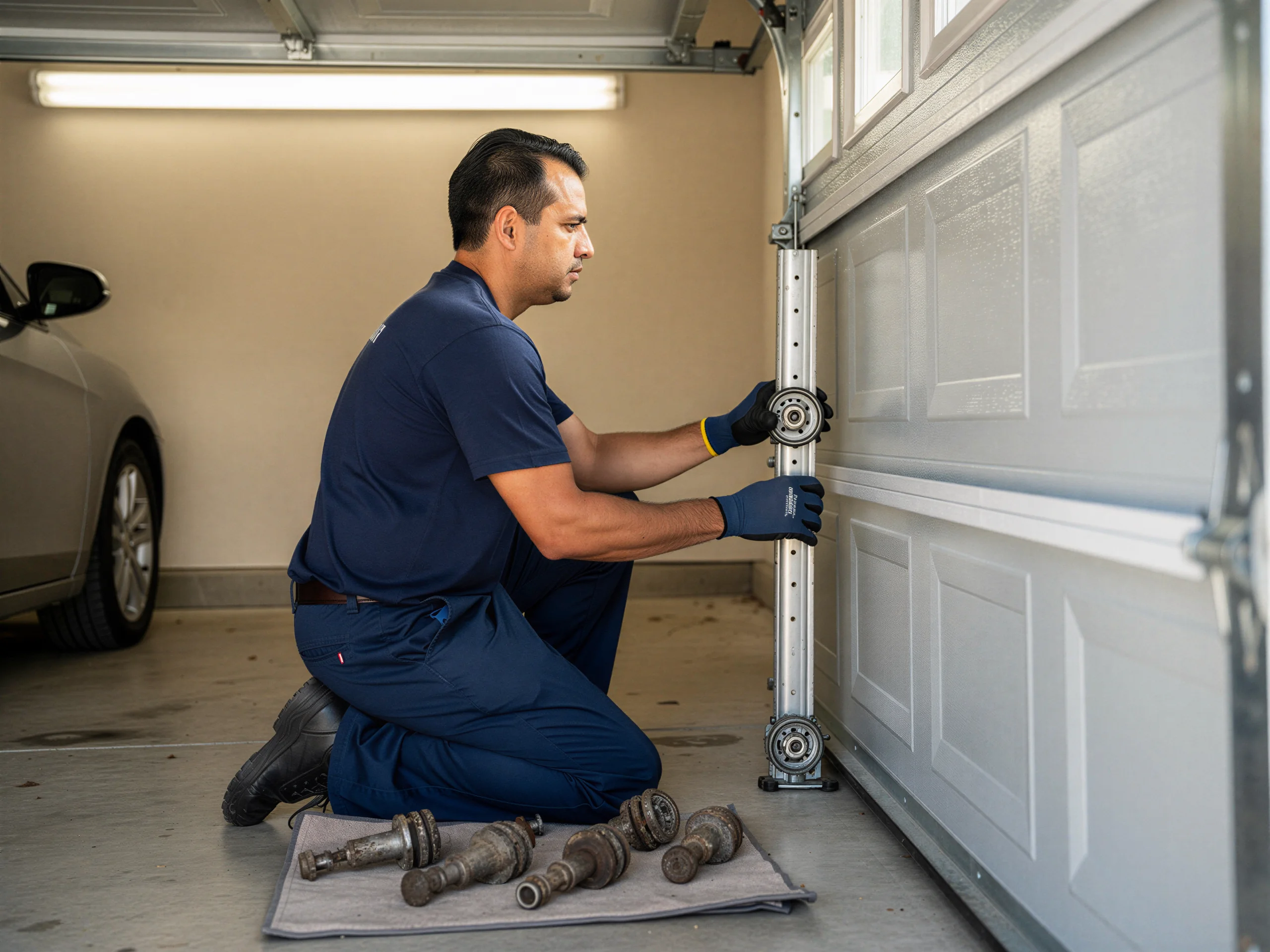
For a house built around 1964 - which is where most of North Haven's stock lands, square in the middle of the 1954-1986 range that covers this whole service area - the truck carries torsion springs sized for older low-headroom tracks, galvanized cable sets, and the sealed ball-bearing rollers that replace the open bearings original to that era.

Narrow jamb weatherstrip

We also carry weatherstrip cut for the narrower jamb widths common on houses from that period, since the cold winters here work gaps loose faster than people expect. We don't carry every spring wire gauge ever made. If your door has a non-standard torsion bar from a long-discontinued manufacturer, that's a special order, and we'll tell you that on the spot instead of pretending otherwise.

DIY or pro

Doing It Yourself

Plenty of this you can do without us. Wipe down the tracks, check that the auto-reverse still stops the door on a 2x4 laid flat on the floor, and look at the bottom panel seal before winter - on a house from the early 1960s that seal has usually been replaced at least once, and if it's cracked it's letting cold air straight into the slab.

Force settings past defaults

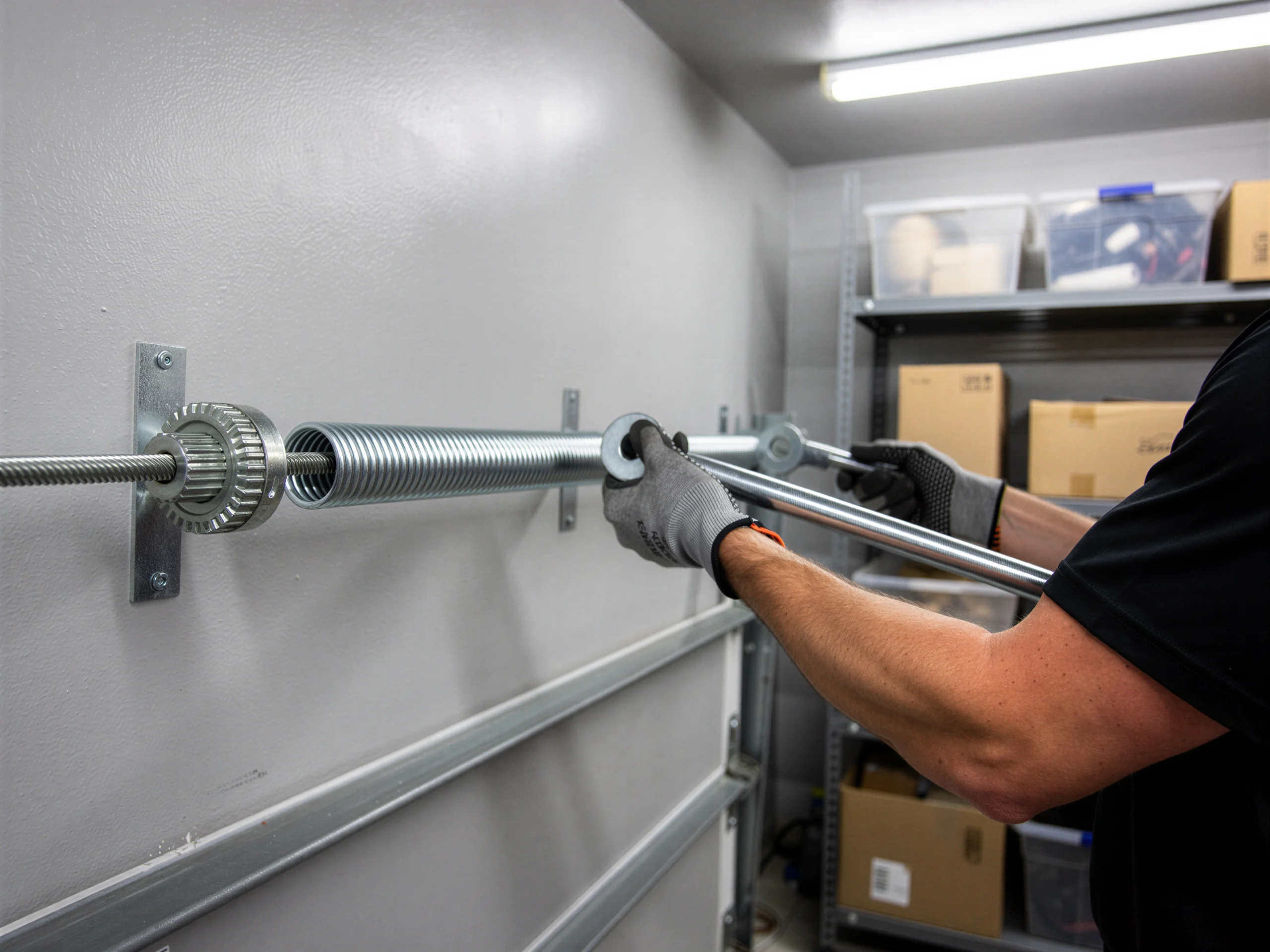
What we don't recommend homeowners do themselves: touching the torsion spring, period, and adjusting the opener's force settings past factory defaults. Both of those are common on doors this age because the original hardware has usually been swapped once already, and the replacement parts don't always match the original spec exactly.

Mismatched force after panel swap

A force setting that was fine on the original 1964 door can be wrong on a later replacement panel, and that mismatch is one we see on these older streets specifically.

Lithium grease for hinges

If you're the kind of homeowner who already lubricates hinges twice a year, keep doing it - that habit alone adds years to hardware from this period. Just use a garage-door-specific lithium grease, not WD-40, which washes out in a cold snap and leaves the roller dry exactly when the metal is contracting the most.

Our process

How We Fix It

A maintenance visit here starts with the spring - checking wind count and wire diameter against what the door weighs now, not what it weighed when it left the factory around 1964, since insulated replacement panels run heavier than the originals.

  1. Galvanizing wears thin

    Severe cold cycling the metal matters more in a house this age because the galvanizing on original hardware has usually worn thin by now, which is where we see rust lines start on cables and bottom brackets. We check track alignment next.

  2. Track mounts shift with settling

    Houses from this build era in North Haven were framed before insulated jambs were standard, so the track mounting often shifted slightly as the house settled - nothing dramatic, but enough that rollers wear unevenly on one side if it's never been reset. Last is the opener.

  3. Opener limits versus door weight

    If it's original equipment, it's long past its working life; if it's a later replacement, we check the force and travel limits match the door's actual weight. We don't rebuild openers - past a certain point, swapping the unit costs less than the labor to chase intermittent failures on something built before modern control boards. We'll say so rather than bill for a repair that won't hold.

Watch-outs

The Complications

The main complication on a house built around 1964 is mismatched parts. Thirty-some years of partial fixes mean a spring from one era paired with a track bracket from another, and neither one is labeled with a date. We measure rather than guess, every time, because guessing on a mismatched setup is how a spring gets installed under the wrong tension.

Cold is the other factor specific to this area. Severe winter swings make steel contract and grease stiffen, and on original 1964-era hardware that's usually thinner-gauge than what's sold today, the contraction shows up as noise and binding before it shows up as a break. That's often what gets a maintenance call started in the first place - not a failure, just a door that's started groaning on cold mornings.

We don't do cosmetic panel matching. If a 1960s-era wood panel is cracked and the rest of the door has faded or weathered differently, a single replacement panel will look slightly off no matter what we do. We'll tell you that up front rather than let you be surprised by it after the job.

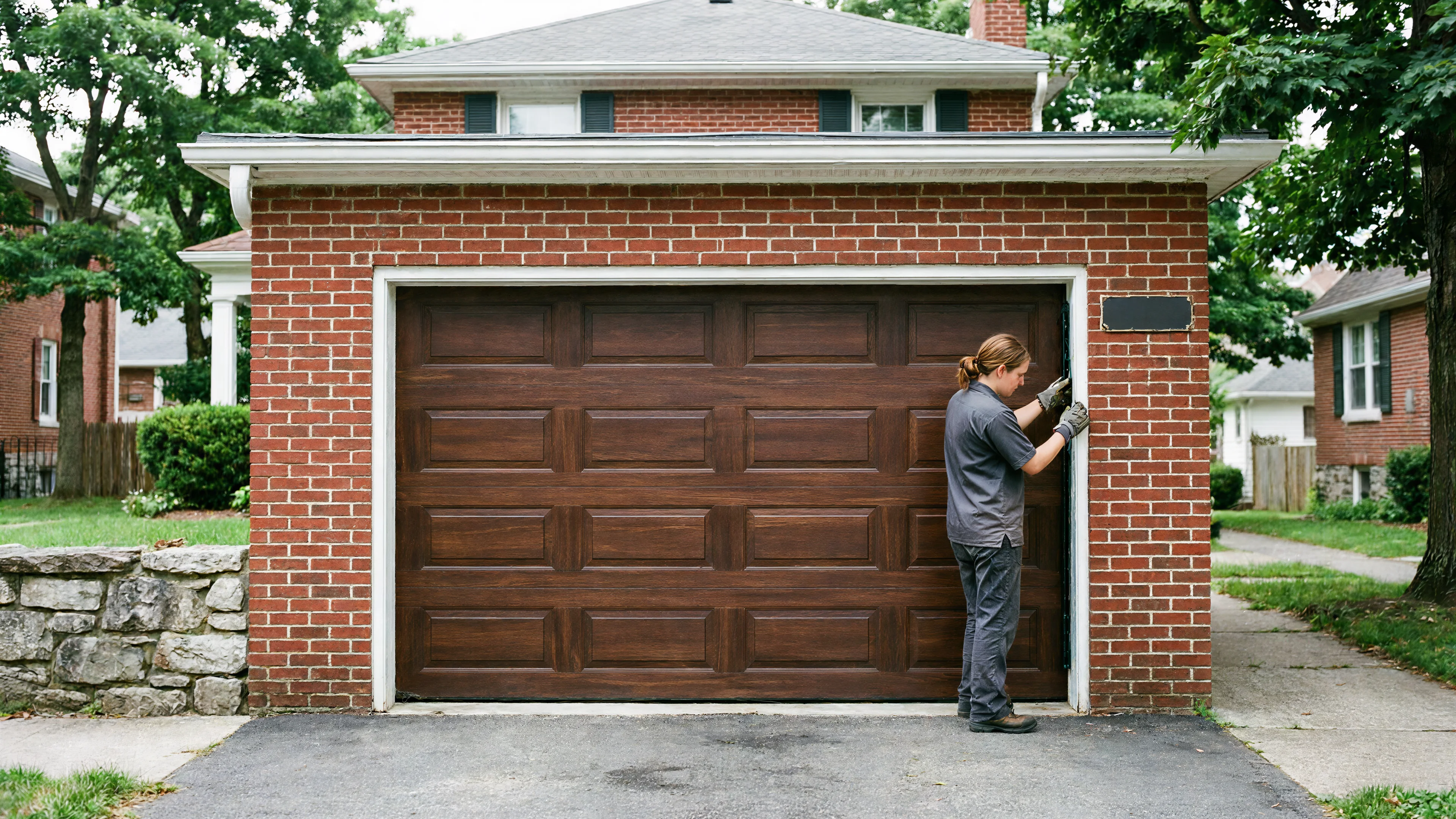
A technician adjusts a brown garage door on a brick house.

Booking

Booking a Visit

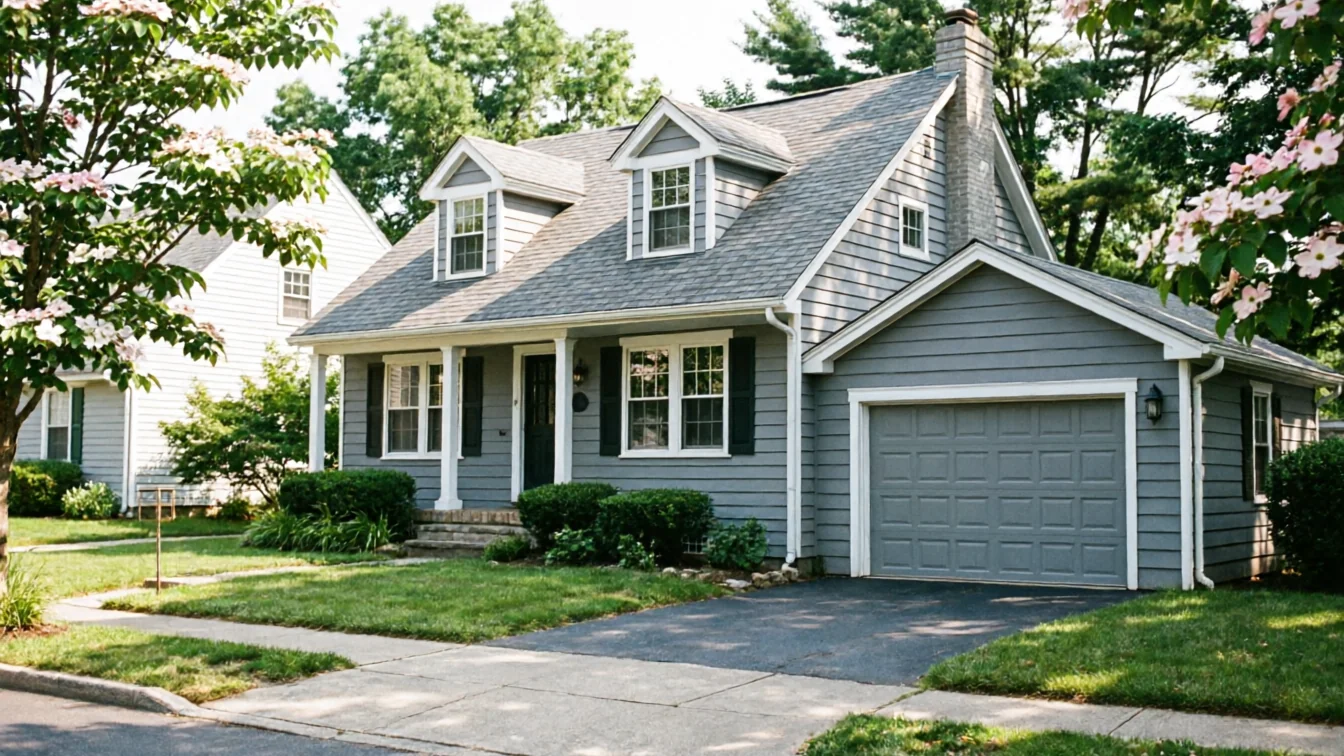
A gray house with a gray garage door and green landscaping.

We run maintenance calls out to North Haven from New Haven, six miles in, and we schedule them in with other stops rather than as same-day emergency work - if your door is stuck or off the track right now, that's a different kind of call. For routine maintenance, tell us the approximate age of the door and whether it's been replaced since the house was built, since North Haven's stock runs from around 1964 and the hardware era matters more than the house address does.

You can see the rest of what we handle in North Haven on our area page, and if you're comparing maintenance against a full tune-up program across the wider service area, the New Haven maintenance page covers that in more detail. For North Haven specifically, this page is the one that matches your door's actual age.

Questions

Common questions

How often should a garage door in North Haven get serviced?

Once a year is standard for most doors, but if yours dates to the 1960s build era common across North Haven, twice a year is worth it - once before winter to check seals and lubrication, once in spring to catch any binding the cold caused. Original hardware from that period wears faster once cycling starts.

Do you carry parts for older North Haven doors on the truck?

We carry torsion springs, cables, and rollers sized for the low-headroom tracks common on houses built in the 1954-1986 range, which covers most of North Haven. If your door has an unusual or discontinued torsion bar, that part gets special-ordered rather than carried standard.

Why does my door get noisy specifically in cold weather?

Steel contracts and grease stiffens as temperatures drop, and on older hardware with thinner original gauge steel, that contraction shows up as groaning or binding before anything actually fails. It's a sign the hardware is reacting to the cold, not necessarily a sign of damage.

Is it worth replacing an opener instead of repairing it?

Past a certain age, yes. We don't rebuild openers with failing control boards - the labor to chase an intermittent fault on an old unit usually costs more than a new opener. We'll tell you when a door's opener has crossed that line rather than bill for a fix that won't hold.

Ready when you are

Need a garage door sorted in New Haven?

New Haven Garage Door Pros repairs and installs garage doors, springs and openers in New Haven, CT and the surrounding area.

Call Now(475) 203-3810