
Roller swap timing
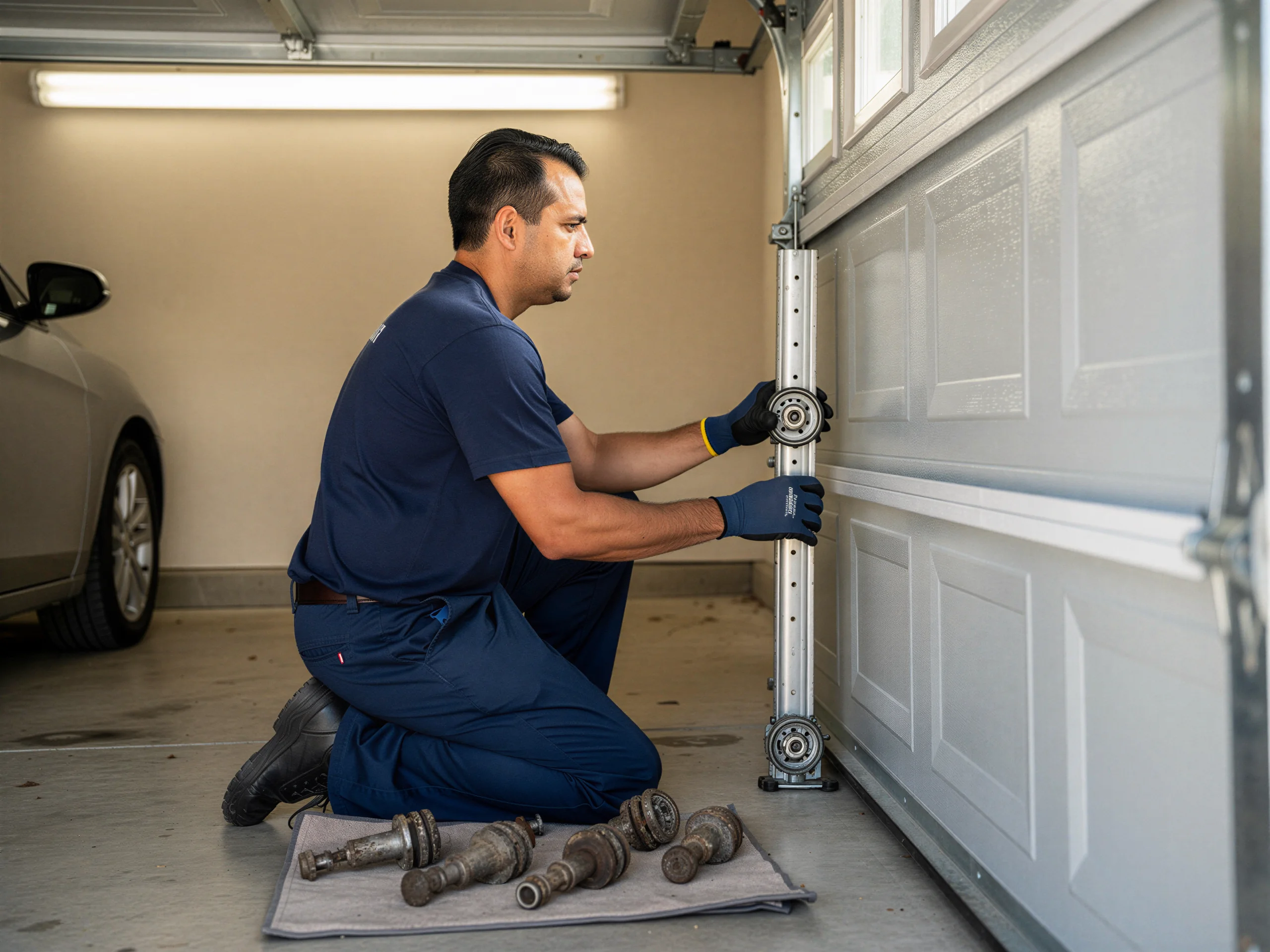
A straight roller swap on a door like that, both tracks, ten to twelve rollers depending on panel count, runs about an hour once the truck is on site.
Branford, New Haven
Branford's garage doors mostly date to the early 1970s, steel sectional on steel rollers. We explain the wear pattern, the parts, and what a roller job costs here.
Timing
Most garage doors in Branford went up between 1954 and 1986, with the median build year sitting around 1972. That means a lot of steel sectional doors, usually a single 16-by-7 or a pair of 8-by-7s, hung from the factory on plain steel rollers with a stem and shaft rather than the sealed, quiet-running rollers you'd find on anything built in the last fifteen years.
A straight roller swap on a door like that, both tracks, ten to twelve rollers depending on panel count, runs about an hour once the truck is on site.
If a track has bent from a roller riding rough for a year or two, or a hinge has worn oval around the roller stem, add time to true the track and replace hardware that's failing alongside it.
We won't quote a number before we've looked at the door, because a roller job that turns out to be a track-and-hinge job isn't the same visit. We travel to Branford from our New Haven shop, about eight miles, so we schedule the visit rather than promise a same-hour arrival. Once we're there, the labor itself is routine and we don't pad it.
Local causes
The service area around Branford, including Branford, sits in a cold, severe winter climate band. That matters for rollers specifically: steel rollers on steel shafts depend on grease staying workable, and in a hard winter that grease stiffens, the roller stops spinning freely in its track, and it starts dragging instead of rolling. A dragging roller wears a flat spot fast, and a flat-spotted roller chatters and binds every time the door runs, which is usually the first thing an owner here notices, not a dramatic failure but a door that's gotten loud and jerky over a few cold months.
Age compounds it. A door built when Branford's housing stock went up, in the early 1970s, has had five decades of track rust, grime, and grease buildup, even if the door itself has been otherwise sound. Steel rollers on original hardware from that era weren't built to be replaced individually without checking the whole track for pitting, so a roller that looks like a simple swap can turn up corrosion the owner didn't know was there. That's not a sales pitch, it's just what fifty-year-old steel does.
On the truck
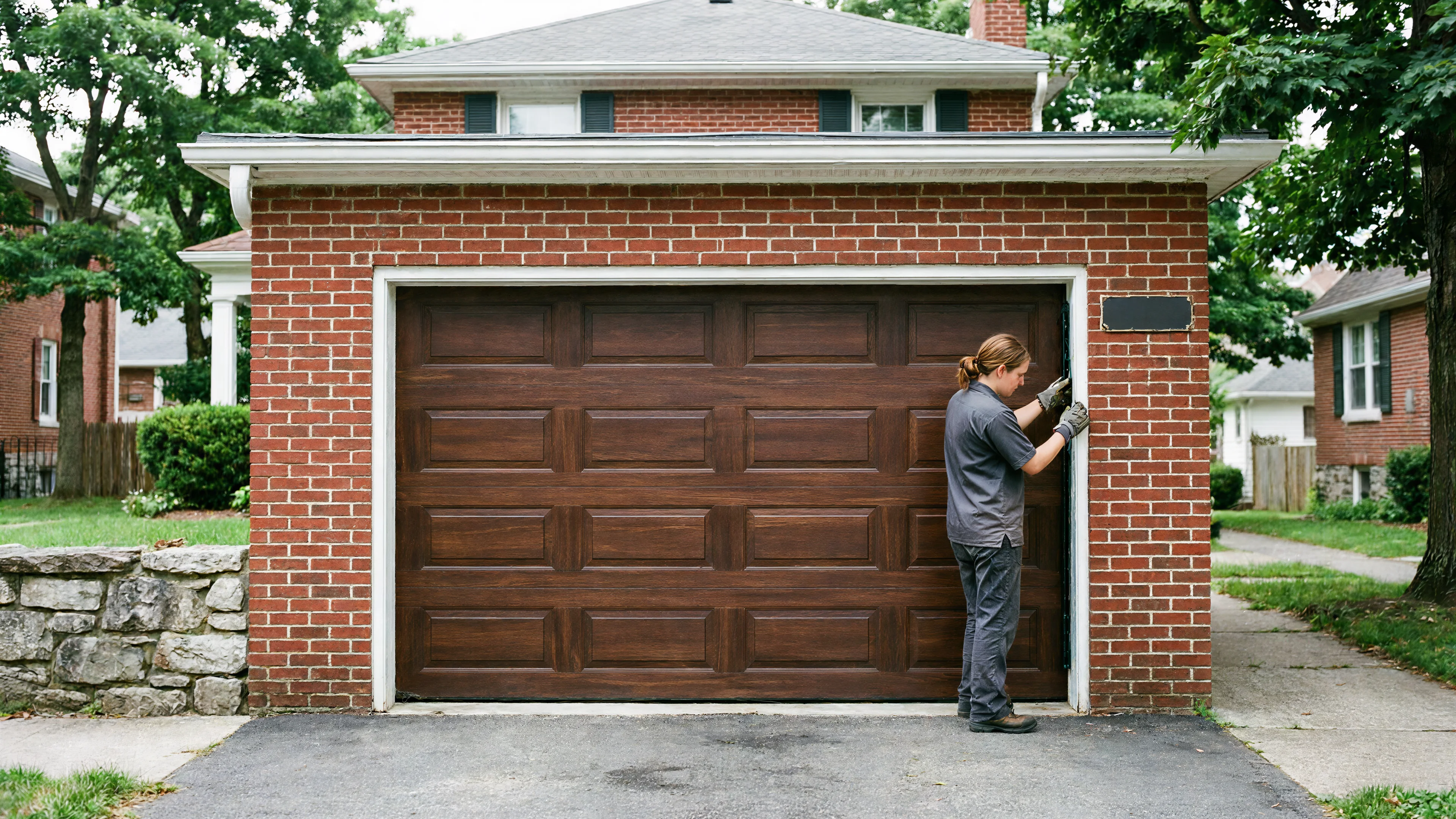
For a door of Branford's typical era and size, the truck carries nylon rollers with sealed bearings in a couple of stem lengths, since steel-era doors weren't built to one universal spec.
We also carry the galvanized steel option for owners who want to match what's already on the door rather than upgrade, though most people switch to nylon once they hear it runs quieter and doesn't need the periodic grease that steel does in a cold climate.
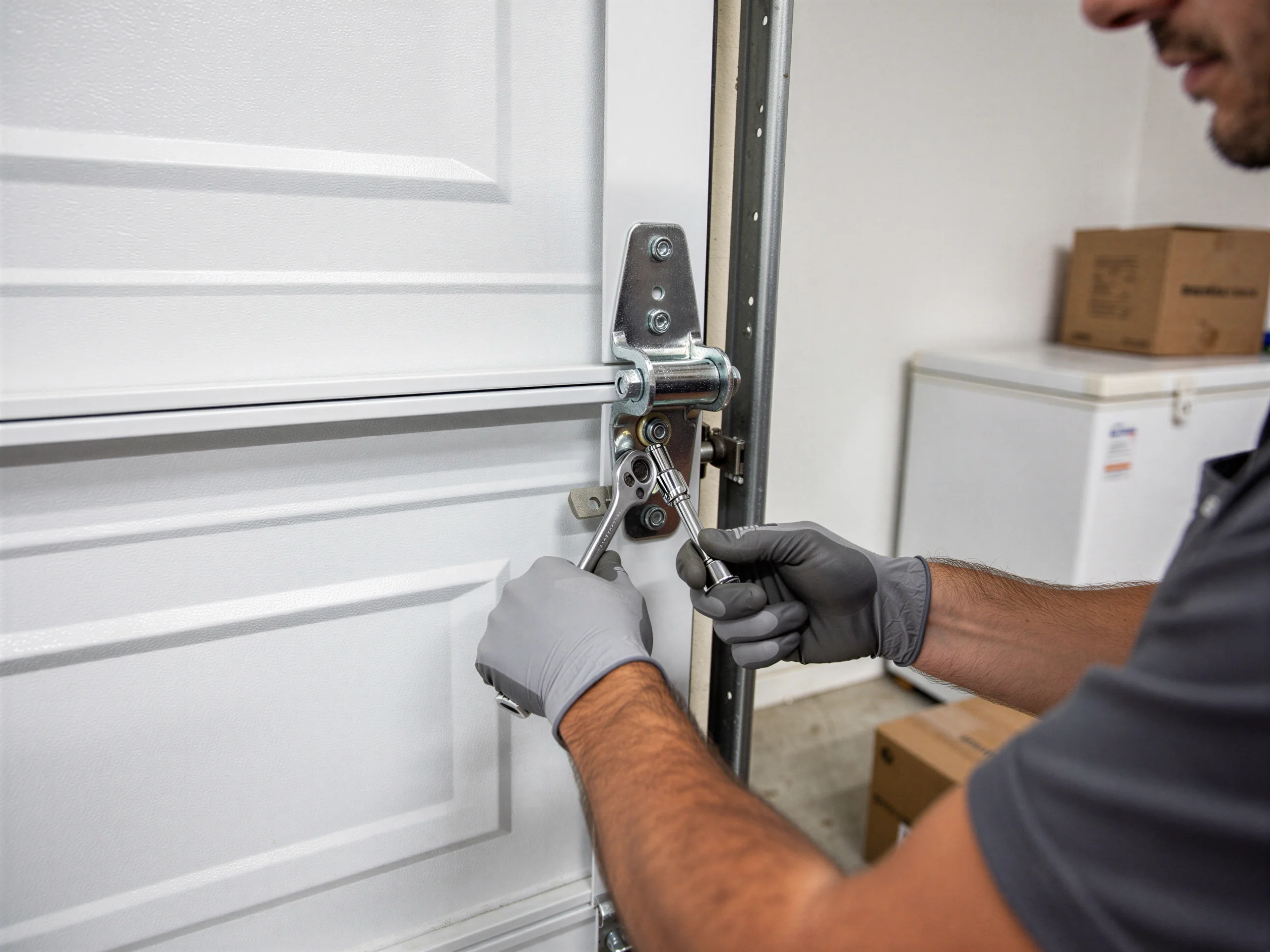
We stock standard track sections and hinges too, because a roller job on a door this old often turns up a bent section or an hinge worn enough that the new roller won't sit right in the old one.
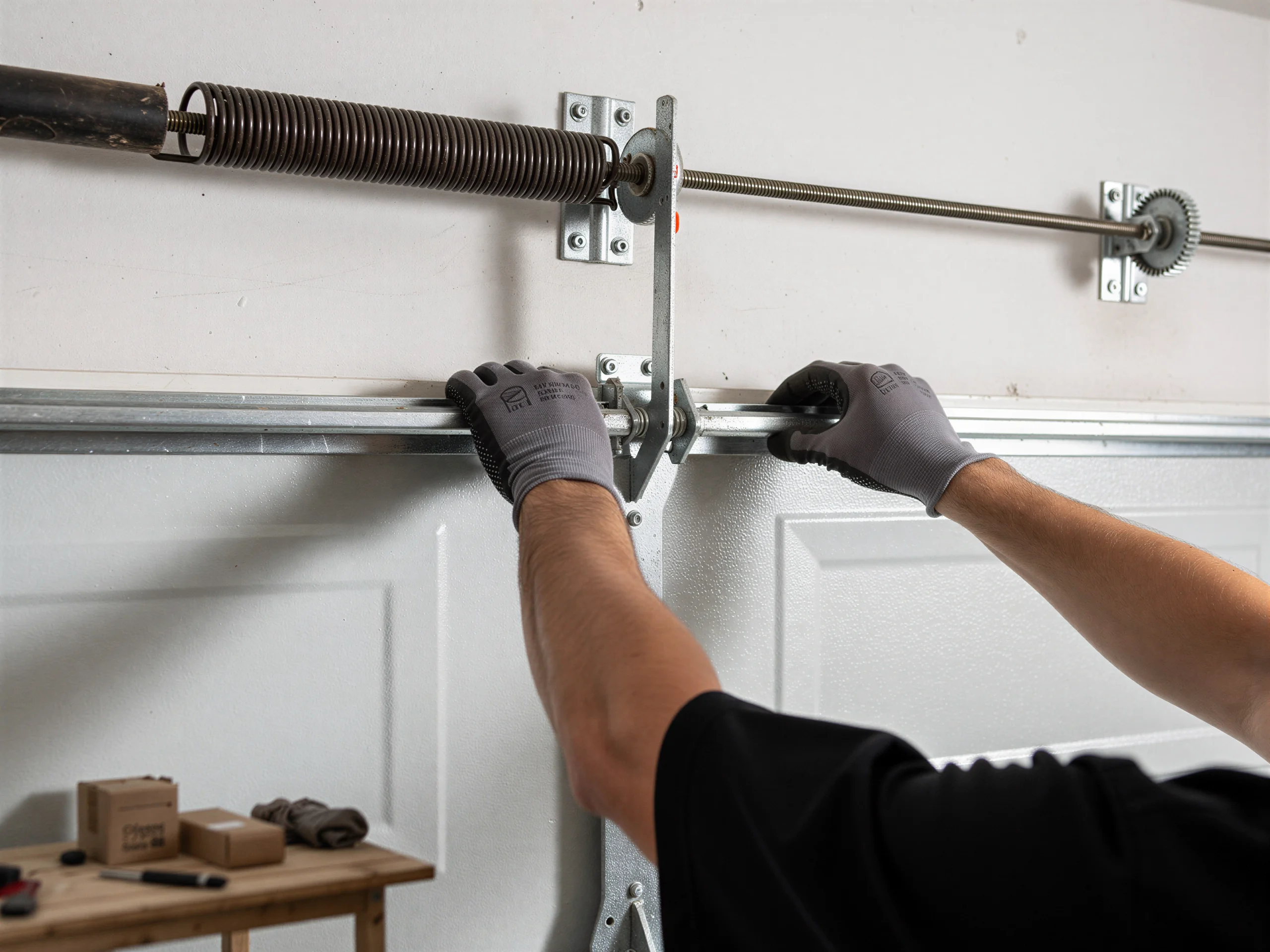
What we don't carry on the truck is a replacement door panel or a full torsion spring system sized for anything unusual, those get ordered once we've seen the door, since panel widths and spring specs on houses from the 1960s and 70s aren't all the same even within one town.
Pricing
We don't publish a flat roller price because the job changes with what the rollers reveal. A straightforward swap, nylon for worn steel, no track damage, is the cheapest version of this call.
Add a bent track section, a seized hinge, or rust pitting deep enough to need a track replacement, and the cost moves with the parts and the extra half hour or more of labor.
Branford's median household income runs lower than the wider New Haven-area median of $113,750, and we price the same parts and labor here as anywhere else we drive to, we don't set rates by zip code.
The honest limitation: if you call about a noisy roller and we get there to find the opener has also been straining against it for months, the roller might not be the whole fix. We'll tell you that straight rather than replace rollers and send you off with a door that's still working too hard.
Booking
Branford is about eight miles from our New Haven shop, so booking means picking a day we're routing that direction rather than a same-day drop-in.
Tell us the door's rough age if you know it, roughly how many rollers are grinding or jumping, and whether the door still opens and closes all the way.
That's usually enough for us to bring the right stem length and decide whether to also bring spare track hardware. If you're not sure whether what you're hearing is a roller problem or something else, a bad opener gear, a loose cable, describe the sound and when it happens.
A roller that's failing tends to make noise at the same spot in the track every cycle; other failures don't. We'd rather ask a question up front than show up with the wrong parts for a Branford door built on 1970s hardware.
Questions
If your house dates to around 1972, which is the median build year for homes in and around Branford, there's a good chance the original rollers are steel on a stem and shaft, not the sealed nylon rollers common today. Steel rollers need periodic grease and tend to stiffen up in a hard winter, which is usually what brings on the noise.
No. We run out of New Haven, about eight miles away, and schedule Branford visits as part of our route rather than offering a local same-hour arrival. We quote the drive time honestly when you book.
We check the track every time, because on a door built in the 1960s or 70s, a worn roller has often already left rust or a bent section behind it. Replacing the roller without looking at the track can mean another call in a few months.
Explore more
Ready when you are
New Haven Garage Door Pros repairs and installs garage doors, springs and openers in New Haven, CT and the surrounding area.