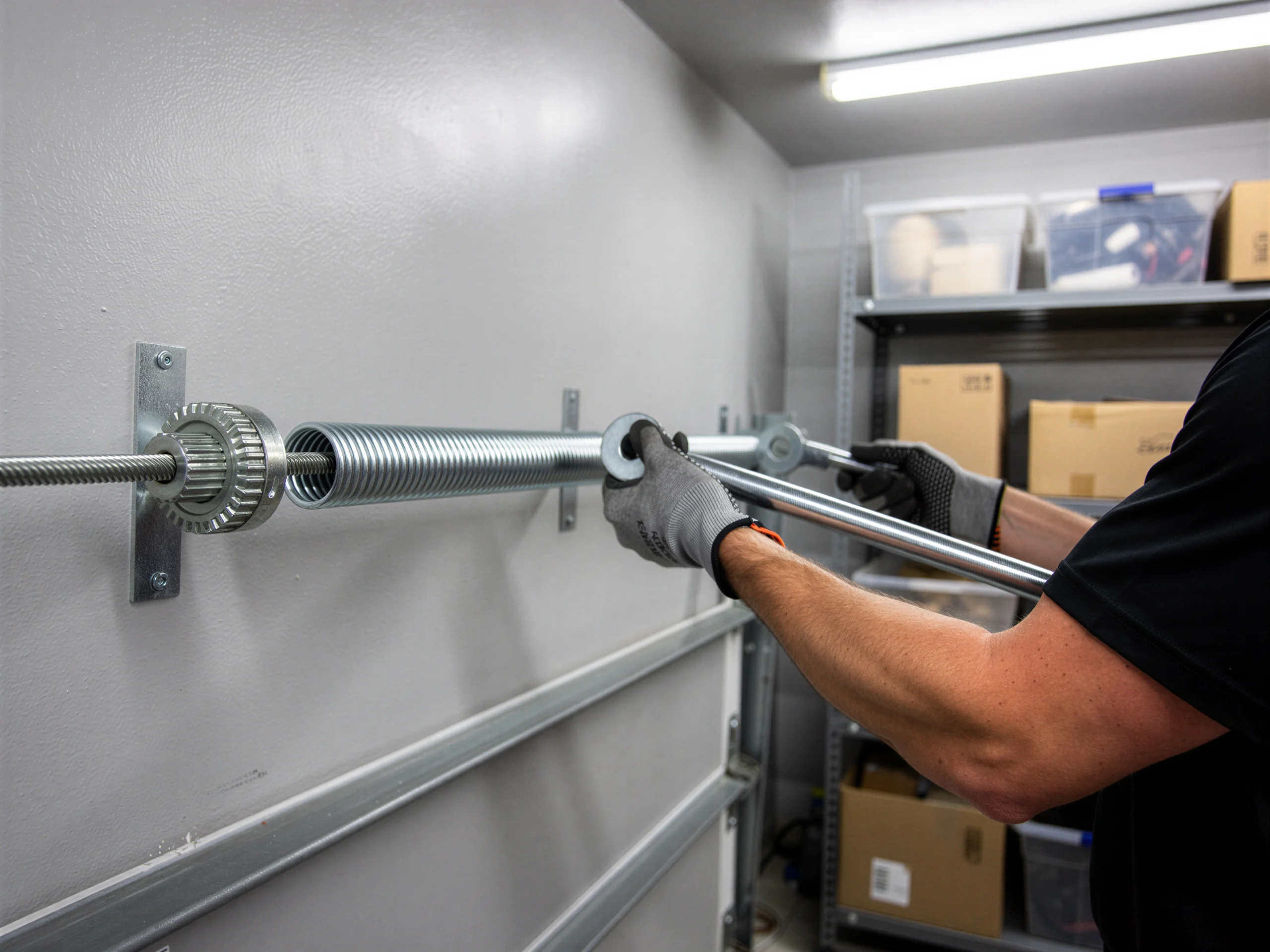
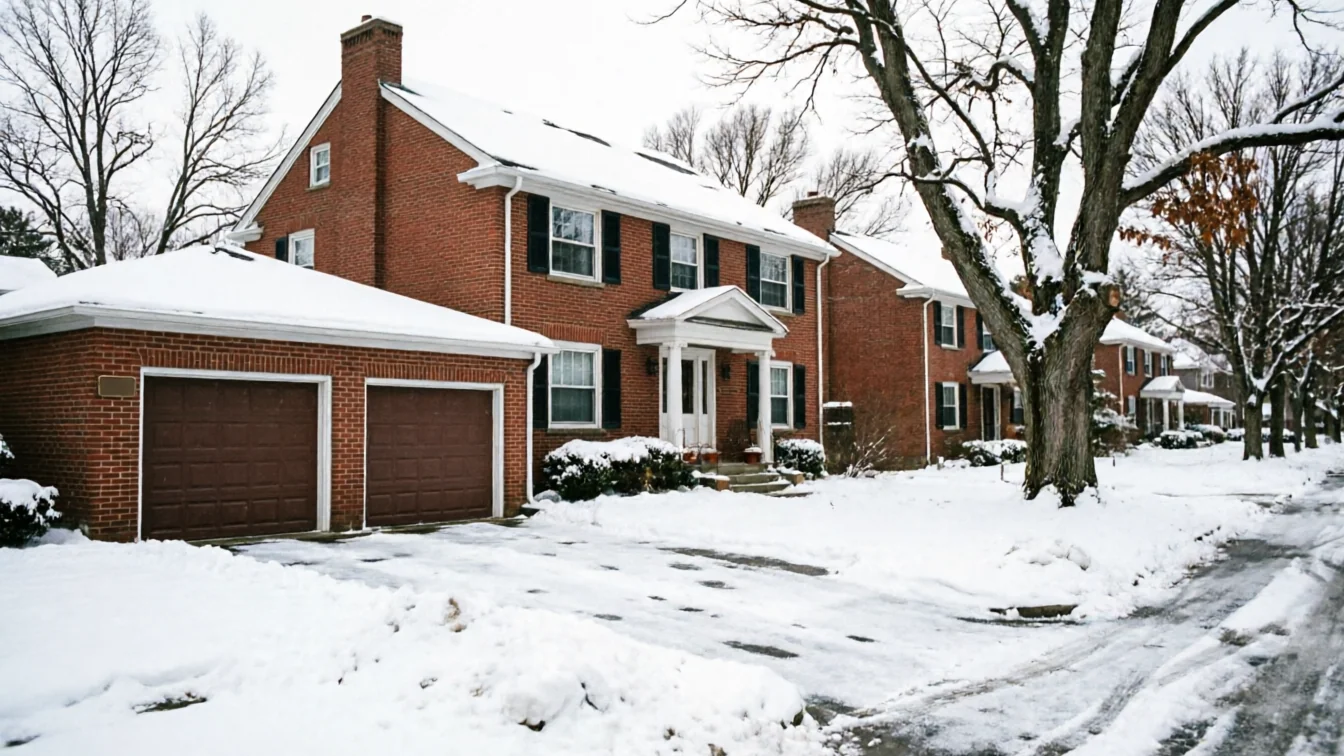
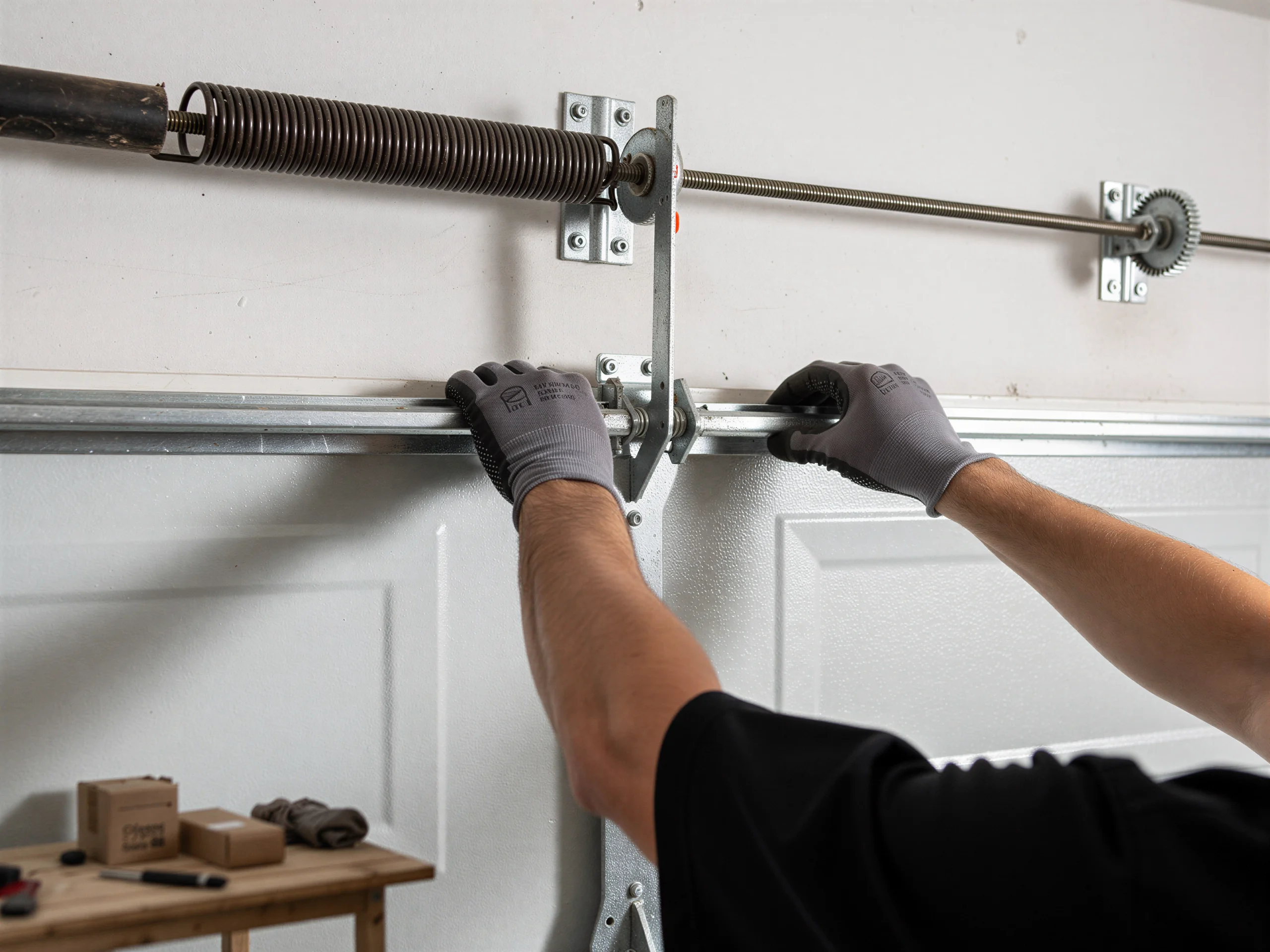
Connecticut's winters are classified as a severe cold climate zone, and that matters for spring life more than most owners realize. Steel contracts in the cold, and a torsion spring that's already near the end of its wind-cycle count is far more likely to snap on a sub-zero morning than a mild one. In a town where most houses date to 1972, a lot of original or first-replacement springs are now past 45 years old, well beyond the rated cycle life regardless of how little the door gets used. Add in the freeze-thaw swings this area sees, which stiffen grease and corrode spring coils from the inside out, and you get a predictable pattern: calls spike after the first hard cold snap each winter. It's not bad luck - it's steel fatigue meeting a region that stresses it harder than most.