
Six decades of cycles
That matters because a torsion spring from a mid-60s build has had roughly six decades of cycles on it, and most were never upsized when heavier insulated doors replaced the original lightweight panels.
East Haven, New Haven
East Haven's housing stock dates to 1966, a run of homes built with torsion springs rated for loads that have since changed. We cover spring repair here from our New Haven base, 4 miles out.
Warning signs
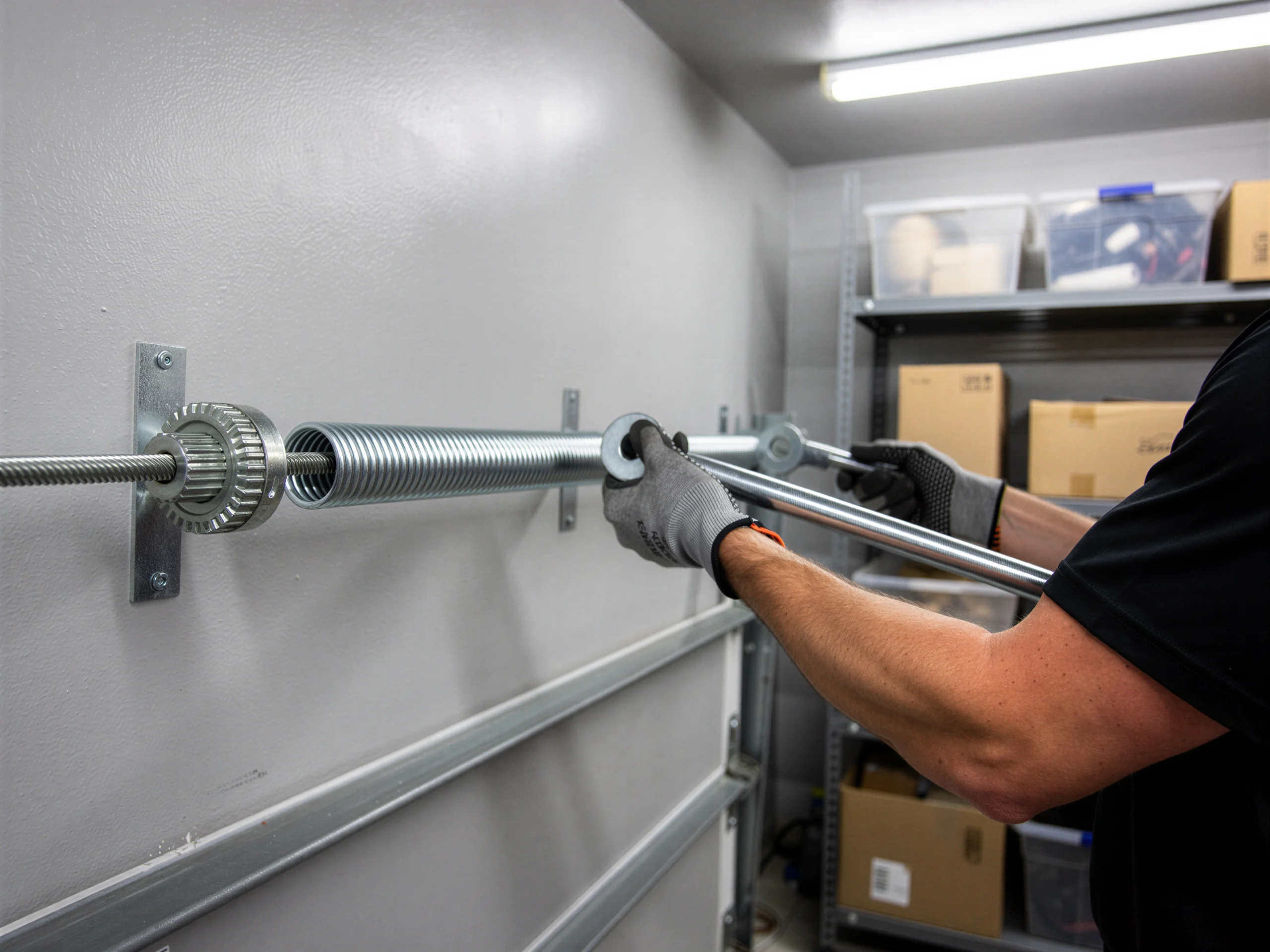
East Haven's median home was built around 1966, which puts most of the town's garage doors in the first wave of torsion-spring installs rather than the older extension-spring setups you still see on pre-war houses closer to the shoreline.
That matters because a torsion spring from a mid-60s build has had roughly six decades of cycles on it, and most were never upsized when heavier insulated doors replaced the original lightweight panels.
The failure pattern we see is a spring that's sagged and gone slack rather than one that's snapped clean - the door feels heavy, the opener strains and groans, and sometimes the cable jumps the drum because the spring isn't carrying its share of the weight anymore.
Connecticut's cold winters add a second stress: steel contracts in low temperatures, and a spring already near the end of its coil life is more likely to let go on a January morning than a mild one. If your door slams down hard or won't stay up on its own, that's a tired spring, not a track problem, and it's worth checking before the cable or drum takes damage too.
Our process
We come out from New Haven, about 4 miles to East Haven, so there's no local branch to call - just a truck stocked for the spring sizes common to this era of house.
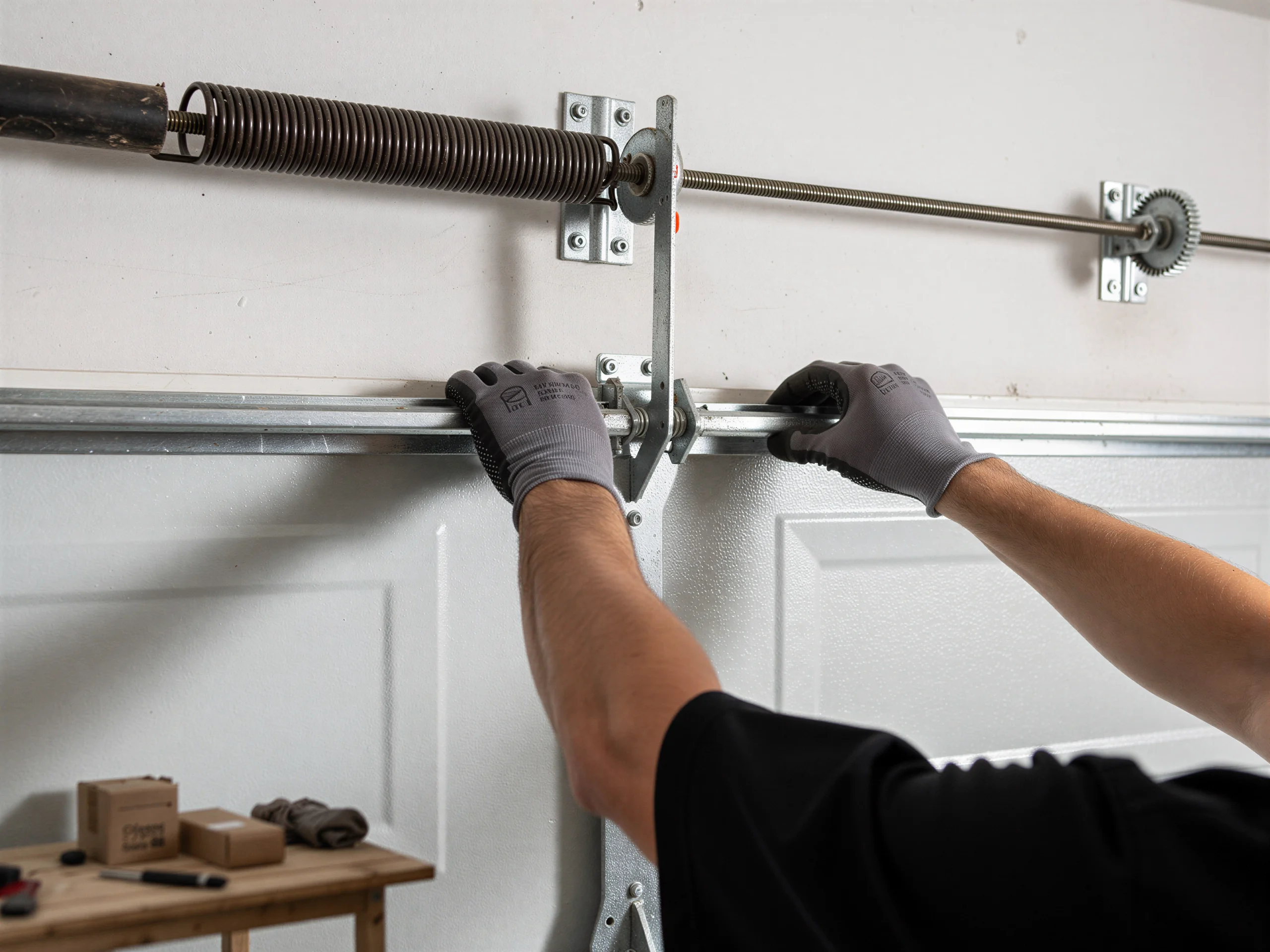
On a 1966-built garage, we're usually dealing with a single torsion spring on a single-car door or a pair on a double, and the first job is measuring the wire gauge, coil length, and inside diameter against the actual door weight, not just swapping in whatever matches the old part.
A lot of these doors were upgraded to heavier insulated panels at some point without the spring being re-rated, which is a big reason the old one wore out early. We replace both springs on a double-spring setup even if only one has failed - the other is the same age and close behind it.
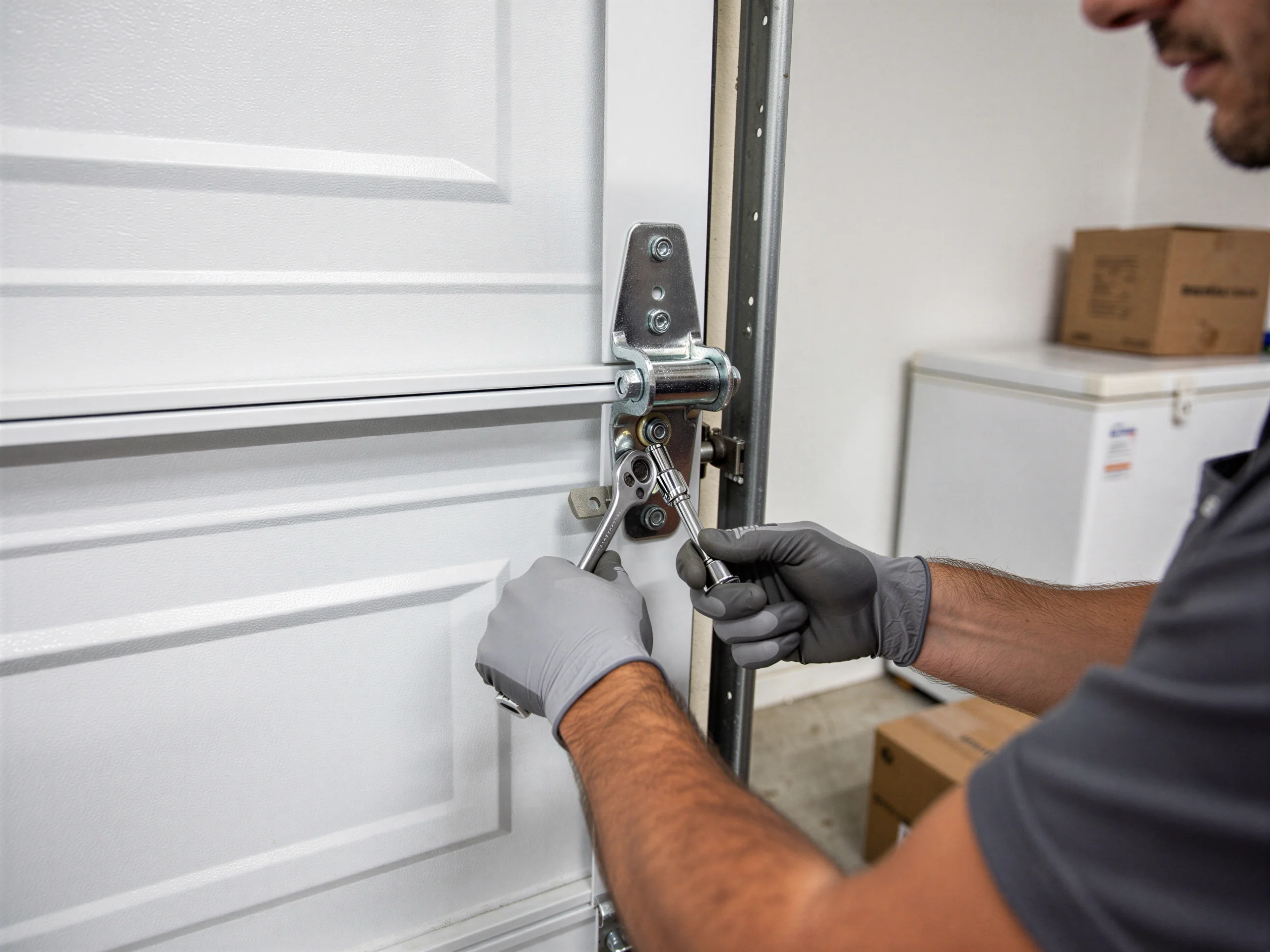
Cables, drums, and bearing plates get checked at the same time, since a spring failure under load is often what frays a cable or chips a bearing. One honest limit: if the torsion tube or the header bracket has rusted or bent, that's a structural repair beyond a spring swap, and we'll tell you before starting rather than after.
Timing
A standard torsion spring replacement on an East Haven single-car door is usually a same-visit job once we're on site - there's no waiting on the part if it's a common size, which most of these 1960s-stock doors use. Double doors with two springs take a bit longer since both get replaced together. Where the schedule stretches is parts availability for less common spring sizes or for the heavier-duty torsion setups found on wider two-car doors added during later remodels; those sometimes need to be ordered in. We'll tell you on the spot which category your door falls into once we've measured it, rather than quoting a time before we've seen the hardware.
DIY or pro
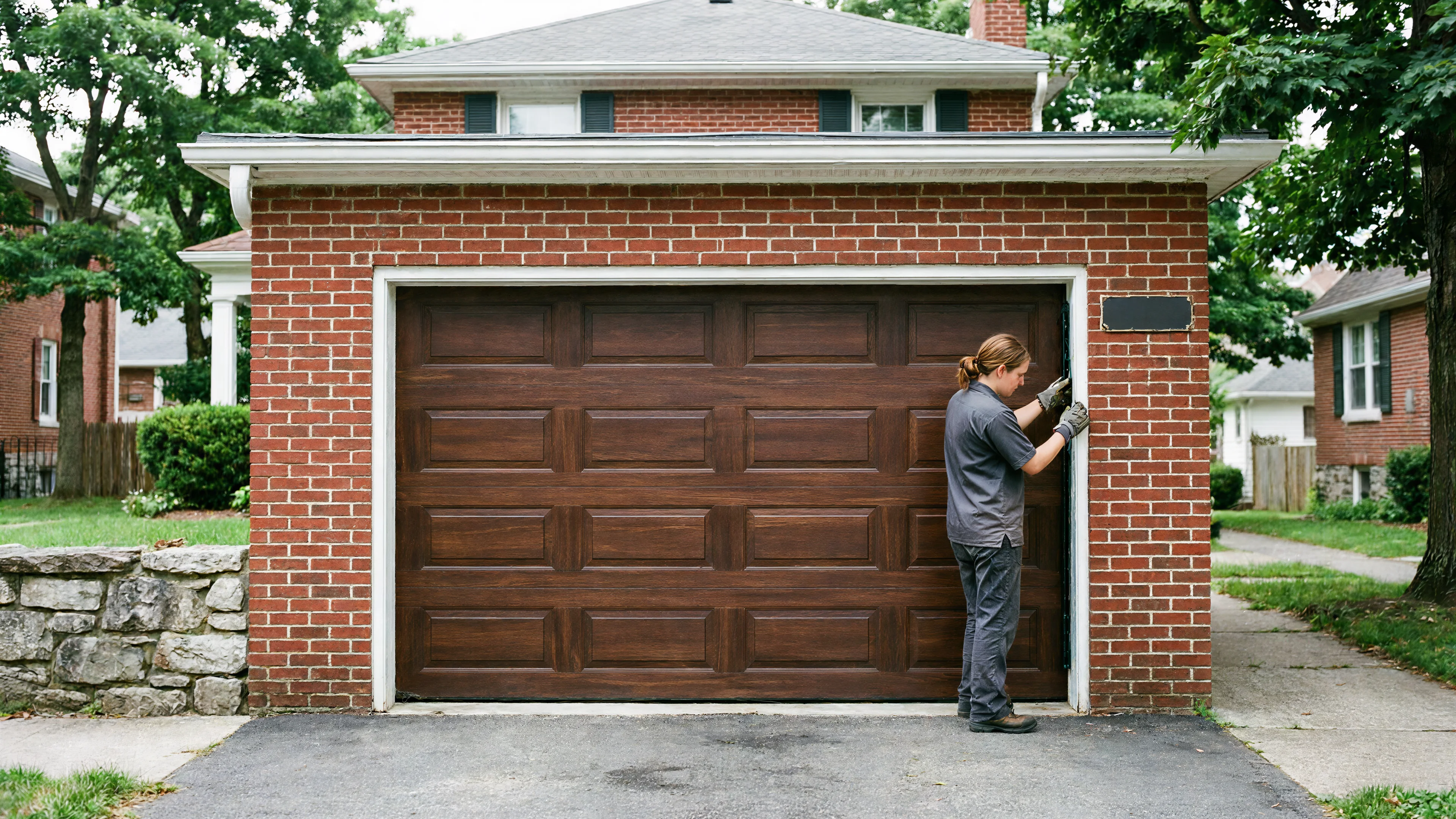
A torsion spring is under real tension even when the door looks still, and winding or unwinding one without the right bars is how people lose fingers or end up with a loose spring whipping across the garage.
This isn't a repair we'd talk a homeowner through over the phone. What you can safely check yourself is whether the door is unbalanced - disconnect the opener, lift the door halfway by hand, and see if it holds position or drops.
If it drops, the spring is going or gone, and it's time to call rather than keep running the opener against it, which just adds strain to the motor and the cables.
Replacing cables and bearings at the same visit as the spring is usually the better move cost-wise than doing them separately later, since the labor to access them is already spent.
Questions
Most East Haven homes were built around 1966, putting the original or first-replacement torsion spring at or past its expected cycle life. Cold winter mornings add contraction stress to steel that's already fatigued, which is why these springs often let go in freezing weather rather than mid-summer.
No. We're based in New Haven and drive out to East Haven, about 4 miles away, for spring repairs. There's no local depot here, just a truck stocked for the common spring sizes found on this town's housing stock.
If your door has two torsion springs, we replace both even when only one has broken. They're the same age and under the same load, so the surviving spring is usually close to failing too, and doing one at a time means paying for the same labor twice.
Yes. A number of East Haven garages from the 1966-era wave had lightweight original doors swapped for heavier insulated panels at some point without the spring being re-rated for the added weight, which shortens the spring's working life considerably.
Explore more
Ready when you are
New Haven Garage Door Pros repairs and installs garage doors, springs and openers in New Haven, CT and the surrounding area.