
Mid-travel binding spot
You'll sometimes feel it before you hear it: the door hangs for a half-second at the same spot on every cycle, right where a worn roller binds against the track instead of rolling through it.
Branford Center, New Haven
Roller replacement for Branford Center, CT garage doors on houses built around 1969, six miles from our New Haven shop, built for Connecticut winters.
Booking
Branford Center sits six miles east-southeast of our New Haven shop, which is a short enough run that a roller job here doesn't get squeezed onto the end of the day after three bigger calls elsewhere.
When you call, we're scheduling around a six-mile drive, not a twenty-minute dash down the street, so expect a window rather than a knock-on-the-door-in-ten-minutes promise. With about 3,261 households in Branford Center, this isn't a neighborhood where we're swapping rollers on a different house every single day - it's one stop on a route that covers a service area of 340,618 households total.
More on roller replacement across the territory covers how the job works more broadly; this page is about what happens specifically on a door built around 1969 in Branford Center. For the full rundown of what we handle for doors in town, see garage doors in Branford Center.
Bring us the make and rough age of your door if you know it - on houses this old, knowing whether the track is steel or aluminum before we show up saves a trip back to the truck for the right roller stem.
Local causes
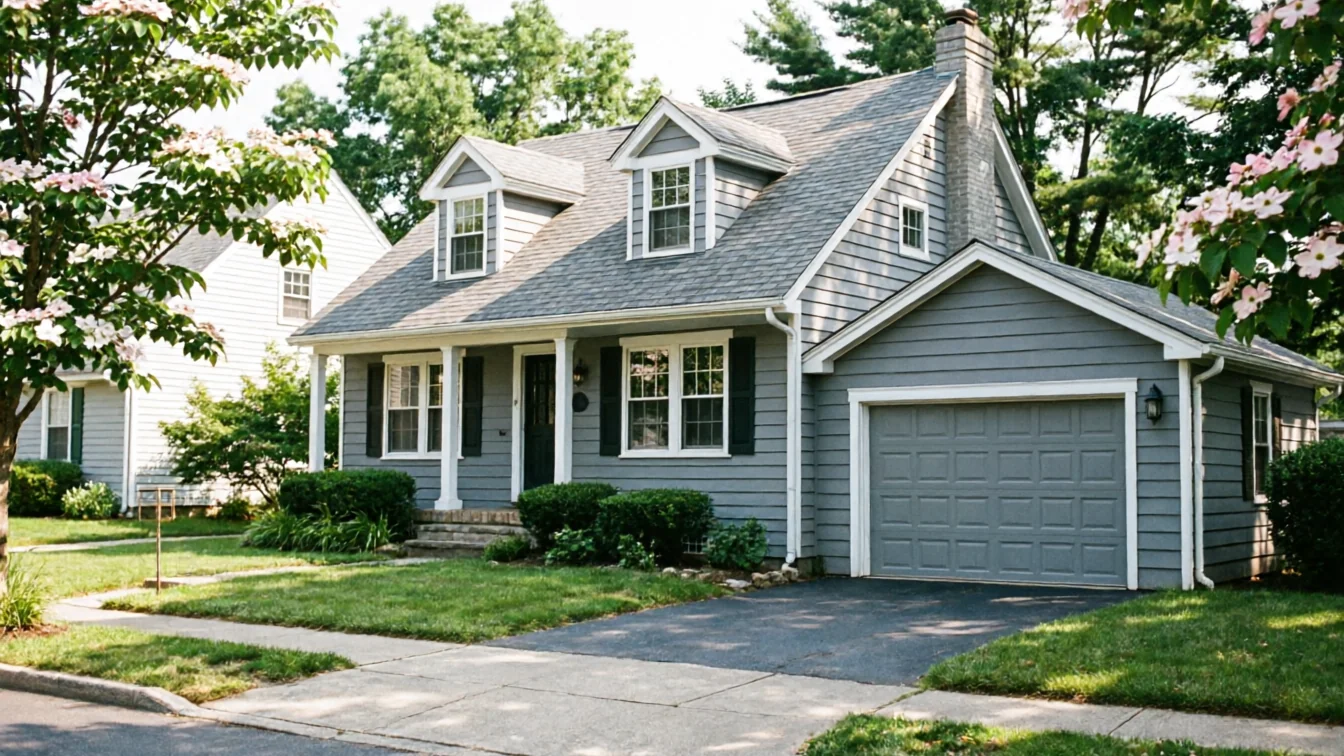
Most of Branford Center went up around 1969, which lines up with the 1954-1986 stretch that covers most of this service area's 41 named sections, median build year 1972. Houses from that run almost all shipped with steel rollers riding directly on steel track, no nylon, no sealed bearings - just a ball bearing in a steel wheel. This part of Connecticut sits in a cold-weather climate band with hard freeze-thaw cycles every winter, and that's rough on old steel: the grease in the bearing stiffens, water gets into the pitting on the wheel, and the roller starts riding flat instead of round. Branford Center's median household income sits at $70,391, well below the $113,750 median across the wider service area we cover, which is part of why plenty of owners here keep running original hardware a few years longer than they might otherwise - a full roller and track job competes with other spending in a tighter budget. Some owners here upgraded to nylon rollers at some point, usually when a spring got replaced and whoever did the job swapped the rollers too, but plenty of doors are still running on what they shipped with.
Warning signs
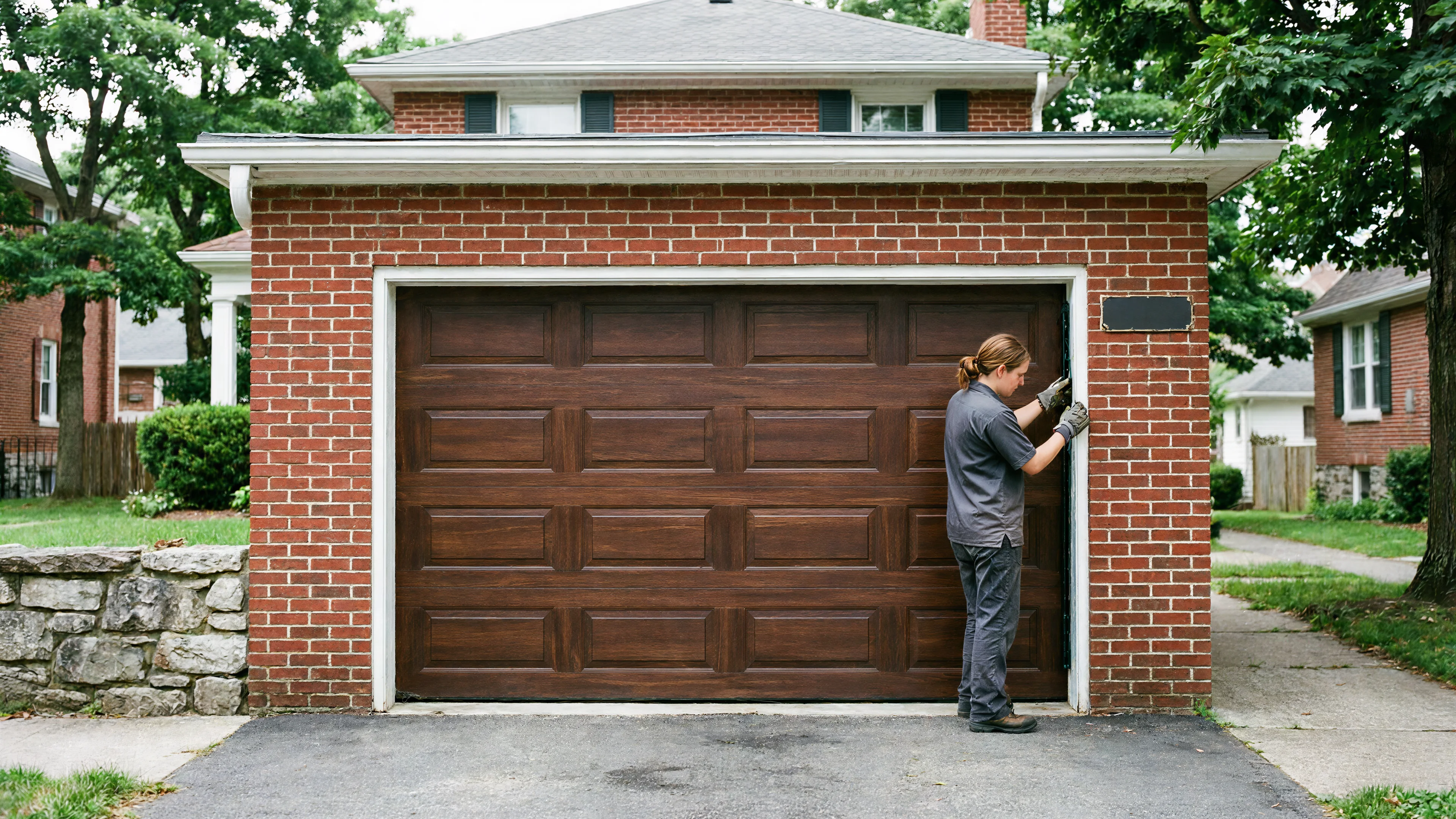
The usual tell is noise - a grinding or rattling that gets louder as the door moves, worse at the top of the track where steel rollers on a 1969-era door have done the most miles of flat-spotting.
You'll sometimes feel it before you hear it: the door hangs for a half-second at the same spot on every cycle, right where a worn roller binds against the track instead of rolling through it.
On doors with the original track, you'll often see rust bloom right where the roller sits when the door's closed overnight - that's moisture sitting in the same spot through a cold snap. Cracked nylon rollers show differently: less noise, more vibration, and sometimes a wheel that's visibly split if you look close with the door open.
Either way, it's rarely one roller. If one's gone, the others on that track are usually close behind it, just not as far along, and we'll point that out on site rather than wait for you to call us back next month about the second one.
Timing
A straight roller swap - all rollers, same door, no track replacement - is a short job once we're on site, usually finished well within the hour.
If the track itself is pitted or bent from riding against a flat-spotted steel roller for a few years, that adds time, because now we're pulling track sections and resetting the door's travel, not just swapping wheels.
We don't give a fixed number here because it depends on what we find once the door's open - a 1969 build with original hardware sometimes hides a bent section behind the header that you can't see from the garage floor.
What we can tell you is that a roller-only job doesn't need parts ordered in most cases; we carry standard steel and nylon rollers on the truck. Odd-stem lengths from older non-standard doors are the exception, and those sometimes mean a second trip.
Our process
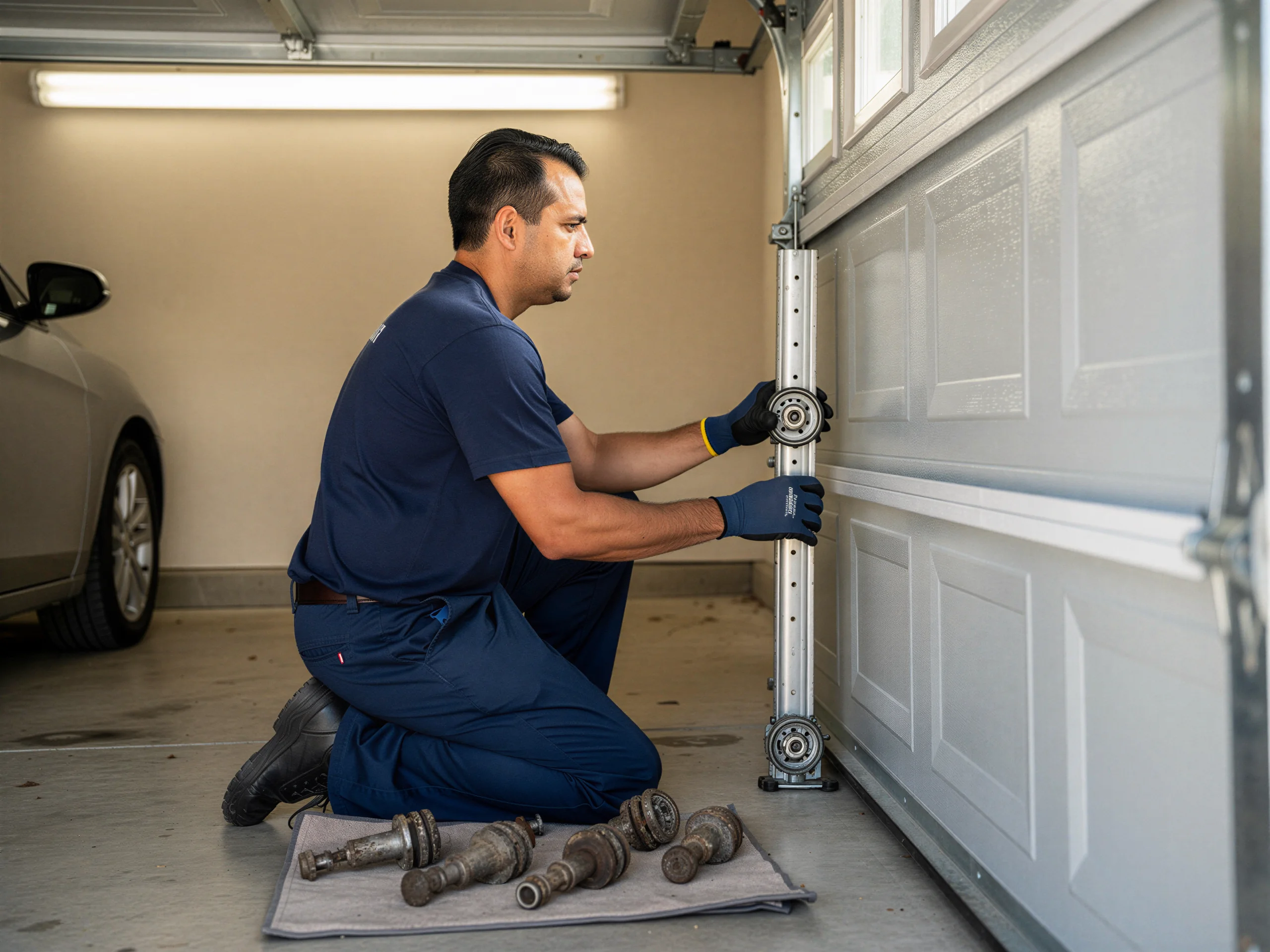
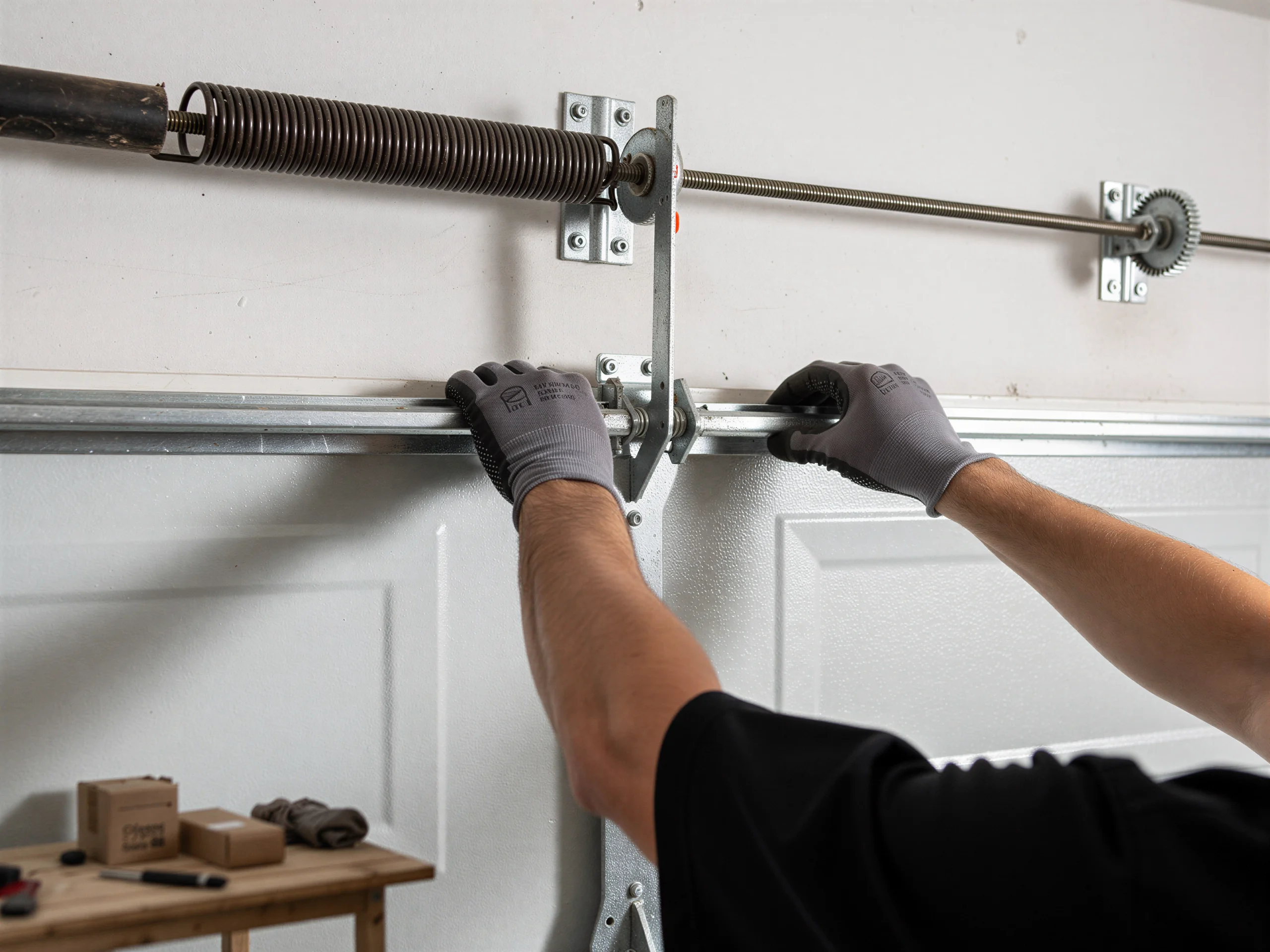
We pull the door down to the floor, release tension on the springs so the section's not under load, and walk each roller out of its track one at a time rather than dropping the whole door apart.
On a steel-track house from this era we check the track for flat spots and rust pitting while we're in there, because a new roller riding in a pitted track just wears the same way again. If the track's still true, new rollers go in, we run the door through a full cycle by hand to check for binding, then power-cycle it a few times before we call it done.
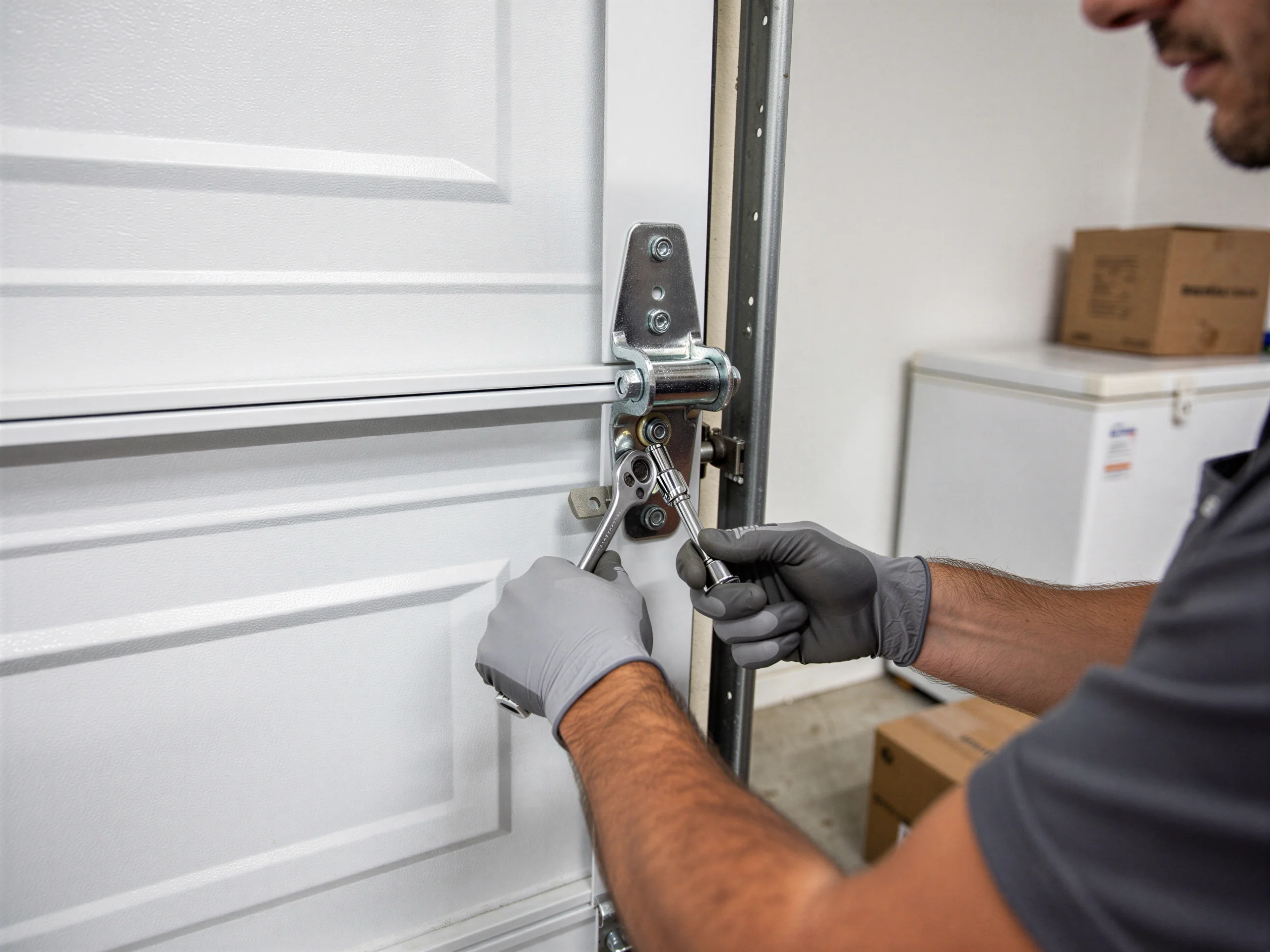
If you're switching from steel to nylon, we check hinge and bracket wear too - a nylon roller is quieter but it's a different stem diameter in some cases, and loose brackets after a roller swap are how a job comes back on us.
We don't replace a roller and leave a rusted track that's going to eat the new roller in two winters; if the track needs replacing, we'll say so and quote it separately rather than mask it with new wheels.
Watch-outs
The honest limitation: if the track is bent, not just worn, a roller swap doesn't fix the underlying problem, and we'll tell you that instead of selling you rollers you don't need. On some of the older Branford Center doors we've seen stems and wheel sizes that don't match current standard stock - galvanized track installed in the late 1960s sometimes runs a slightly different rail width than what ships today, and matching an odd roller to an odd track can mean a short delay while we source the right part instead of forcing a standard one in. Cold doesn't help diagnosis either: grease that's stiff at 20 degrees can mask how bad a bearing actually is until the door's been run a few times and warmed up. We'd rather tell you a job needs a return trip than force a part that's going to come loose in a month. None of this is common, but on a 1969-built door with original hardware, it's common enough that we mention it before, not after.
Questions
We don't quote a flat price here because it depends on whether the track needs attention too, and on steel vs nylon rollers. A straight roller-only swap is priced on site once we've seen the door and track condition - on a 1969-built house, that's usually clear within a few minutes of pulling the door down.
Yes, we can do a partial swap, but on a door this age we'll usually flag that the other rollers on the same track are close behind the ones that failed. If they're not cracked or flat-spotted yet, we'll leave them and let you decide - we won't push a full set replacement you don't need.
This area sits in a cold-weather climate band with regular freeze-thaw cycles, and that's harder on steel rollers than on nylon ones - stiff grease and moisture in pitted steel wheels is a common failure pattern we see on older doors through the winter months.
We run out of New Haven, about six miles away. That's close enough that a roller job here fits into a normal route without needing a special trip, though we still schedule a window rather than an immediate arrival.
Explore more
Ready when you are
New Haven Garage Door Pros repairs and installs garage doors, springs and openers in New Haven, CT and the surrounding area.