
Monthly manual lift test
Once a month, lift the door by hand with the opener disconnected. If it doesn't stay roughly where you leave it, the springs are losing tension and you're close to a cable or spring failure, not a tune-up.
Hamden, New Haven
Hamden's 1963-era homes carry original torsion hardware most shops don't stock. See what a maintenance visit checks here and why repair often beats replace.
DIY or pro
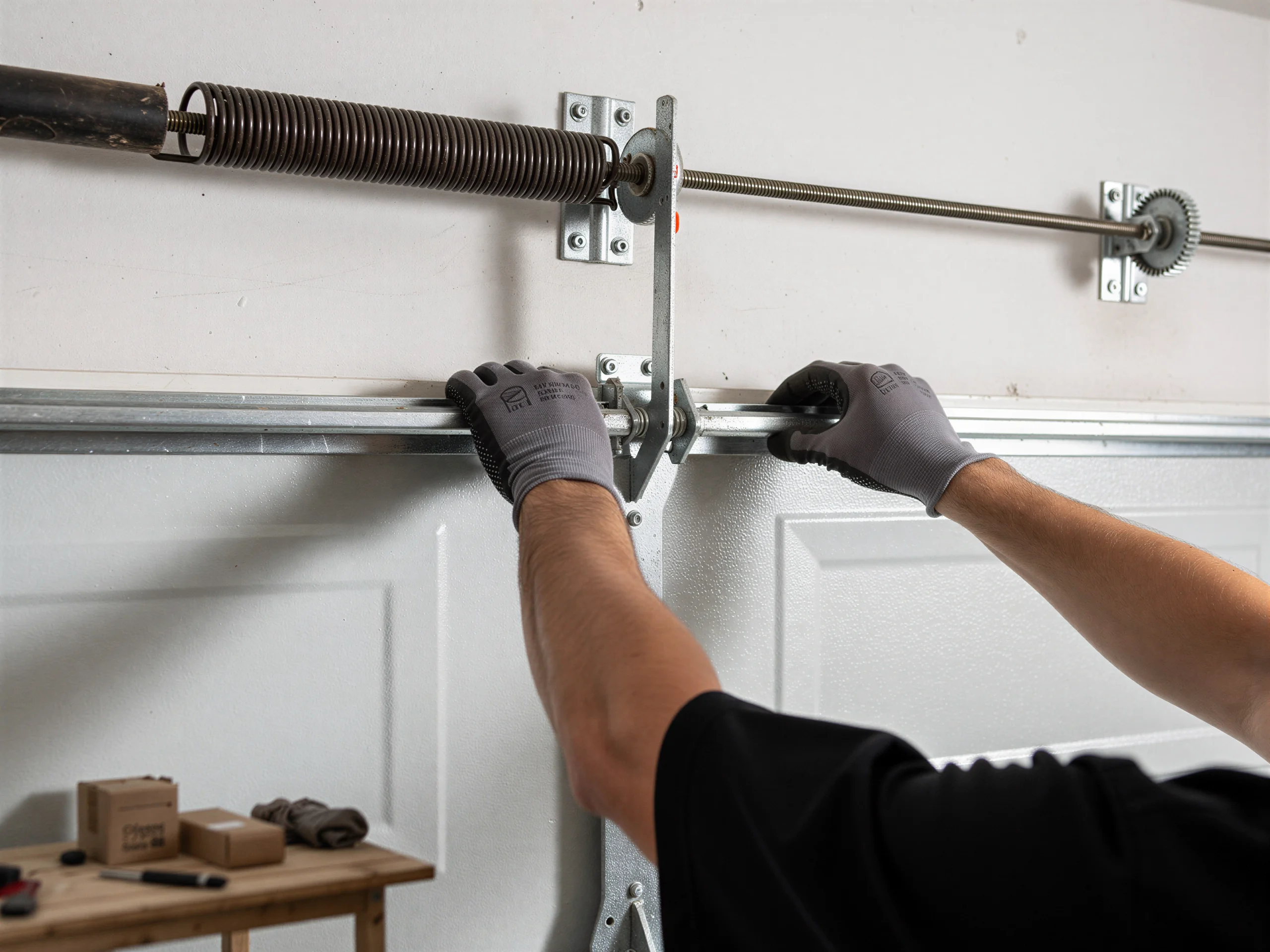
Hamden's median household income sits at $92,176, about 19% below the $113,750 median across the wider service area. That gap matters here because it changes the math on repair versus replace faster than in some neighboring towns - a door that's merely stiff or noisy is almost always worth saving, and a lot of what keeps it running is simple.
Once a month, lift the door by hand with the opener disconnected. If it doesn't stay roughly where you leave it, the springs are losing tension and you're close to a cable or spring failure, not a tune-up.
Wipe the tracks, don't grease them - a dry rag and a vacuum for the grit does more good than a can of spray lubricant, which just gathers dust and grime on rollers. Check the weatherstrip at the bottom for cracking, since Hamden's houses from the early 1960s often still have the original jamb seals.
What you shouldn't touch: the torsion spring itself. It's under enough stored force to break a wrist or worse, and on houses this old the spring is sized for hardware nobody stocks on a shelf anymore. That one's ours, not yours.
Booking
We cover Hamden from our New Haven base, about 6 miles out, along with the rest of the towns inside this service area - from Downtown New Haven out through Woodbridge, Orange, and North Haven. There's no separate Hamden branch; the truck comes from New Haven for every visit, so we don't promise a same-day slot just because the drive is short.
What we ask for up front: the rough age of the house, whether the door has ever been serviced, and whether it's a single or double. Houses built around 1963 - which is where Hamden's housing stock centers - often still run the opener and spring setup that came with the original installation, so knowing the build era before the truck shows up saves a trip back for the right spring size.
Our process
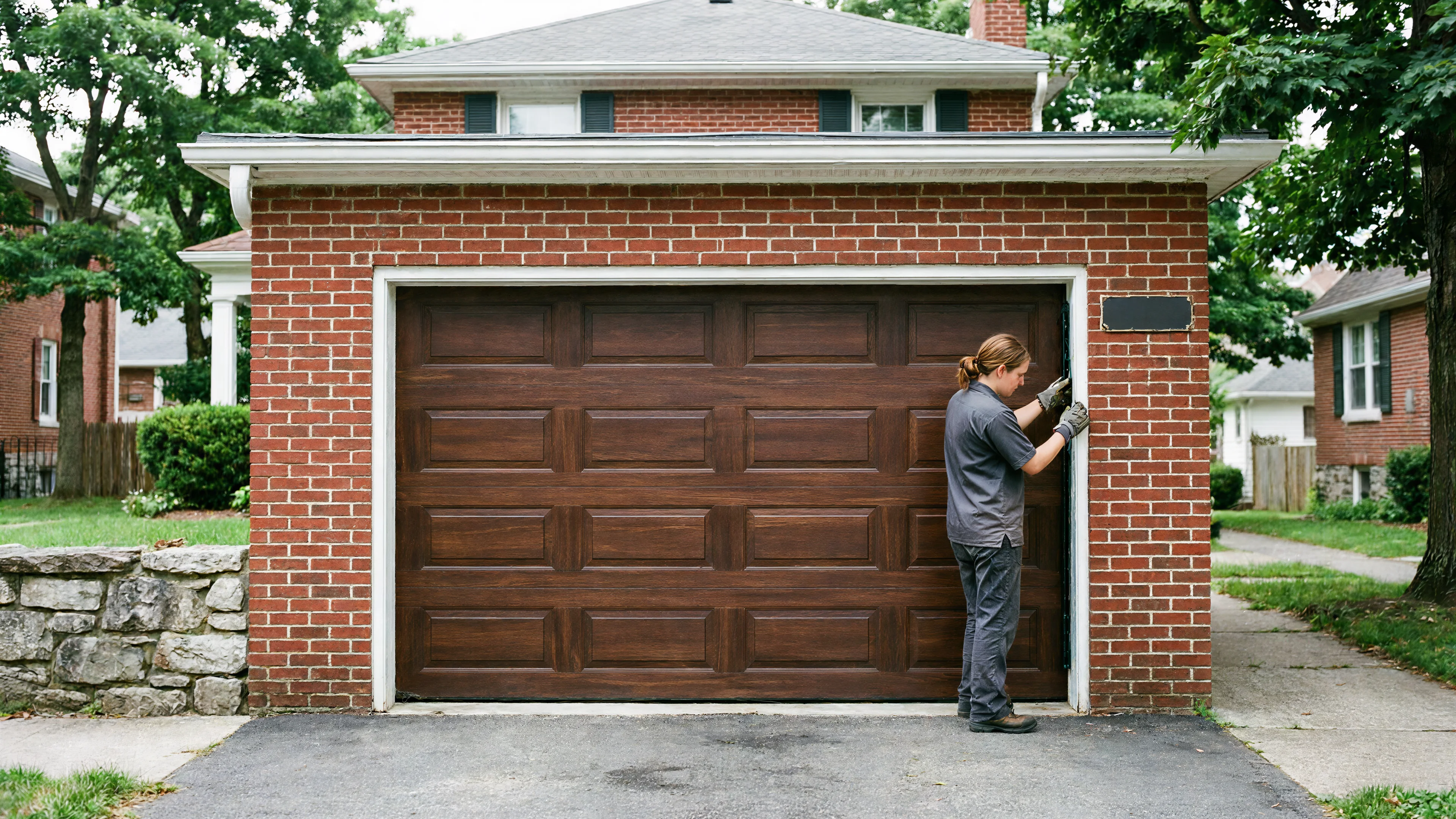
A maintenance visit isn't a repair call, but on a lot of Hamden doors the two blur together fast. We start with the track alignment and the bottom brackets, since houses from this era were built before double-insulated panels were standard, and the original steel sections have had six decades to settle on their tracks.
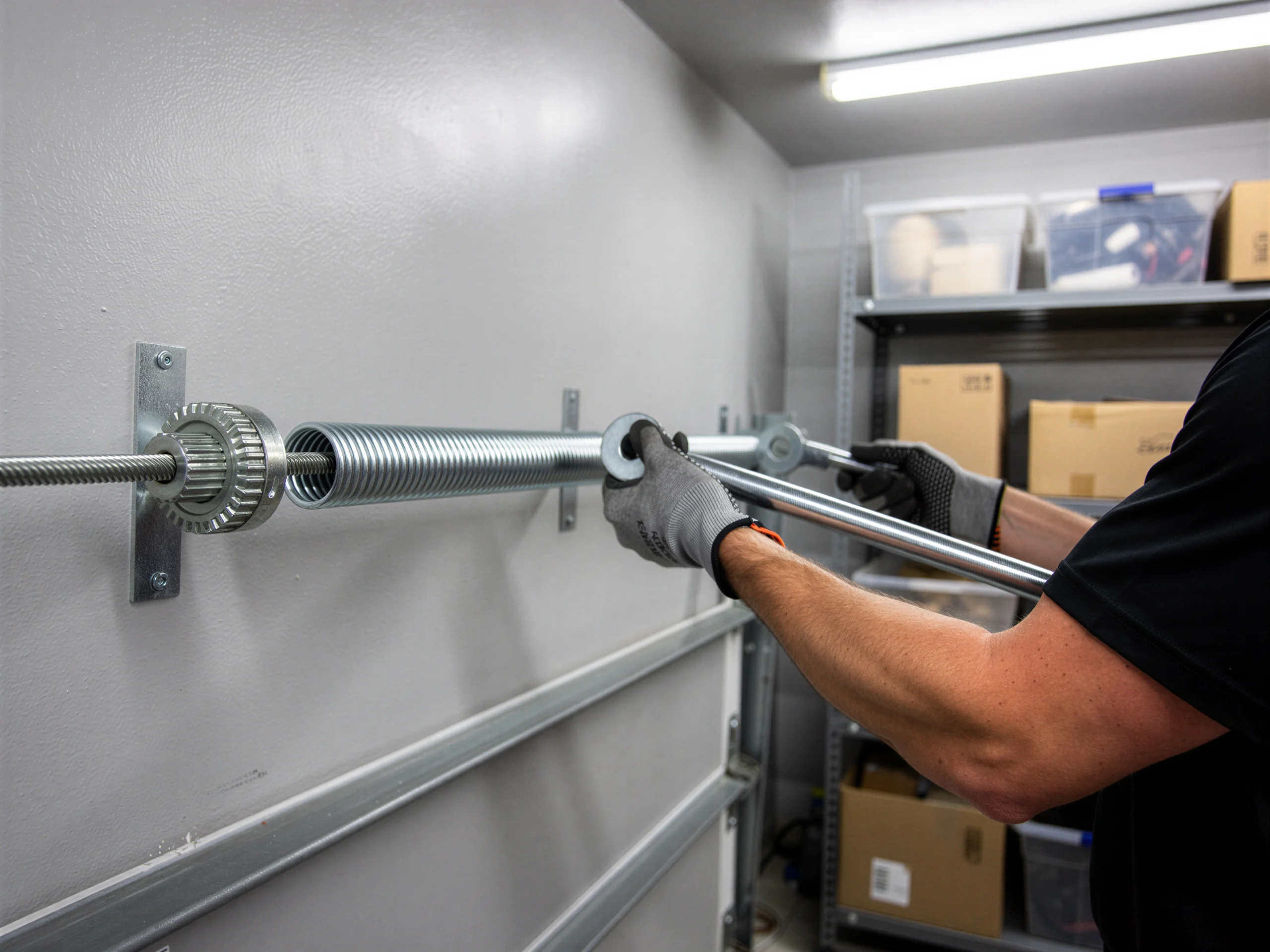
We check torsion spring tension against the door weight, not against a guess - an underpowered spring is the single biggest reason an opener motor burns out early.
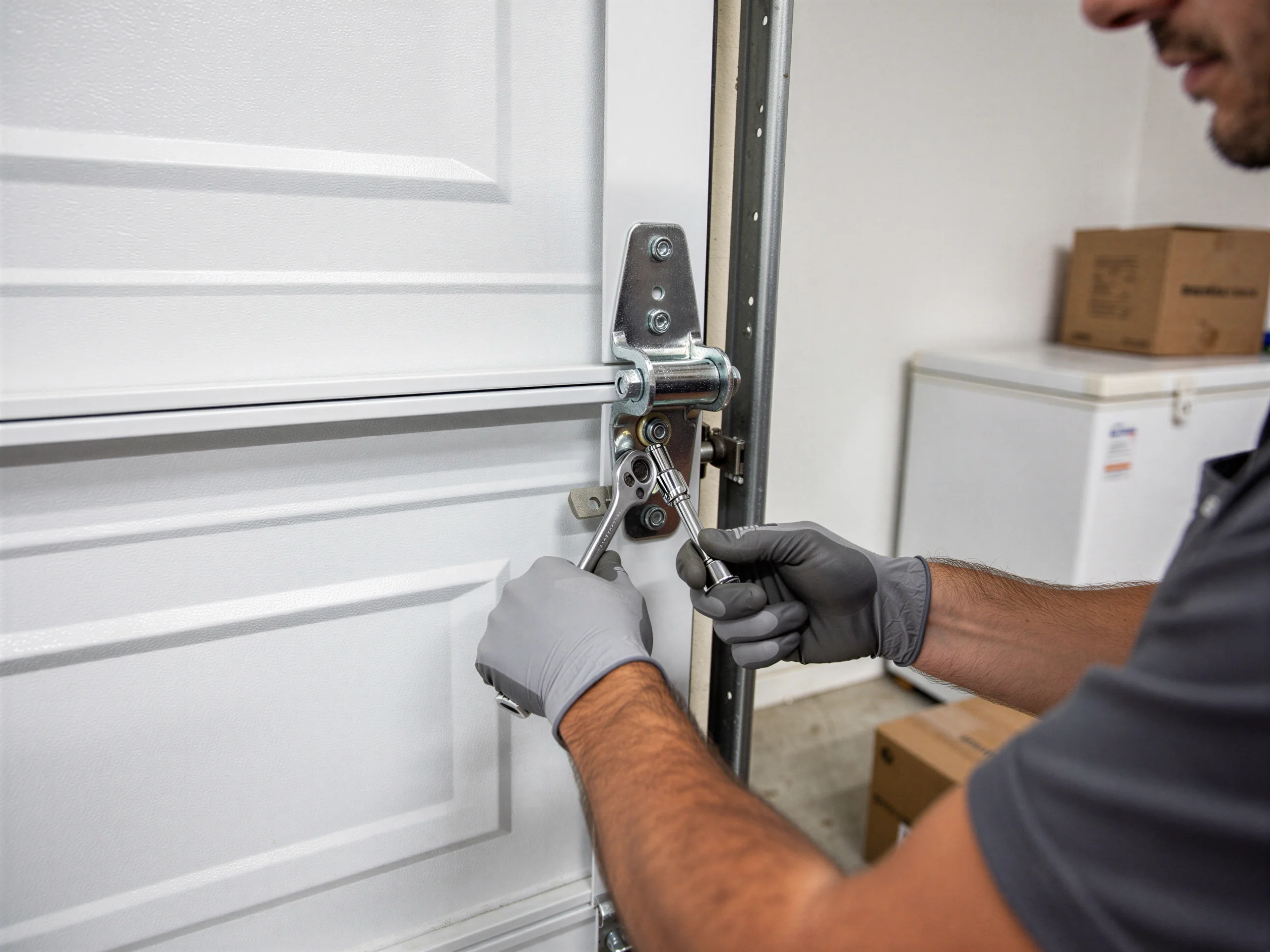
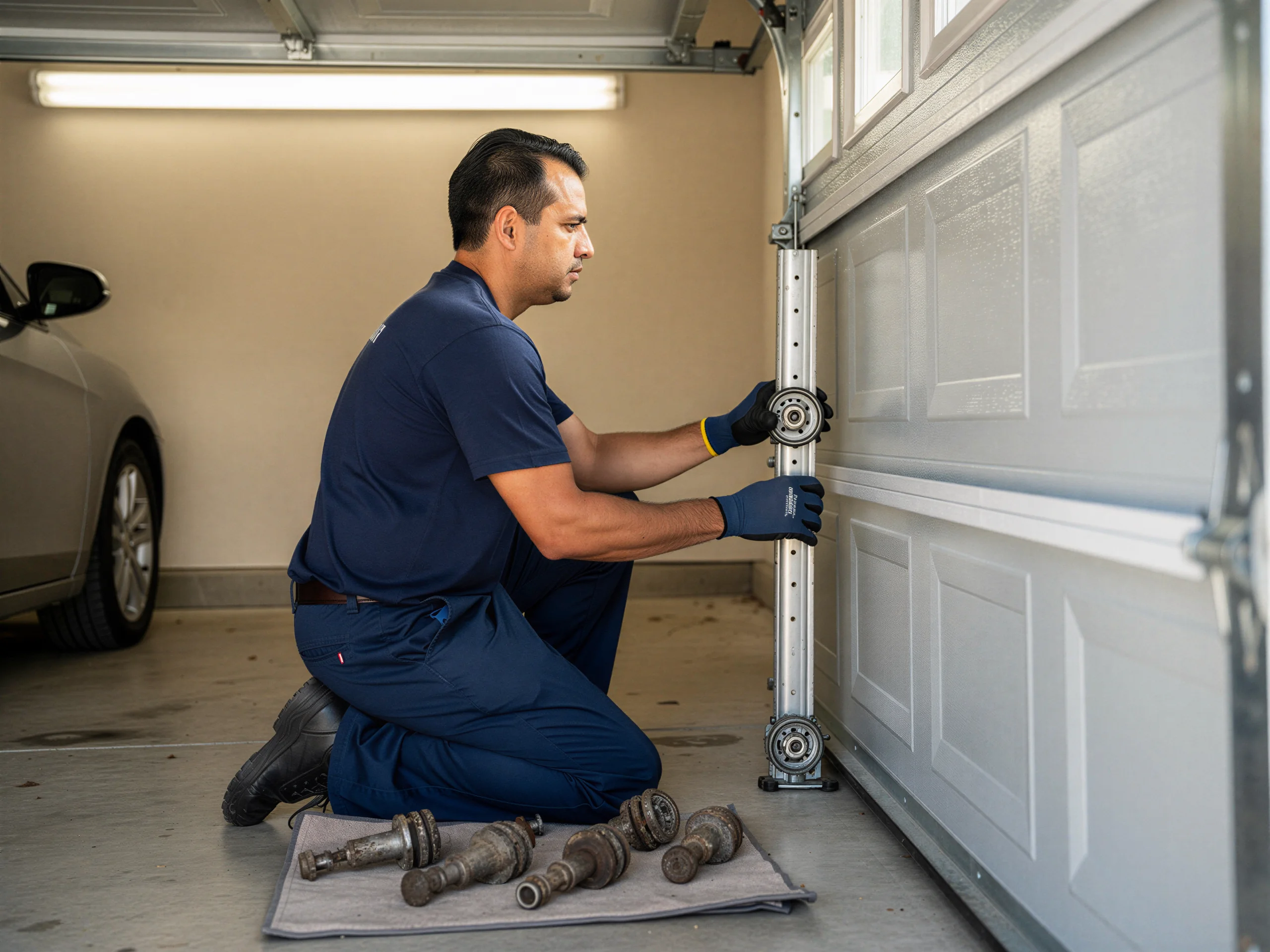
Rollers get inspected for flat spots and cracked nylon, and we re-torque loose hinges rather than just lubricating around the problem. If the cable fraying we find is more than cosmetic, we say so before anything is reassembled rather than after.
The honest limit here: if a door's torsion hardware is original to a 1963 build and a spring has already let go, we're often better off replacing the spring pair and the bottom brackets together rather than patching one side, since mismatched spring age on a double door throws the whole balance off again within a year.
Warning signs
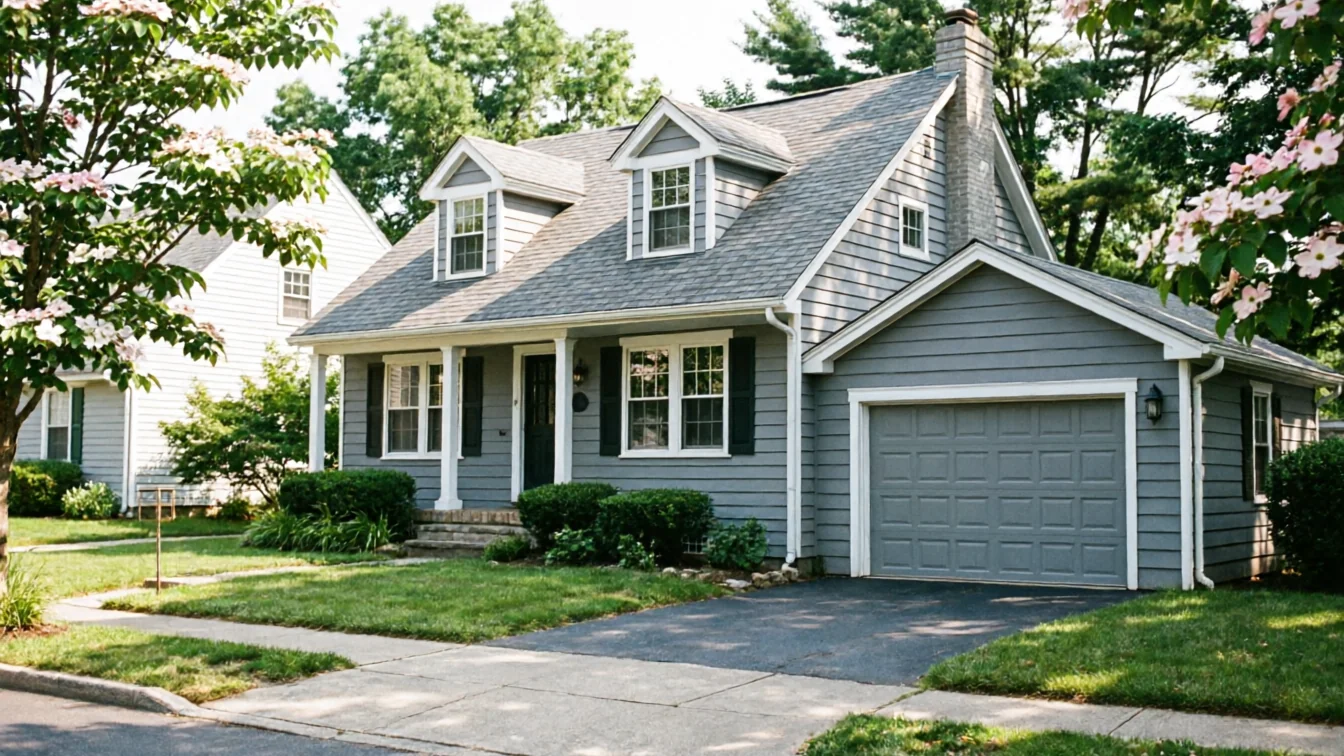
On houses built in Hamden's main construction era, the first sign is rarely a door that won't open at all - it's a door that opens unevenly, dragging on one side a half-second before the other catches up. That's a spring losing tension asymmetrically, and it's common on original torsion setups that have never had the springs replaced as a pair.
The second pattern: a grinding or popping sound right as the door passes the halfway point, which on 1960s track hardware usually means a bent track flange rather than anything wrong with the opener. Owners often replace the opener motor first because that's the part that's loud, when the actual fault is six feet lower on the track.
Timing
A straightforward maintenance visit - spring tension check, track alignment, roller and hinge inspection, weatherstrip check - moves at the pace of the door in front of us, not a fixed clock.
Original hardware from the 1963 era sometimes takes longer simply because the fasteners are harder to turn after sixty years, and a stripped bracket screw costs a few extra minutes to drill and replace rather than force.
If we find something that needs parts we don't carry on the truck that day - a specific spring wind length for an older double door, for instance - we'll say so on the spot rather than improvise with a near-enough substitute that throws the balance off.
On the truck
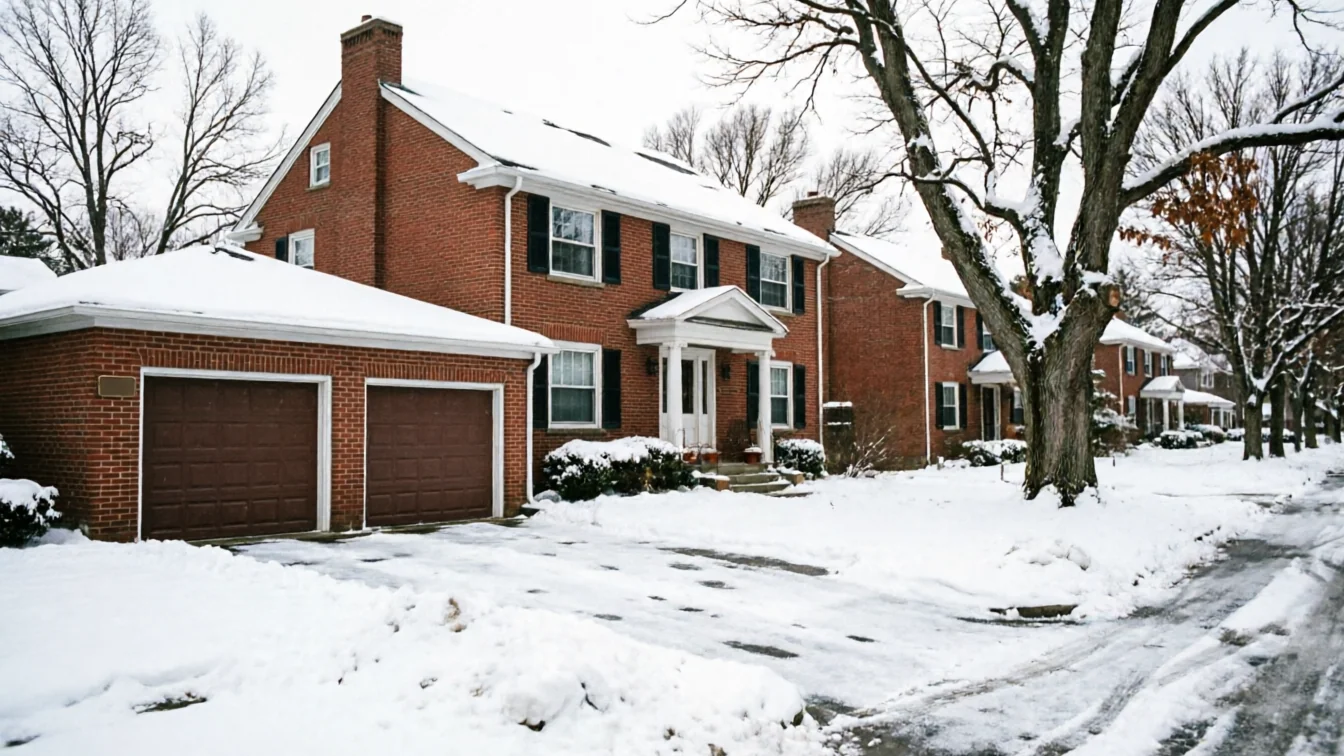
Because so much of Hamden's housing stock dates to the early 1960s, the truck carries torsion springs sized for the heavier, single-layer steel doors common to that build era, not just the lighter insulated panels found on newer construction elsewhere in the service area. We also stock a range of roller types, since nylon rollers on original hardware wear differently than the sealed-bearing rollers used on later installs.
We don't stock every spring wind length for every door ever built - some older or custom sizes get ordered after we've measured the door in person, which is why we're upfront about parts availability before promising a one-visit fix.
Questions
Once a year is reasonable for most houses, twice if the door is original to a 1960s build and hasn't been serviced before. Older torsion hardware loses tension gradually, and catching it on a schedule costs far less than a cable snap or a bent track caught after the fact.
Usually yes. At Hamden's median income, replacing a structurally sound door mainly for cosmetic reasons rarely pencils out - a spring and hardware service on an original steel door commonly extends its life for years at a fraction of replacement cost, as long as the panels themselves aren't rusted through.
We drive from New Haven, about 6 miles away, for every Hamden visit. There's no separate local depot, so we don't offer guarantees tied to being already in town - just a clear estimate of when the truck can get there.
You can wipe them down, but don't spray lubricant directly on the tracks - it attracts grit and makes rollers slide instead of roll. Lubricant belongs on the hinges and rollers themselves, lightly, a few drops at a time, not on the track surface.
Explore more
Ready when you are
New Haven Garage Door Pros repairs and installs garage doors, springs and openers in New Haven, CT and the surrounding area.