
Single-layer opening limits
That matters if you're thinking about doing this yourself. A 1963 opening is almost always built for a single-layer steel door on 7-foot headroom, and the track brackets are lagged into framing that's six decades old.
Hamden, New Haven
New garage doors for Hamden, CT homes built around 1963, sized for Connecticut winters and installed by the New Haven Garage Door Pros crew six miles away.
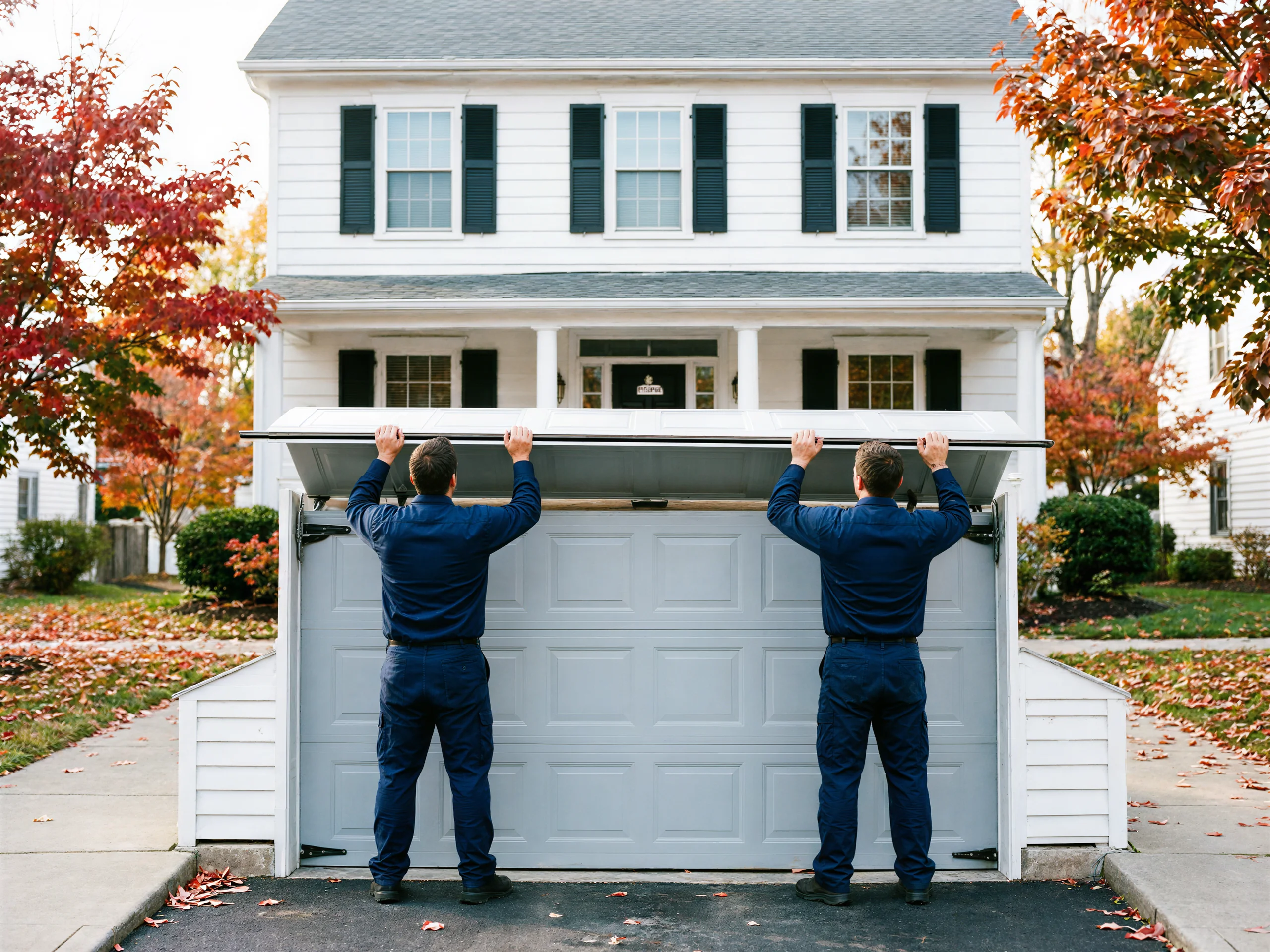
DIY or pro
Hamden has about 23,195 households, and a good share of those garages went up around 1963 - a decade earlier than the regional average of 1972.
That matters if you're thinking about doing this yourself. A 1963 opening is almost always built for a single-layer steel door on 7-foot headroom, and the track brackets are lagged into framing that's six decades old.
Swapping in a modern insulated door off the shelf at a box store often means the opening isn't square anymore, or the header won't take the new hardware without reinforcement. We won't pretend DIY install is impossible - plenty of single-panel garden sheds get a new door with a weekend and a torque wrench.
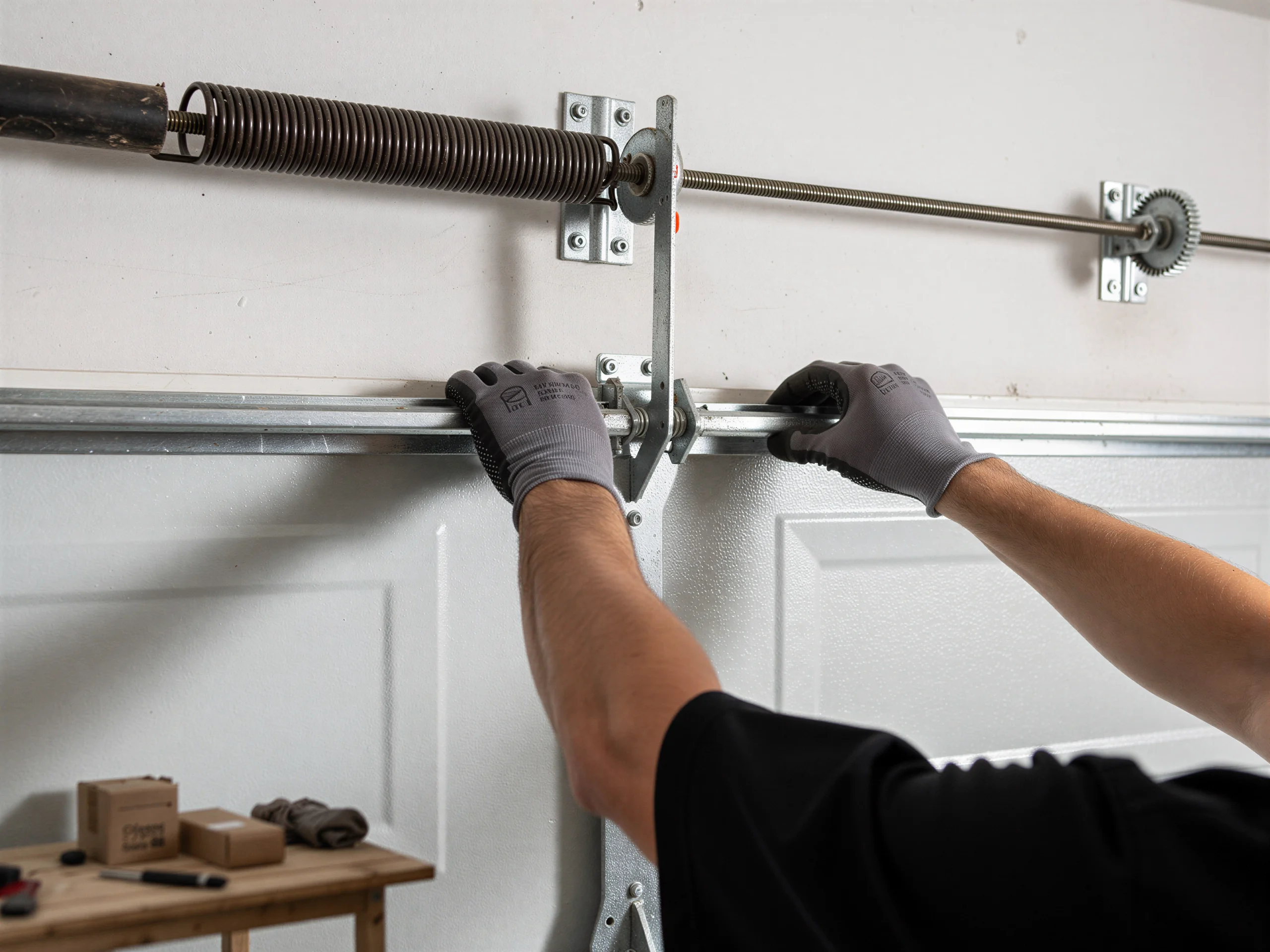
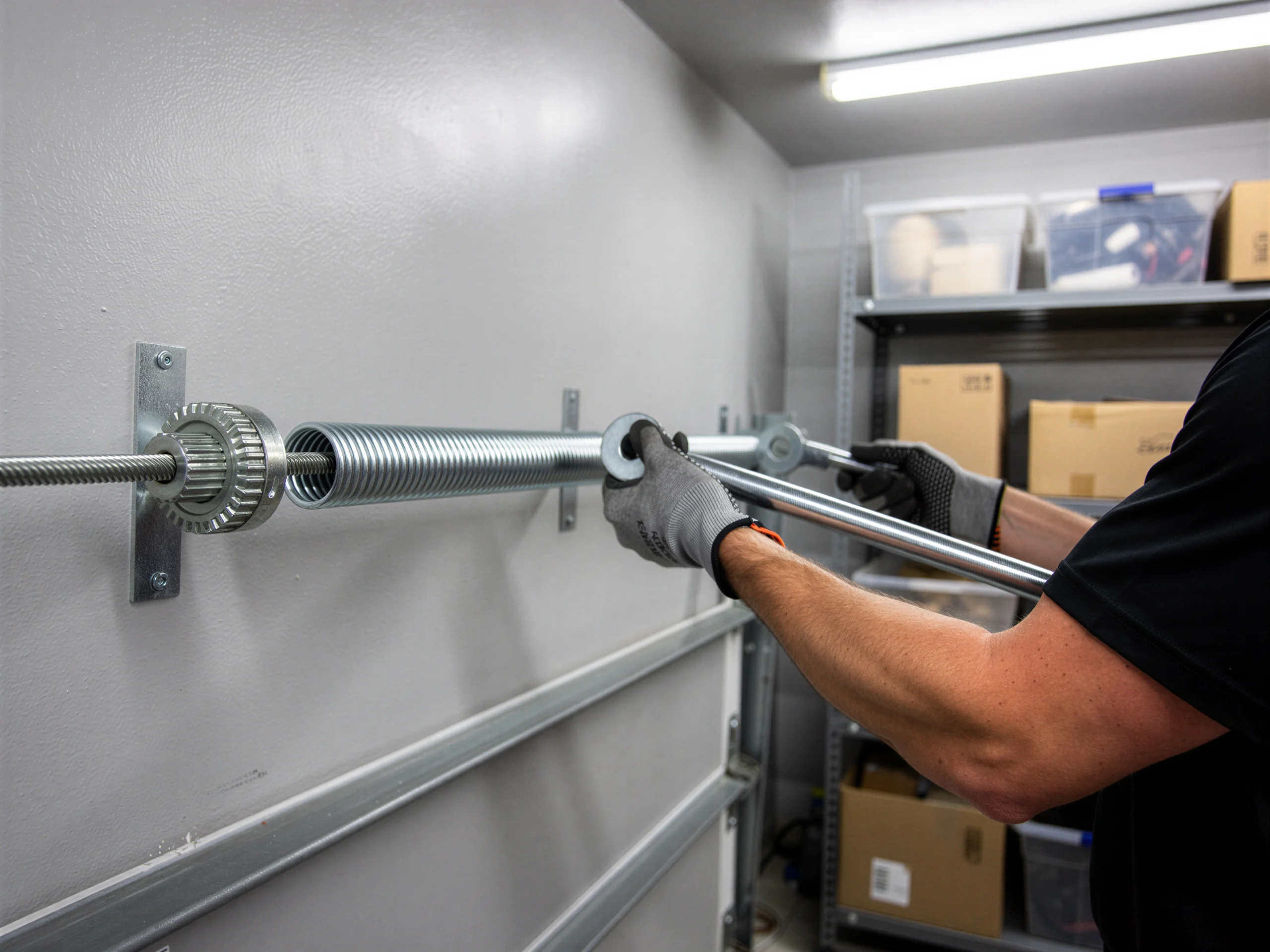
But a double-wide torsion system on an older Hamden header is a different job: the springs are under real load, and guessing the wind-load rating wrong on a door exposed to our winters is the kind of mistake that costs more to undo than it saved. If you're set on doing it yourself, at least have someone who's installed torsion hardware check the header before you hang anything. That one inspection prevents most of the comebacks we see.
Booking
We run installs in Hamden out of our New Haven base, about six miles off. There's no branch office here and we're not going to pretend there is - it's a short haul, not a local depot, and we size the visit around that.
Booking starts with a look at your opening: width, headroom, and whether the house is one of the many in town built in that 1960s window where hardware and framing follow a predictable pattern.
That lets us bring the right door and track kit on the first trip instead of guessing. We measure before we quote, not after, because an opening that's shifted slightly over sixty years is common and it changes what fits.
If you've already got a door picked out from a catalog, bring the model number - it saves a round trip. We cover installation here as one piece of a wider New Haven-area service area; if you're looking at repairs instead of a full replacement, that's a separate conversation and a separate scope.
Our process
Most of what we install in Hamden has to account for two things at once: the age of the opening and the climate band this part of Connecticut sits in - cold winters with real snow load, not the mild version.
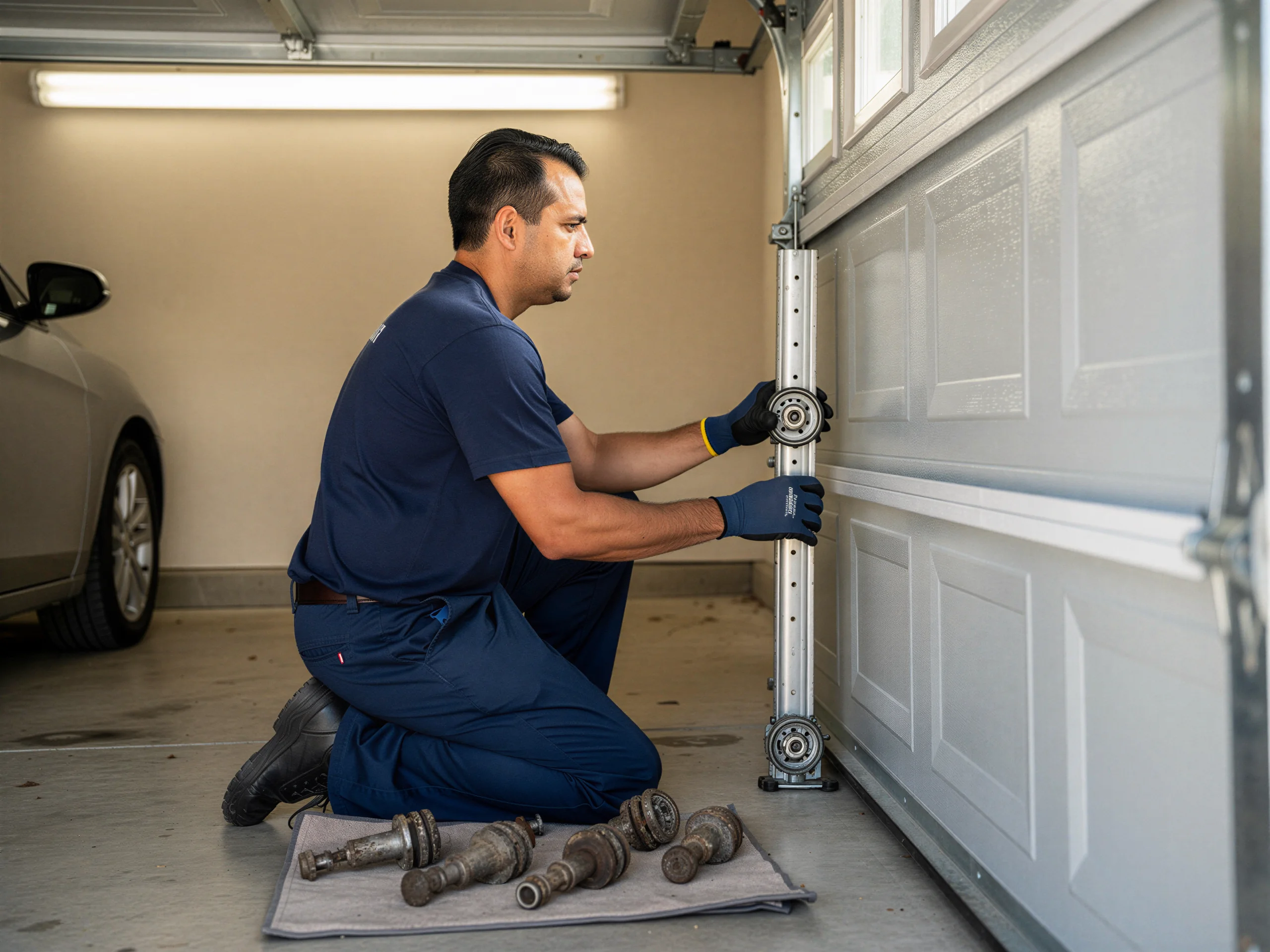
On a house from the early 1960s, that usually means re-squaring the jamb before the new door goes in, because original framing has settled. We set new track to match whatever headroom the garage actually has rather than assuming the 7.5-foot standard that newer builds use.
For insulated doors, we check that the header can carry the added weight; a heavier door on springs sized for the old lightweight steel panel is a fast way to end up back out here in six months.
Where income and budget point toward a solid steel door instead of an insulated composite or carriage-style build - and across this town that's a common call - we still make sure the weatherstrip and bottom seal are rated for the cold, since that's the part that actually keeps the garage usable in January.
Warning signs
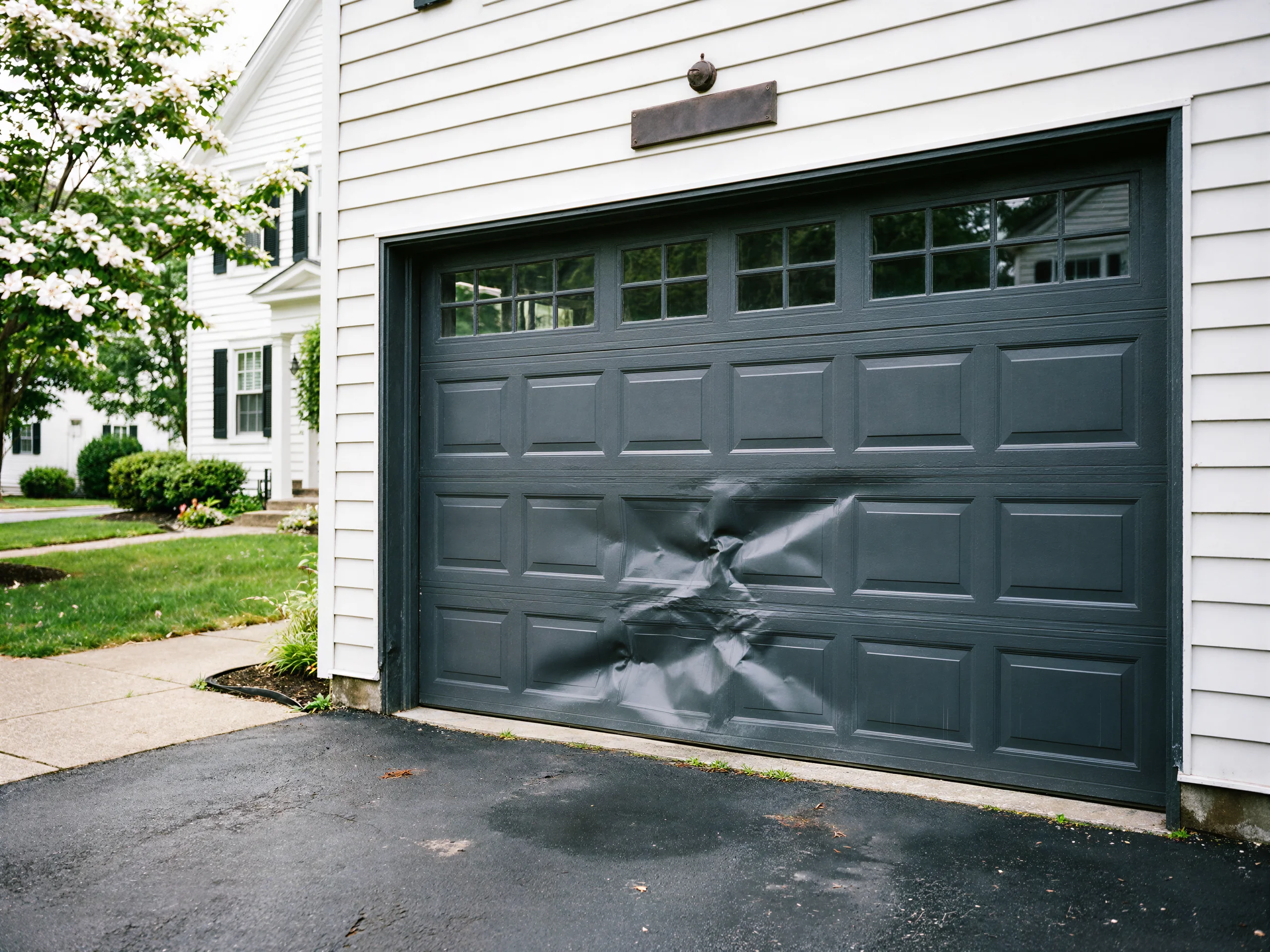
In a town where most garages date to the early 1960s, the signs we get called out for are consistent. Panels that have rusted through at the bottom where decades of snowmelt sat against the steel.
Springs that were sized for a lighter original door and are now straining to lift a heavier replacement someone bolted on without upgrading the torsion bar. Non-insulated doors that turn the garage into an icebox every winter, which matters more here than in a milder climate because the cold season is long and severe.
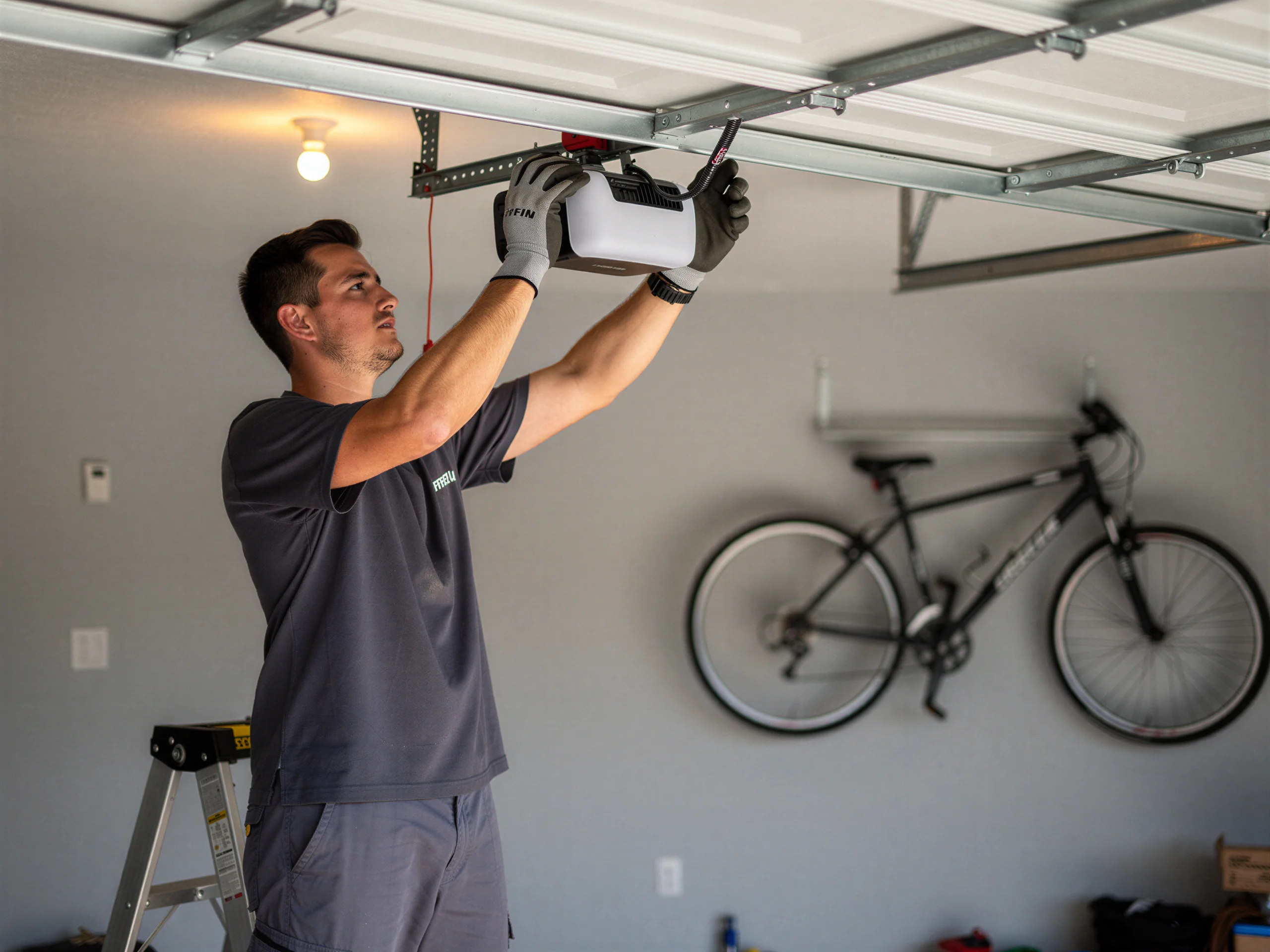
Openers that predate safety reversal sensors, installed before that was standard, now paired with a door that's heavier than the motor was built for. None of these are dramatic failures - they're wear patterns that show up because the housing stock here is old enough that the original hardware has simply reached the end of its service life.
That's the honest reason most Hamden calls turn into a full replacement conversation rather than a patch job: the door and the opener are both past the point where fixing one part makes sense.
Timing
What stretches a Hamden install isn't the drive - six miles from New Haven is nothing - it's what we find once the old door comes down. A straightforward swap on an opening that's still square and the right size goes fast. An opening that needs header reinforcement, or track reset because the jamb has shifted over sixty years, takes longer, and we won't quote a tight window until we've actually measured. Cold-weather sealing adds a step too: fitting bottom seal and weatherstrip rated for a real winter isn't the same five-minute job as a standard strip in a mild climate, and we're not going to shortcut it just to hit a number. If your door is a non-standard size - not unusual in houses built before the current code-driven dimensions became common - the door itself may be special order, which adds lead time before we ever touch your garage. We'd rather tell you that upfront than promise a date we can't hit.
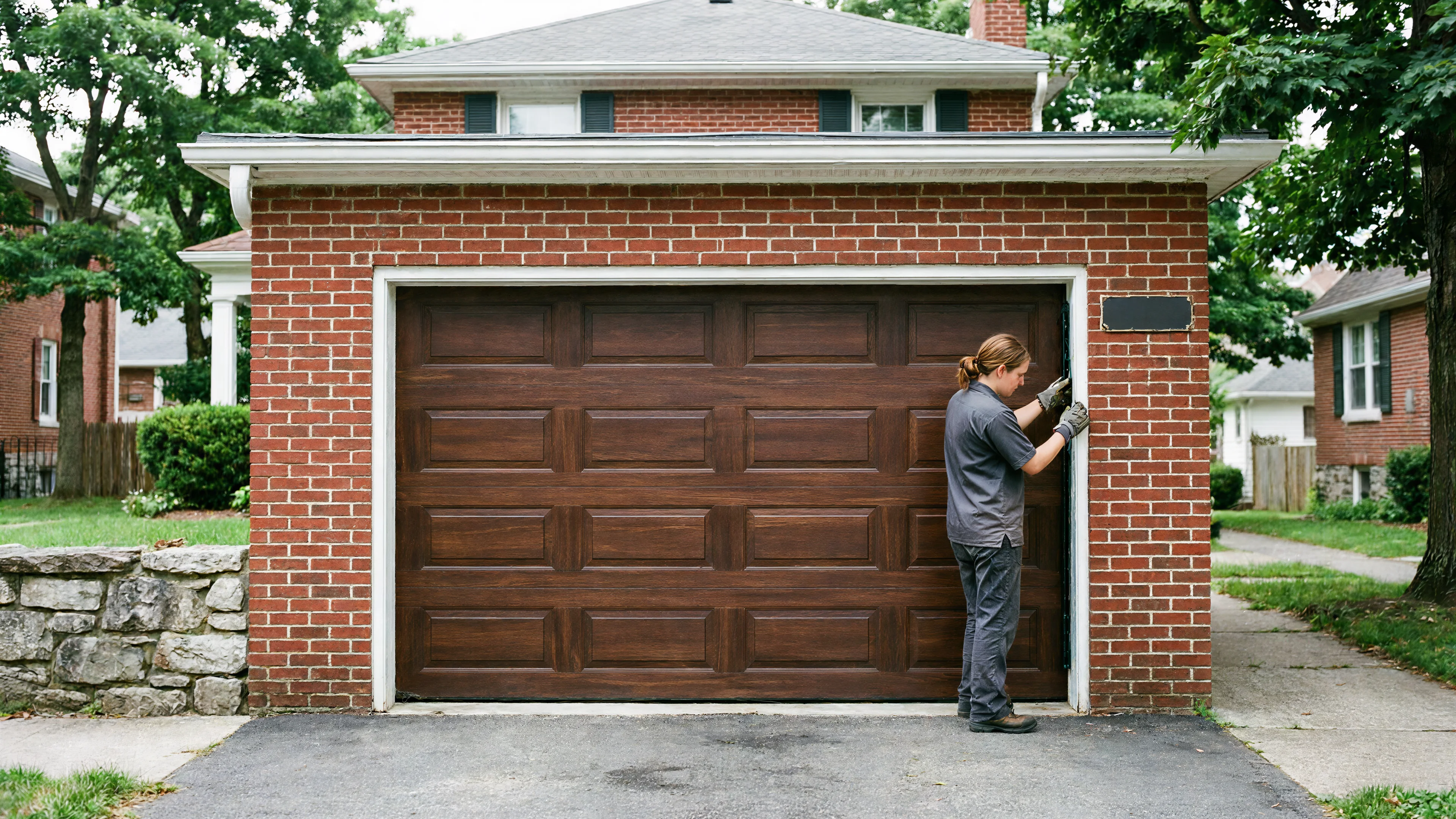
On the truck
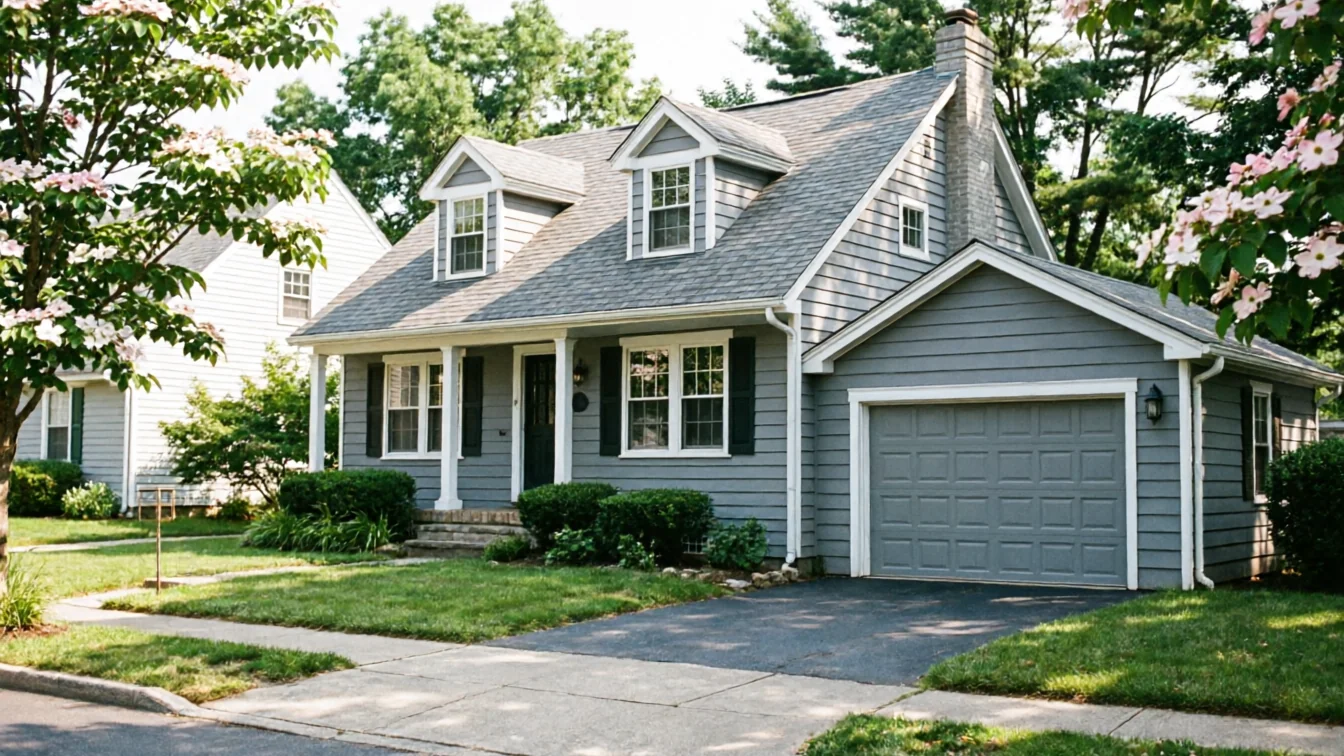
For a Hamden job we load for the housing stock we expect to find: standard steel sectional doors in the sizes common to early-1960s openings, insulated options for anyone upgrading, torsion springs rated for both the old lightweight panel weight and the heavier insulated replacements, and track hardware sized to the shallower headroom that shows up on houses from that era rather than the deeper clearance newer builds have. We carry weatherstrip and bottom seal rated for a cold, snow-load climate as standard, not an upsell, because anything less doesn't hold up through a full Connecticut winter here. What we don't carry as a default: oversized or custom-width doors for openings outside the typical range, and certain older opener models that have been discontinued - those get special-ordered once we've measured on site. We'd rather say that plainly than show up with the wrong part and waste your afternoon.
Questions
No. We run Hamden installs out of our New Haven location, about six miles away. There's no local office, just a short drive, and we plan the visit around that rather than pretending otherwise.
Often, but not always. Openings from that era commonly have shallower headroom than current builds, and framing can shift over six decades. We measure before quoting so we bring hardware that actually fits your opening, not the current default size.
It depends on how you use the space and your budget. Given the cold winters here, we size most quotes toward a solid steel door with proper weatherstrip and bottom seal rather than skipping insulation, but it's a real option if the garage isn't heated or lived-in space.
We don't split the job that way. Torsion spring tension depends on the exact door weight and track geometry, and getting that wrong on an older header is a safety issue, not a convenience one. We handle the full install as one job.
Explore more
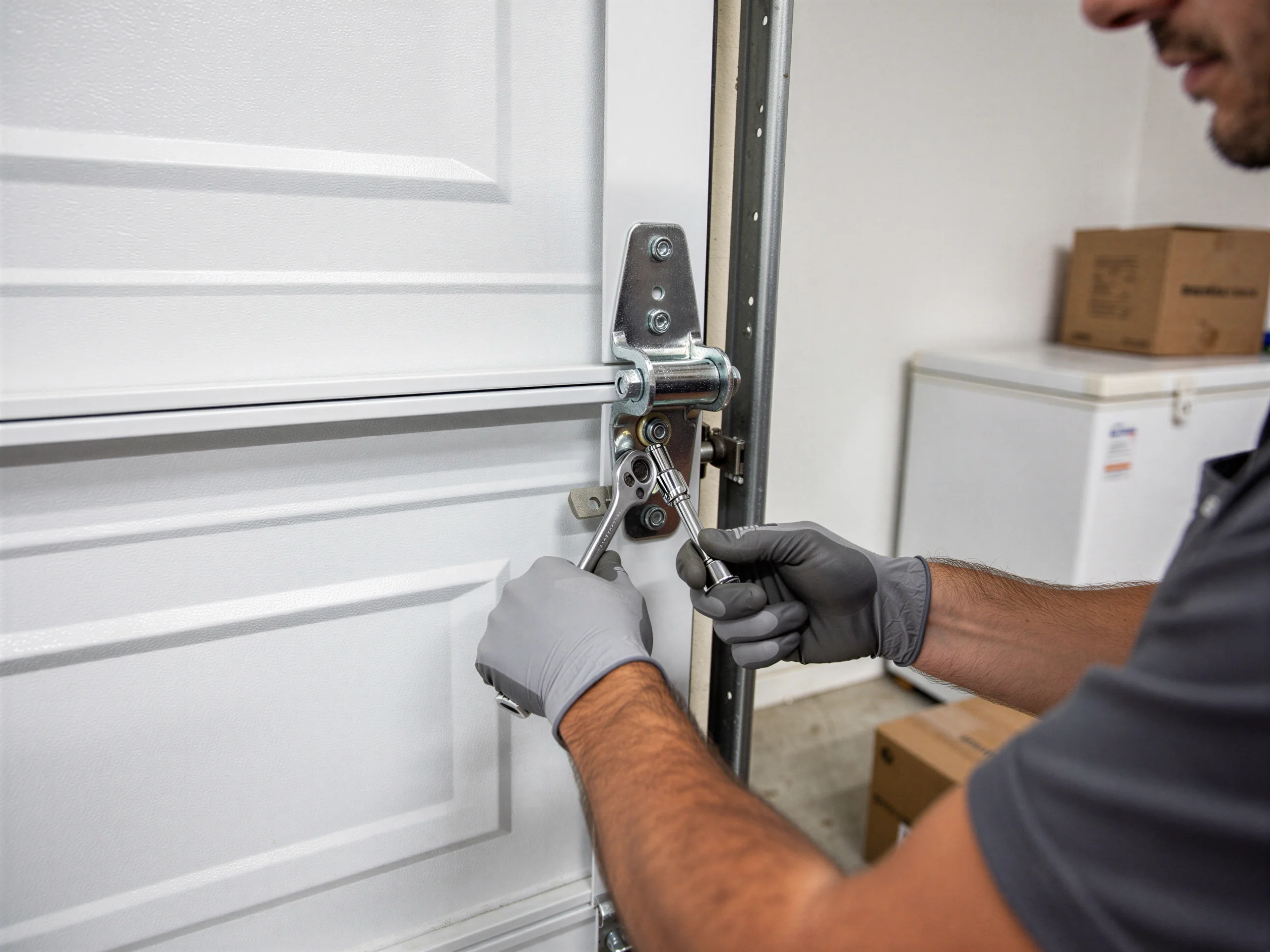
Ready when you are
New Haven Garage Door Pros repairs and installs garage doors, springs and openers in New Haven, CT and the surrounding area.