New Haven, CTSame-day service/Free estimates/Licensed & insured(475) 203-3810

Hamden, New Haven

Garage Door Roller Replacement for Hamden Homes

Most Hamden garages still run the steel rollers installed when the house went up in 1963. Here's how we tell when it's time to swap them, and what we carry.

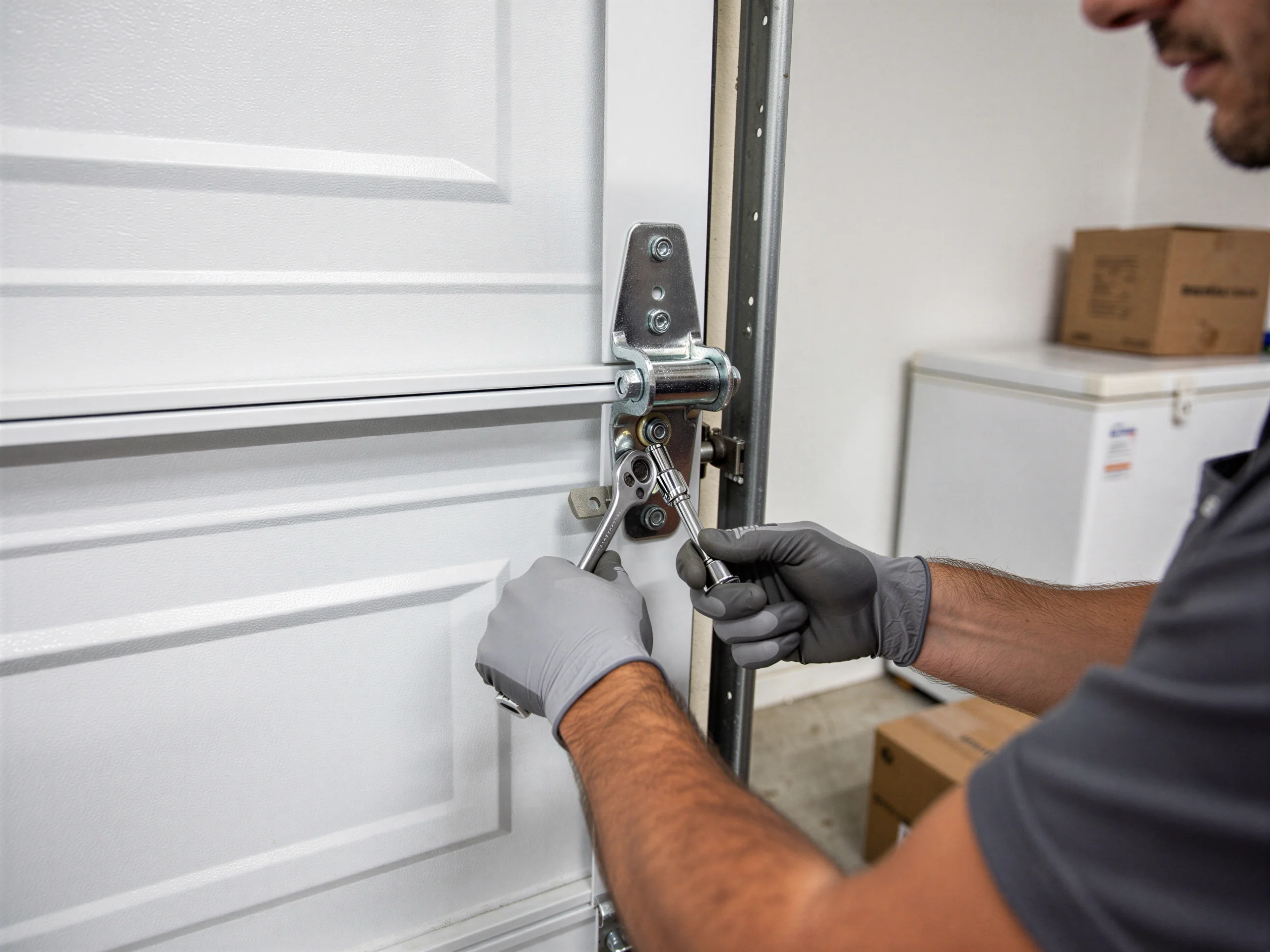
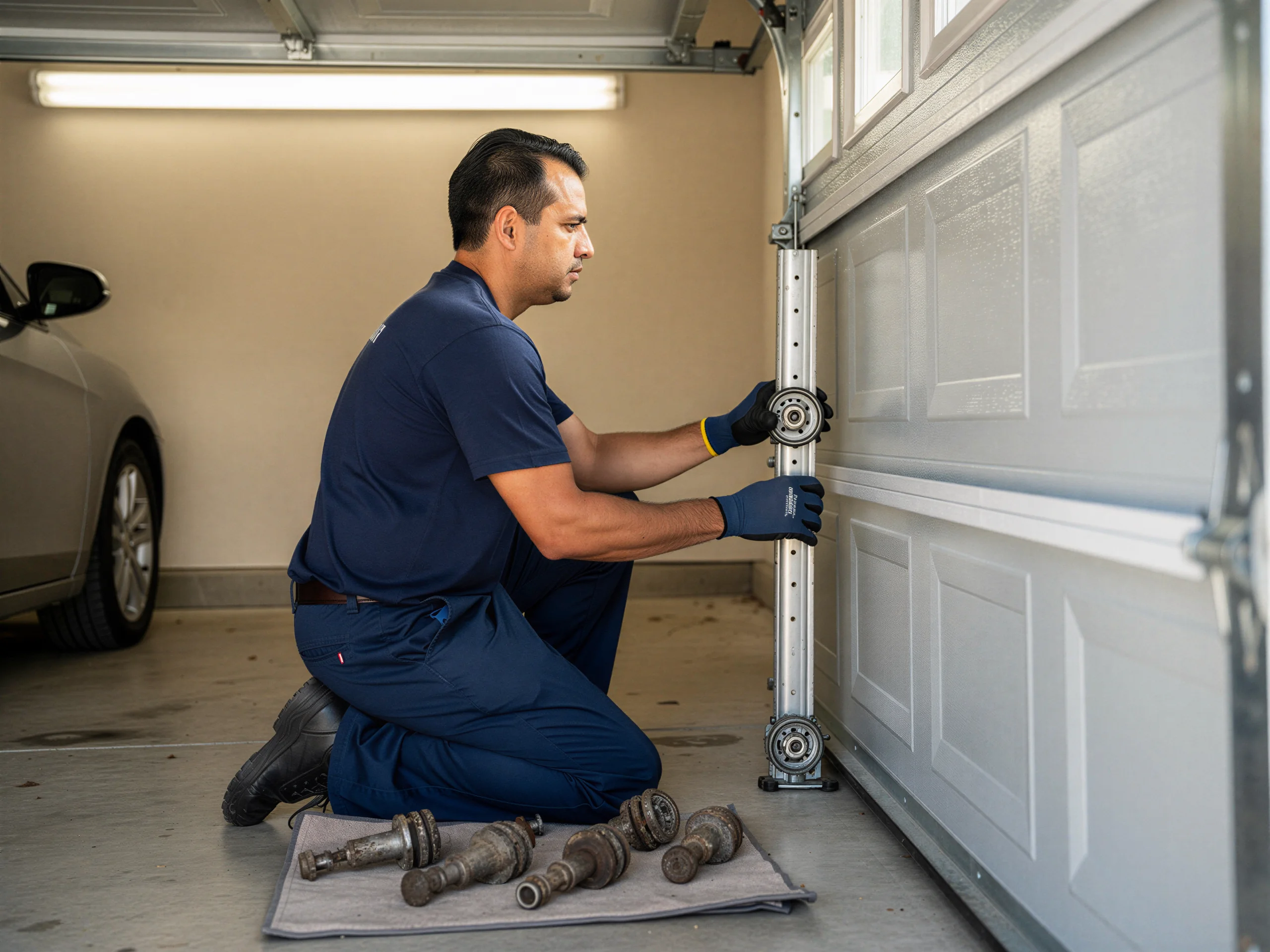
A technician kneels while working on a white garage door track and rollers.
Same-day serviceTrusted local pros
Serving New Haven, CTBackground-checked techsHonest, upfront pricingFast local response

DIY or pro

Doing It Yourself

A lot of Hamden homeowners open the garage, hear the grind, and figure they'll just swap the rollers themselves. You can, on some doors. If your door is a newer torsion setup with the spring already under low tension and you're only replacing a roller or two on the bottom section, it's a reasonable Saturday job with the right safety clips.

Original hardware hazards

Where it gets dangerous fast is on original hardware. Houses in this part of town mostly went up around 1963, a full decade before the median build year across the wider service area, and a lot of that original steel-roller, steel-track combination has never been touched.

Rusted brackets and fasteners

The brackets are rusted into the jamb, the track is bowed from fifty-plus winters, and the fasteners strip the second you put a wrench on them. That's not a roller job anymore, that's a bracket-and-track job, and if the spring lets go while you're under it, that's an ER visit.

No phone walkthroughs

Our honest limit here: we don't walk people through DIY roller swaps over the phone. If your door is original to a 1960s build, have it looked at in person before you buy parts online that won't fit the bracket spacing.

Booking

Booking a Visit

We run out of New Haven, six miles from Hamden, which keeps the drive short enough that a roller job doesn't turn into a wasted afternoon for either of us.

  1. No local branch slots

    We don't keep a branch in town, so we can't promise a same-day slot just because you're close - distance helps routing, it doesn't change the schedule. When you call, tell us the door's approximate age if you know it.

  2. Steel-track hardware on truck

    If the house is original-build era, around 1963 for a lot of this neighborhood, we'll bring steel-track hardware and the right-size rollers rather than assuming a standard modern bracket. That one detail saves a second trip more often than anything else we ask about.

  3. Noise pattern questions

    We also ask whether the noise is constant or only on the way up or down - it tells us whether we're looking at a worn roller, a bent track, or both, before the truck even leaves New Haven.

Our process

How We Fix It

Most roller jobs start with pulling the door down to a working height, locking it with clamps, and running each roller out of its track one at a time rather than dropping the whole section.

Stem gauge sized to bracket

On original 1960s hardware, the stem is often a different gauge than what's sold in most hardware-store kits, so we size against the bracket rather than guessing. We replace steel rollers with sealed nylon ball-bearing rollers where the track allows it - quieter, and they don't need the regular oiling steel rollers demand.

Bowed track before rollers

If the track itself is bowed or the bracket is rusted through, we say so before we start; a new roller riding in a bent track just wears out again in a season, and that's money you didn't need to spend.

Reversal adjustment after swap

We check the cable and the opener's travel settings after, since a door that's been grinding on worn rollers often needs a small reversal adjustment once it's running smooth again.

Warning signs

How It Shows Up

The first sign is usually noise: a grind or a rhythmic squeak that gets louder as the door travels, not a one-time pop. On original steel-roller setups common in this part of Hamden, the sound often shows up worse on cold mornings - Connecticut sits in a severe cold climate band, and steel rollers that have run dry for decades seize harder once the grease in the bearing stiffens.

The second sign is motion, not sound: the door hesitates or jerks at the same spot on every cycle, which usually means a roller has flattened on one side and is catching the track seam. Left alone, that flattened roller starts wearing a groove into the track itself, which turns a $20 part into a $150 track replacement.

If the door comes off the track entirely on one side, stop using the opener and call - that's a roller or bracket failure already in progress, not a sound you can wait out.

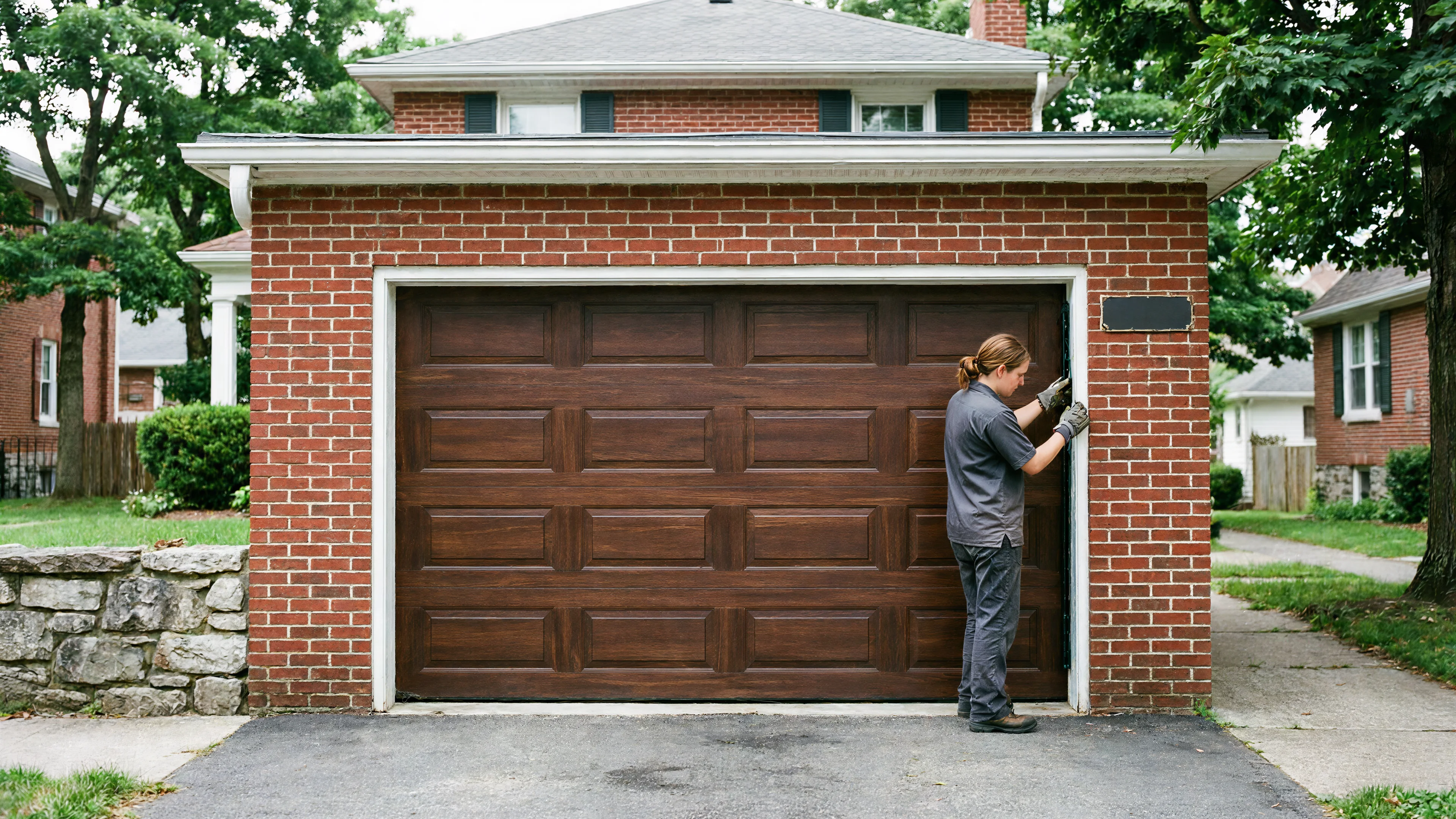
A technician adjusts a brown garage door on a brick house.

Timing

How Long It Takes

A straight roller swap on a door with sound track and brackets is one of the shorter jobs we do - quicker than a spring job, and nothing like the half-day a full panel replacement runs.

Bracket wear and alignment

Where the time goes is diagnosis: on original hardware from the early 1960s we're often checking bracket wear and track alignment as part of the same visit, since a worn roller on fifty-year-old steel track rarely travels alone.

Brackets rusted past reuse

If we find the track is bowed or the brackets are rusted past reuse, we'll say so on site rather than quoting a roller-only job and surprising you with a second trip. That's the honest trade-off with older hardware: the roller itself is a fast fix, but what it's riding in sometimes isn't.

On the truck

What Is on the Truck

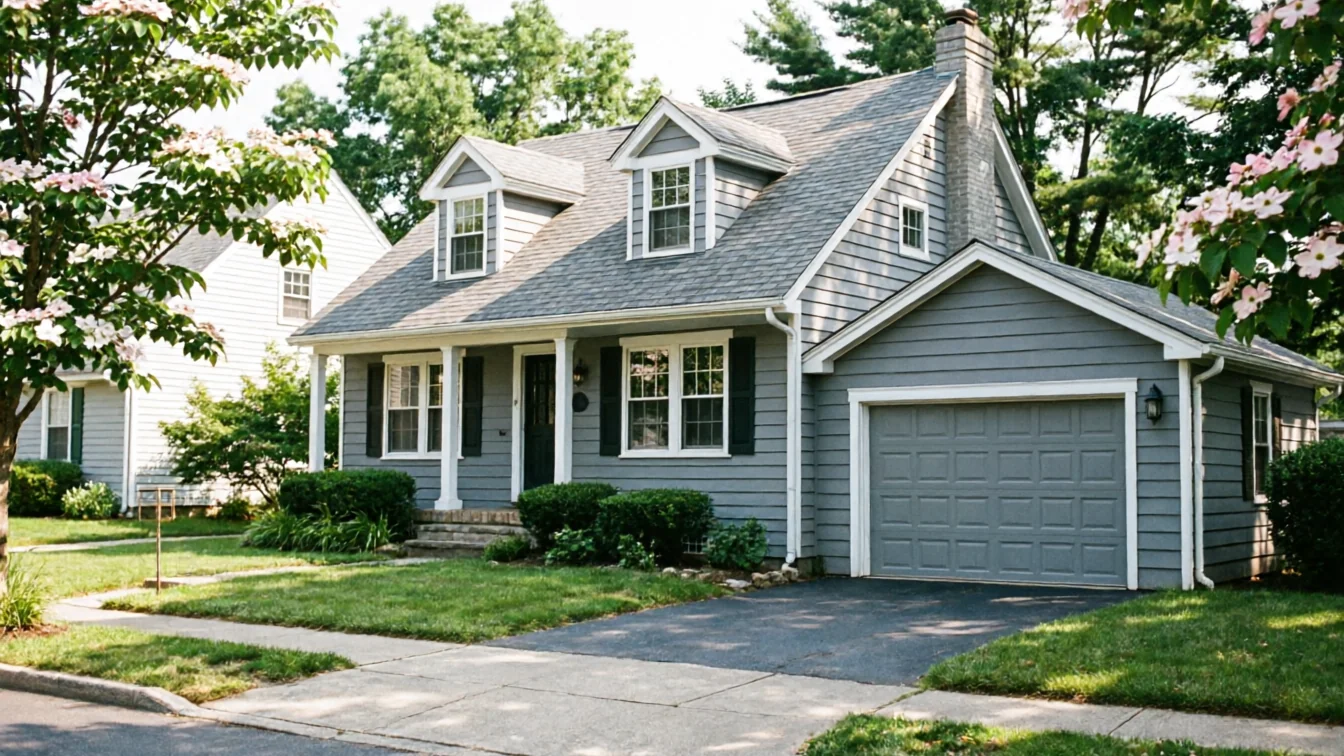
A gray house with a gray garage door and green landscaping.

We carry both steel and sealed nylon rollers in the common stem lengths, since Hamden has a mix of original 1960s steel-track doors and newer aluminum-track installs from remodels. For the severe cold winters this area gets, we stock a lithium-based grease rated for low temperatures rather than the general-purpose stuff that stiffens up in January.

We keep replacement brackets and short sections of track on the truck for the common failure points, but we don't carry full custom track runs - if a whole side needs replacing, that's a second visit with the right length cut to your door. With roughly 23,195 households in town and a housing stock that leans toward that early-1960s build year, steel-roller replacements and bracket work make up a steady share of what we're asked to look at here.

Questions

Common questions

Are the rollers on my garage door original to the house?

If your Hamden home was built around 1963, which is typical for a lot of this area, there's a decent chance nobody has ever touched the rollers. Steel rollers can run for decades before failing outright, they just get noisier and rougher every winter. If you've never had the door serviced, assume original until we tell you otherwise.

Why does my door sound worse in cold weather?

This area sits in a severe cold climate band, and old grease in steel roller bearings stiffens up as the temperature drops. A roller that sounds tolerable in July can grind badly on a January morning. It's usually a sign the bearing is drying out, not a new problem starting.

Can you just replace the rollers without touching the track?

Often yes, if the track is straight and the brackets aren't rusted through. On original 1960s hardware we check both before quoting, because a new roller in a bent track wears out again fast. We'll tell you on site if the track needs attention too.

Do you keep a crew based in Hamden?

No - we run out of New Haven, about six miles away. We don't promise a local branch or a guaranteed same-day slot because of that distance, but it's close enough that scheduling a visit isn't a long wait in practice.

Ready when you are

Need a garage door sorted in New Haven?

New Haven Garage Door Pros repairs and installs garage doors, springs and openers in New Haven, CT and the surrounding area.

Call Now(475) 203-3810